
Eid is a time of generosity, family gatherings and sharing food, and dry fruits have a natural place in the celebration: dates break the Ramadan fast, almonds and pistachios decorate sheer khurma and biryani, and boxes of nuts and dried fruit are exchanged between homes. This guide to Eid gifting with dry fruits suggests hampers for every relationship and budget, explains etiquette, offers healthier swaps for heavy sweets, covers packaging, delivery timing, and sensitivity around fasting, dietary needs and allergies, and ends with practical tips for hosts who receive many gifts. The aim is to help you give something thoughtful, fresh and beautifully presented without overspending.
Quick answer: For Eid, build a hamper around good dates, almonds and pistachios, add figs or apricots, and finish with a handwritten card. Budget about Rs 400 to 700 for neighbours, Rs 1000 to 1800 for family and Rs 2000 plus for elders. Order a week ahead, pack neatly, avoid heavy sweets for people with diabetes and mention that nuts are included.
Why dry fruits suit Eid
Dates hold deep significance in Ramadan, where fasts are traditionally broken with dates, and dry fruits are central to festive dishes such as sheer khurma, seviyan and biryani. A box of premium dates and nuts feels appropriate, generous and healthy. They keep well, travel easily and appeal across ages. Unlike perishable sweets, they can be enjoyed over weeks. For more on dates in Ramadan see dates for Ramadan iftar guide.
Hamper ideas by relationship
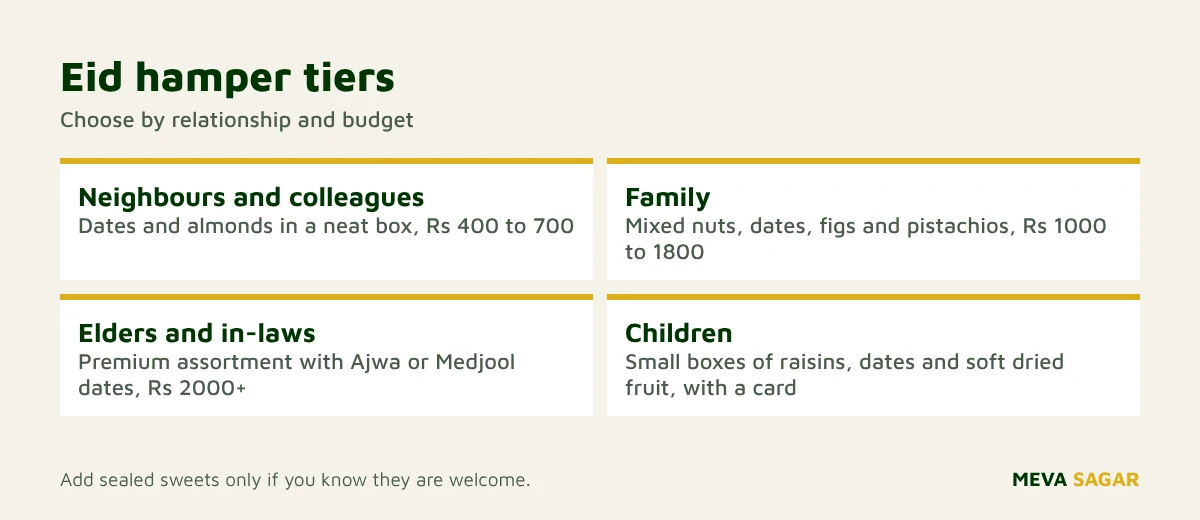
| Recipient | Hamper idea | Budget |
|---|---|---|
| Neighbours, colleagues | Dates and nuts gift box | Rs 400 to 700 |
| Close family | Fruit and nut gift box with extra pistachios | Rs 1000 to 1800 |
| Elders, in-laws | Royal dry fruits gift box with Ajwa dates | Rs 2000 and above |
| Hosts of an Eid gathering | Mixed nut tin and saffron | Rs 600 to 1200 |
| Children | Small packs of raisins, dates, dried mango | Rs 150 to 300 |
See dry fruit gift box price guide for what each price level should include.
Choosing the dates
Choose plump, glossy dates with a clean, sweet aroma. Ajwa, Medjool, Khalas and Mabroom are popular for gifting. Ajwa dates are valued for their significance and taste; Medjool dates are large and soft. Avoid sticky, fermented or crystallised dates. Presentation matters: layer dates in a box with parchment between rows. See types of dates compared and Safawi dates guide.
Etiquette and sensitivity
- Give within the spirit of the occasion, not as a show of wealth.
- Check dietary needs: diabetes, allergies and personal preferences.
- Avoid anything that conflicts with religious or dietary rules; if including sweets or non-dry-fruit items, ensure they are suitable.
- Present with both hands and a warm greeting.
- Include a note with your wishes; avoid lavish extras that cause embarrassment.
- Reciprocate sincerely, but do not feel obliged to match value.
Healthier gifts for people watching sugar
Many families now prefer lighter gifts. For people managing diabetes or weight, send nuts, seeds and a small selection of unsweetened dried fruit instead of heavy mithai. A hamper of unsalted almonds, pistachios, walnuts and makhana is welcome. See gifts for diabetics: a sugar-free hamper and sweets without sugar for ideas. A note saying "we thought of your health" is received as care, not judgement.
Packaging and presentation
Choose a sturdy box in festive but understated colours such as emerald, gold or ivory. Line with paper, add small compartments for different items and tie with ribbon. A scattering of dried rose petals and a small bottle of attar or saffron makes it special. Keep the packaging free of images that may not suit every recipient. Consider reusable or eco options; see eco-friendly dry fruit gift packaging.
Timing and delivery
The date of Eid depends on the moon sighting, so confirm it and plan delivery for the evening before or the morning of Eid. Order at least a week ahead, because the last days of Ramadan are busy for couriers. For distant relatives, ship early; see gifts for NRI family. Provide a contact number and confirm someone will be home. Keep dates and nuts cool until delivery.
Cooking and hosting ideas
If you host Eid gatherings, use dry fruits in your menu: almonds and cashews in biryani, pistachios in sheer khurma, dates in desserts and dry fruit milk for guests. See dry fruit kheer recipe and Kashmiri pulao recipe for ideas that suit a festive table. Offer a bowl of dates and nuts alongside tea and coffee for guests who prefer lighter options.
Charity and sharing
Eid is also a time for zakat al-fitr and charity. Consider adding a small contribution to a food bank or sharing a portion of your hamper budget with families in need. A box of dates and nuts can be a dignified gift to those who may not afford them. Keep acts of charity respectful and private. Teaching children to share part of their Eid gifts builds generosity.
Storing and enjoying the gifts
After Eid, you may be left with many boxes. Store nuts in airtight jars, preferably in the fridge in warm weather, and keep dates cool; see how to store dates and how to store dry fruits. Use them within a few weeks or freeze portions. Re-gift only sealed, unopened items before their date; see best before date on dry fruits.
Quality and food safety
Choose products with a clear packing date and an FSSAI licence number; see FSSAI. Check that nuts are fresh and dates are clean. For general dietary guidance see the WHO healthy diet page. Mark allergens on boxes you assemble yourself. Honest labels and fresh products are part of good gifting etiquette.
Making the gift personal
The most memorable Eid hampers are the ones that show you know the recipient. Think about what the person actually eats through the year. A grandfather who loves soft dates and has trouble chewing hard nuts will appreciate a box weighted towards Medjool dates and soft figs rather than raw almonds. A young cousin who is starting at university may prefer a trail mix style assortment that fits in a backpack. A neighbour who hosts often might value a large tin of mixed nuts they can put out for guests. Spending ten minutes on these small decisions turns an ordinary box into a considerate gesture.
Presentation is the second layer of personalisation. Handwrite the card instead of printing it, mention one specific memory or wish, and choose colours that suit the family. If you are sending several hampers, keep a short list of who received what so that next year you can vary the contents. Keep receipts and delivery details handy in case something goes wrong. A little organisation before the busy final week of Ramadan makes the whole exercise calmer, and it means the gifts arrive fresh, on time and in good condition, which is the foundation of any good hamper.
Finally, remember that gifting is only one part of the celebration. Visiting relatives, sharing meals and helping those in need matter just as much, and a modest hamper given warmly will always mean more than an expensive one given carelessly. Let the dry fruits carry your good wishes, and let the rest of the day belong to people.
Frequently asked questions
What is a good Eid gift?
A box of premium dates and nuts with a personal note.
How much should I spend?
Anything from Rs 400 to 2000 or more, depending on the relationship.
Which dates are best for gifting?
Ajwa, Medjool, Khalas and Mabroom are popular.
Can I send sugar-free hampers?
Yes, unsalted nuts and seeds suit people watching sugar.
When should I order?
At least a week before Eid.
Should I include sweets?
Only if you know they are welcome and suitable.
The bottom line
Eid gifting with dry fruits works best with fresh dates, good nuts and a personal note. Match the hamper to the person, order early and pack neatly.