Dates are one of the longest-lasting dried fruits, but that does not mean they last forever. Left in a warm, humid kitchen, soft dates can ferment, grow mould or attract insects, while overly dry storage turns them hard and sugary. Knowing how to store dates properly saves money and keeps their caramel flavour intact. This guide explains the difference between soft and dry dates, where to keep each kind, how long they last in the pantry, fridge and freezer, how to pack them, signs that dates have gone off, why white crystals appear, how to soften hard dates, and extra tips for hot climates and festival stockpiles. It applies to Medjool, Khalas, Ajwa, Kimia, Safawi, Mabroom and dry dates.
Quick answer: Store soft dates (Medjool, Khalas, Ajwa) in an airtight container in the fridge for 6 to 12 months, or in the freezer for up to 2 years. Keep them in the pantry for only 1 to 2 months in cool weather. Dry dates (chhuhara) keep at room temperature for about a year. Discard dates that smell sour or alcoholic, or show mould.
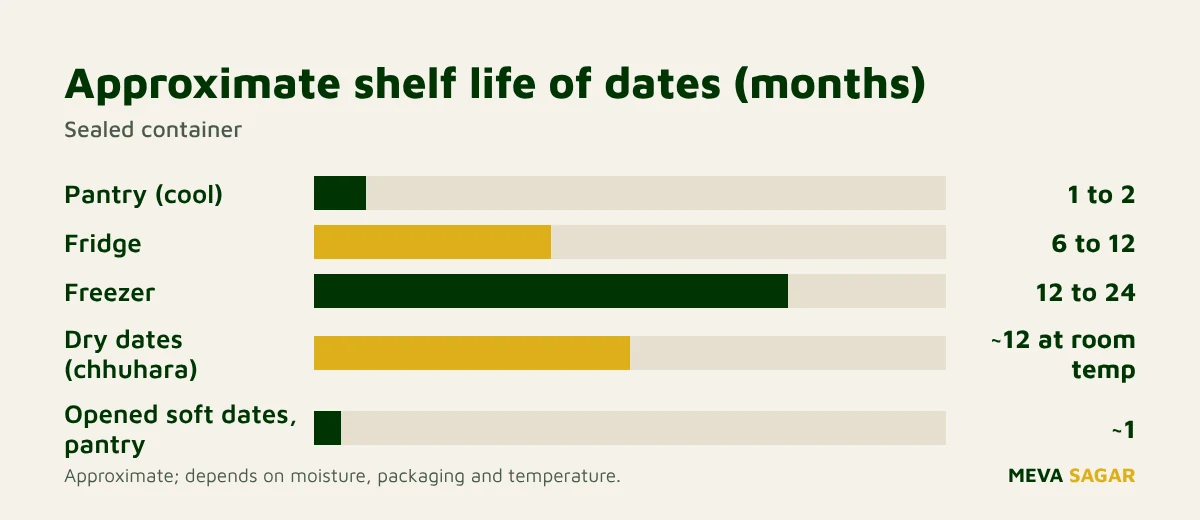
Soft dates versus dry dates
Dates are classed by moisture. Soft dates, such as Medjool, Khalas, Ajwa, Kimia and Mabroom, have about 20 to 30 percent moisture and a sticky texture. Semi-dry varieties like Safawi have somewhat less. Dry dates, such as chhuhara and kharik, have much less moisture and a firm, chewy texture. Moisture determines how easily dates spoil: the wetter the date, the more important cool storage becomes. See types of dates compared for more on varieties.
Where to store dates
| Location | Best for | Shelf life | Notes |
|---|---|---|---|
| Pantry or cupboard | Dry dates; soft dates for short periods | 1 to 2 months (soft), up to 12 months (dry) | Cool, dark, below 25 C |
| Fridge | Medjool, Khalas, Ajwa, all soft dates | 6 to 12 months | Airtight container; avoid strong odours nearby |
| Freezer | Bulk purchases, premium dates | 12 to 24 months | Portion in bags; thaw at room temperature |
| Humid or hot kitchen | Not recommended | Days to weeks | Risk of fermentation and insects |
In India, where summers are warm and humid, the fridge is the safest place for soft dates.
Packing for the pantry or fridge
Transfer dates to an airtight glass jar, steel container or heavy-duty zip bag. Press out excess air if using a bag. Keep the container away from the stove, windows and any heat source. In the fridge, avoid storing dates beside onions, garlic, fish or cut fruit, as they absorb odours. Line the container with baking paper if dates are very sticky. Do not wash dates before storing; moisture invites mould. Rinse only just before eating, and dry thoroughly.
Freezing dates
Freezing is excellent for bulk packs. Divide dates into meal-sized portions, place in freezer bags, squeeze out air and label with the date. Dates do not freeze solid because of their sugar content, so you can take out a few at a time. Thaw at room temperature for 15 to 20 minutes, or use straight from the freezer in smoothies and baking. Avoid repeated thawing and refreezing. Freezing also kills any insect eggs that may have been present, which is useful for dates bought loose. See insects in dry fruits.
Signs dates have gone bad
- Sour, vinegary or alcoholic smell: fermentation.
- Visible mould, which can be white, green or black fuzz.
- Slimy, wet or leaking texture.
- Tiny holes, webbing or small moths: insect infestation.
- A bubbly or fizzy surface.
- Off taste, bitter or fermented.
If only a few dates are affected, discard those and inspect the rest carefully. If the whole batch smells off, throw it away. Do not cut away mould and eat the rest.
White crystals: sugar bloom, not mould
White, grainy spots on dates are often sugar crystals that have come to the surface as moisture shifts. They are harmless and the dates are safe to eat. Sugar bloom feels crunchy and dissolves in water, while mould is fuzzy and may smell musty. To reduce bloom, avoid temperature swings and store airtight. If dates look dull, a light rub with a damp cloth removes the crystals. Distinguishing bloom from mould is important; when in doubt, smell and look closely, or discard.
Softening hard dates
- Steam
Place dates in a steamer for 2 to 3 minutes until plump. - Soak
Or soak in warm water for 10 minutes and pat dry. - Microwave
Or microwave with a damp paper towel for 10 to 15 seconds. - Use soon
Softened dates should be eaten or used within a day or two.
Hard dates are fine for blending into laddus, energy bars and smoothies; see khajoor ladoo recipe and energy bar recipe.
Storing pitted, stuffed and chopped dates
Pitted dates have more exposed surface and dry out or spoil faster, so keep them refrigerated and use within a few months. Stuffed dates, with nuts or cream cheese, should be refrigerated and eaten within a week. Chopped dates can clump; toss with a little flour or oat flour before storing. Date paste or syrup should be kept in a clean jar in the fridge and used within a month, or frozen in cubes.
Insects and pests
Dates attract moths and beetles, especially when stored loose in warm kitchens. Buy sealed packs from reliable sources, check for webbing and small holes, and store in airtight containers. Freeze new purchases for 48 hours if you suspect infestation. Clean cupboards regularly. See insects in dry fruits: prevention and removal.
Storing for Ramadan and festivals
If you buy dates in bulk for Ramadan or Diwali, store most in the fridge or freezer and keep only a week's worth in a bowl at room temperature. Pack gift dates in airtight boxes and keep them cool until the day. For iftar ideas see dates for Ramadan iftar guide. When serving, take dates out of the fridge 15 minutes in advance for the best texture.
Buying fresh to begin with
Good storage starts with good dates. Look for plump, glossy fruit with intact skin and a pleasant caramel smell, without crystallisation or stickiness on the pack. Check the packing date and use FSSAI-compliant packaging; see FSSAI. Nutrient and sugar data for dates are on USDA FoodData Central. For general healthy eating, see the WHO healthy diet page.
A simple weekly routine
Once a week, open your date container, smell it and check a few dates for stickiness or crystals. Remove any that look suspicious, wipe the jar and reseal it. Keep a small bowl of dates for the week on the counter and the rest in the fridge. Rotate stock so older dates are used first. These tiny habits prevent most storage problems before they start.
Frequently asked questions
Do dates need refrigeration?
Soft dates keep best in the fridge, especially in warm weather; dry dates can stay at room temperature.
How long do dates last?
Six to twelve months in the fridge, up to two years frozen.
Are white spots on dates mould?
Usually they are sugar crystals, which are harmless; mould is fuzzy and smells musty.
Can I freeze dates?
Yes, they freeze well and do not harden completely.
How do I soften hard dates?
Steam or soak in warm water for a few minutes.
What if my dates smell sour?
Discard them, since this indicates fermentation.
The bottom line
To store dates, keep soft varieties in an airtight container in the fridge or freezer and dry dates in a cool pantry. Watch for sour smells and mould, and soften hard dates with steam or warm water.