

A long drive, a hill station weekend or a family picnic all share one problem: what to eat between meals that is not greasy, messy or sugary. Dry fruits solve it beautifully. They are light, shelf-stable, need no cutlery and give steady energy. This guide to road trip dry fruits covers what to pack, how much per person, mess-free mixes, options for children, how to keep nuts crisp and dates soft in heat, safe handling, healthy swaps for chips and biscuits, and a simple packing checklist. It also gives tips for flights and treks, so whether you are travelling by car, train or on foot you can pack smartly and enjoy the journey.
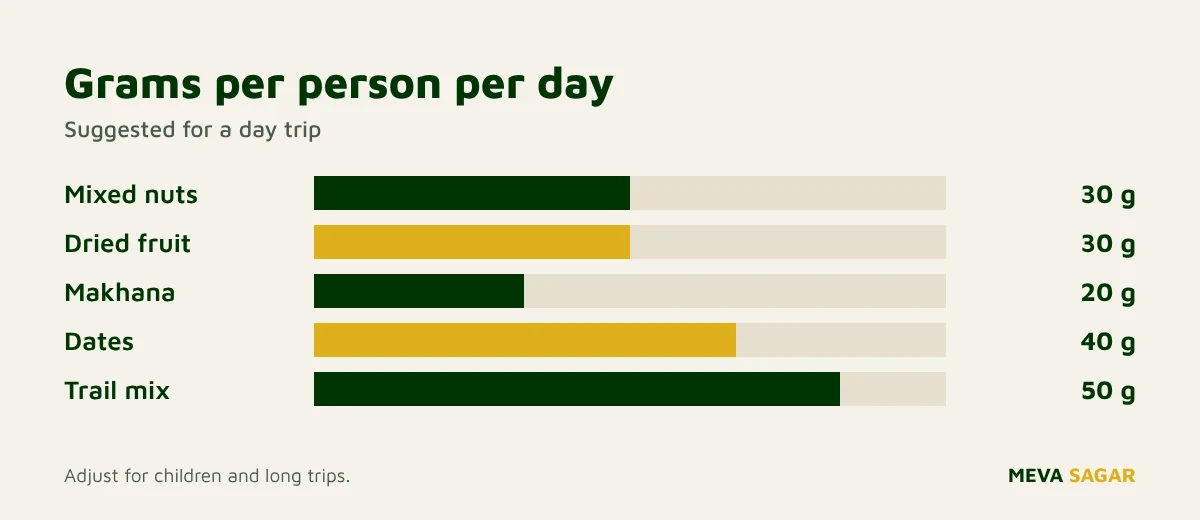
Quick answer: For picnics and road trips, pack 30 g nuts, 30 g dried fruit and a few dates per person per day, add roasted makhana and trail mix, use small airtight containers or zip bags, keep them out of direct sun and carry water. Avoid whole nuts for very young children.
Why dry fruits travel well
They are compact, do not need refrigeration for short trips, have a long shelf life and offer a good mix of carbohydrates, fat and protein. Unlike fresh fruit, they will not bruise in a bag, and unlike chips, they will not leave oily fingers on the steering wheel. They also help avoid roadside fried food that can upset the stomach on a long journey.
What to pack
| Item | Why | Product |
|---|---|---|
| Mixed nuts | Protein and fat | Premium mixed dry fruits |
| Trail mix | Balanced energy | Trail mix |
| Dates | Quick sugar and potassium | Khalas dates |
| Makhana | Light crunch | Roasted makhana |
| Dried mango or kiwi | Fruity treat | Dried mango |
| Raisins | Cheap, kid-friendly | Raisins |
How much to carry
As a rule, plan 30 to 50 g of mixed snacks per person for every three to four hours of travel, plus extra for children and hikers. For a full day, carry two or three small portions per person. Extras are easy to store, but running out on a mountain road is not. Add a few spare packets for unexpected delays.
Packing for children
Children enjoy raisins, soft dried mango, banana chips and small crunchy mixes. Avoid whole nuts for children under four because of choking risk, and chop or use nut butters instead; see dry fruits for kids age-wise guide. Pack in small boxes with lids. Carry wet wipes for sticky fingers. Check for allergies in the group; see nut allergy symptoms and safe swaps.
Keeping things fresh in the heat
Heat and sunlight make nuts go rancid and dates sticky. Keep snacks in an insulated bag or the cooler part of the car, never on the dashboard. Use airtight containers or zip bags and squeeze out the air. For multi-day trips, carry a small cool pack. See how to store dry fruits and how to tell if nuts are rancid.
Healthy swaps for road snacks
- Roasted makhana instead of chips.
- Dates instead of toffees.
- Nut mix instead of biscuits.
- Dried fruit instead of sweets.
- Water instead of fizzy drinks.
- Homemade trail mix instead of packaged namkeen.
See homemade trail mix recipe for a custom mix.
Flights, treks and special trips
On flights, dry fruits are usually allowed in carry-on bags, but check airline and destination rules, especially for international travel. On treks, choose calorie-dense mixes and carry extra water, since dry foods are thirst-inducing. For high altitude, small frequent snacks help. See dry fruits for energy and pre-workout snacks.
Food safety on the road
Wash hands or use sanitiser before eating, use clean spoons or scoop from a container instead of dipping hands, and keep food covered. Do not leave opened packs in a hot car. Buy sealed fresh products with clear dates and FSSAI details; see FSSAI.
A packing checklist
- Small airtight containers or zip bags.
- Napkins, wipes and a small bag for rubbish.
- Water bottles.
- Portions for children, labelled.
- A cooler bag in summer.
- Spare snacks for delays.
Eco-friendly picnicking
Carry reusable containers, avoid single-use plastic and take all waste home. Choose bulk packs and portion at home. Leave natural places as you found them. For general nutrition advice see the WHO healthy diet page and USDA FoodData Central.
Sample menus for different trips
For a half-day picnic, pack a small tub of trail mix, a bag of dates and walnuts, a container of roasted makhana and some fresh fruit such as apples or oranges. Add sandwiches or parathas for the main meal and plenty of water. This combination offers sweet, salty, crunchy and soft options, and it keeps everyone satisfied without sticky mess or heavy oil.
For a full-day drive, divide snacks into three portions per person, one for mid-morning, one for the afternoon slump and one for the evening. A typical portion might be a small handful of mixed nuts, two dates and a few raisins, with makhana in between. Keep the portions in separate bags so that nothing is finished too early and you do not need to rummage in the car while driving.
For a multi-day trek, choose calorie-dense mixes with nuts, seeds and dried fruit, and pack more than you think you need. Add electrolytes if sweating heavily, and eat small amounts often. Pack out all wrappers and leave nothing behind. With a little planning, dry fruits are an excellent companion for any adventure.
Making your own travel mix
A homemade mix is cheaper, fresher and tailored to your taste. Combine equal parts almonds, cashews and walnuts with half as much raisins and chopped dried mango or apricot. Add a few pumpkin seeds for crunch, and a handful of roasted makhana for lightness. If you like a sweet touch, add a few dark chocolate chips in cooler weather, though they will melt in the heat of a car.
Mix gently in a large bowl, taste and adjust, then portion into small containers. Label with the date and finish within two weeks. For children, leave out whole hard nuts and add soft dried fruit. For people with allergies, make separate mixes and mark them clearly. A custom mix turns an ordinary journey into something to look forward to, and it is a good way to introduce friends and family to healthier snacking habits.
A closing thought
Good travel snacks make a trip calmer, healthier and more fun. Pack small portions, keep them cool, share them generously and carry your rubbish home. With a little preparation, a bag of dry fruits is all you need to keep spirits and energy high from the first kilometre to the last, whether the destination is a hilltop, a beach or a park down the road.
One last tip
Pack a little more than you expect and share the extra with fellow travellers, drivers or children you meet along the way. It makes the journey friendlier.
Frequently asked questions
How much dry fruit should I pack?
About 30 to 50 g per person per few hours of travel.
Do nuts spoil in a hot car?
They can go rancid, so keep them cool and out of sun.
Are dry fruits allowed on flights?
Usually in carry-on, but check airline rules.
What suits children?
Raisins, soft dried fruit and chopped nuts, with care for under-fours.
What is a good road trip snack?
Trail mix, dates and roasted makhana.
How do I avoid mess?
Use small airtight containers and avoid sticky items.
The bottom line
Road trip dry fruits keep a journey fuelled without the mess. Pack small portions, keep them cool, mind children and enjoy the ride.