
Kheer is the dessert of festivals, birthdays and temple offerings, and a dry fruit version raises it from simple to special. Slowly simmered rice and milk turn thick and creamy, scented with cardamom and saffron, and studded with almonds, cashews, pistachios and raisins. This dry fruit kheer recipe uses no condensed milk or cream; the texture comes from patient cooking. You will find quantities for six bowls, a step-by-step method, tips to prevent scorching and curdling, how to reduce sugar using dates, a vegan variation, make-ahead and storage advice, and calories so you can enjoy a bowl without guilt on special occasions.
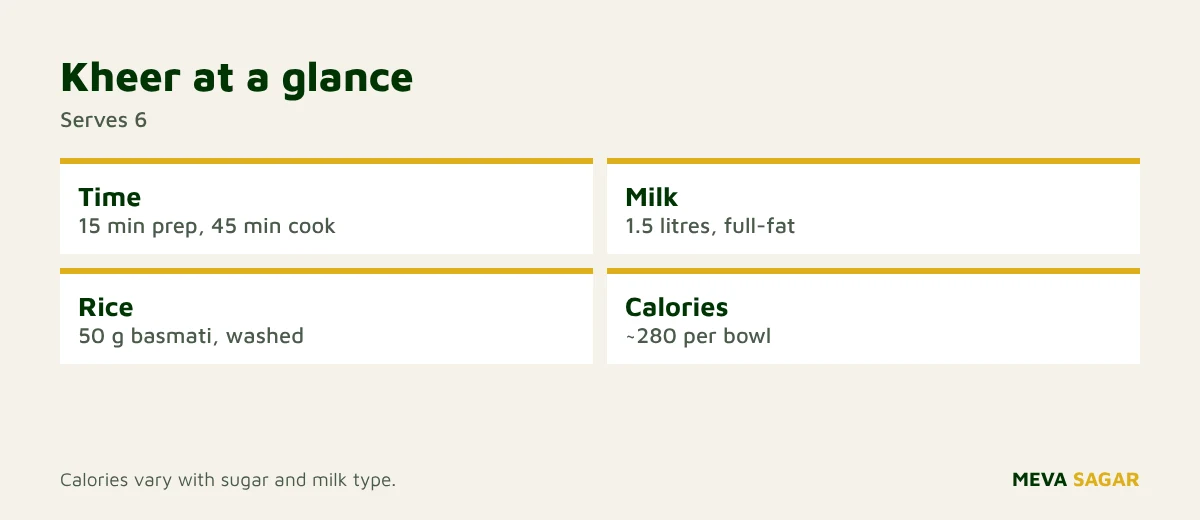
Quick answer: Simmer 1.5 litres of full-fat milk, add 50 g washed basmati rice and cook on low for 40 to 45 minutes, stirring often. Add 3 tablespoons of sugar (or 5 chopped dates), a pinch of saffron, 1/2 teaspoon cardamom and a handful of fried almonds, cashews, pistachios and raisins. Simmer 5 minutes, rest and serve warm or chilled. Serves 6.
Ingredients for six bowls
| Ingredient | Quantity |
|---|---|
| Full-fat milk | 1.5 litres |
| Basmati rice | 50 g (3 tbsp), washed and soaked 30 minutes |
| Sugar | 3 tbsp, or 5 chopped dates |
| Ghee | 1 tbsp |
| Almonds, sliced | 2 tbsp |
| Cashews, chopped | 2 tbsp |
| Pistachios, sliced | 1 tbsp |
| Raisins | 1 tbsp |
| Cardamom powder | 1/2 tsp |
| Saffron | 8 to 10 strands |
Choose fresh nuts; see sliced almonds, cashew pieces, pistachio kernels and golden raisins.
Method
- Fry the nuts
Heat ghee, fry cashews, almonds and raisins until golden. Remove and set aside. - Boil the milk
Bring the milk to a boil in a heavy pan, then reduce to low. - Add the rice
Add drained rice and simmer, stirring every few minutes. - Cook slowly
Cook for 40 to 45 minutes until the rice is very soft and the milk has thickened by a third. - Sweeten
Add sugar or dates and cook 5 more minutes. - Flavour
Stir in cardamom, saffron and fried nuts, reserving some for garnish. - Rest
Cool for 10 minutes, since kheer thickens as it sits.
Scrape the base regularly to avoid scorching.
Getting the texture right
Mash a few grains of rice against the pan for a creamy body, or lightly crush the rice before cooking. Use a wide, heavy-bottomed pan for even heat and faster reduction. Do not rush by turning up the heat, since the milk will catch. If the kheer is too thick after cooling, loosen it with a splash of warm milk. If it is too thin, simmer a few more minutes. Add the sugar at the end, as early sugar can slow the rice from softening.
Lowering the sugar
Replace sugar with chopped dates, added with the rice so they soften and dissolve. Use 5 to 6 dates for six bowls, and taste before adding more. Cardamom, saffron and vanilla make the kheer taste sweeter. A pinch of salt also lifts flavour. For people with diabetes, reduce the rice, increase nuts and consult a doctor; see dry fruits for diabetes.
Variations
- Makhana kheer: replace rice with roasted, crushed makhana.
- Vermicelli kheer (seviyan) with roasted vermicelli.
- Vegan kheer with coconut milk and cashew cream.
- Anjeer kheer with chopped dried figs.
- Broken wheat (dalia) kheer for fibre.
- Kesar pista kheer for festivals.
See anjeer halwa recipe for another fig dessert.
Nutrition and portions
A bowl of 150 ml has around 280 calories, 8 g of protein and 12 g of fat, mostly from milk. The nuts add vitamin E and minerals. This is a treat, not an everyday dessert, so serve small portions. Use toned milk for a lighter version, though it will be less creamy. Nutrient data are in USDA FoodData Central.
Serving ideas
Serve warm in winter and chilled in summer. Top with extra pistachios, rose petals or a few saffron strands. For gatherings, serve in small clay cups. Leftover kheer can be set in moulds as a firm pudding. Do not leave it out for more than two hours in warm weather.
Make-ahead and storage
Kheer improves overnight in the fridge. Store in a covered container for up to three days and reheat with a splash of milk. Freeze only if necessary, since texture changes. Keep nuts separate and add at serving to keep them crisp, or add fried nuts fresh. Store dry nuts in an airtight jar; see how to store dry fruits.
Common mistakes
| Mistake | Result | Fix |
|---|---|---|
| High heat | Scorched milk | Cook on low and stir |
| Unsoaked rice | Longer cooking | Soak 30 minutes |
| Adding sugar early | Hard rice | Add near the end |
| Stirring rarely | Skin and sticking | Stir every few minutes |
| Over-frying nuts | Bitterness | Fry until just golden |
Allergies and substitutions
This recipe contains milk and tree nuts. For allergies, omit nuts and use seeds, and use plant milk if dairy-free. Always label desserts at gatherings. Check ingredient packaging for allergen statements; see FSSAI. For general dietary guidance, see the WHO healthy diet page.
Cooking in a pressure cooker or instant pot
To save time, cook the washed rice in 250 ml of milk and 100 ml of water in a pressure cooker for three whistles, then transfer to a pan with the remaining milk and simmer for 15 to 20 minutes. This gives a creamy kheer in about 30 minutes, but the flavour is slightly less deep than slow cooking. In an instant pot, use the saute function to reduce milk after pressure cooking. Add sugar and nuts at the end in every case.
Serving kheer for festivals and offerings
Kheer is offered at pujas, served on Sharad Purnima, enjoyed at Eid as sheer khurma-style desserts and cooked for birthdays. For offerings, make it without onion, garlic or egg, and serve in clean vessels. For large gatherings, scale up carefully, since reducing milk takes longer in bigger pots. Use a wide vessel, and keep nuts aside to add at serving, so they stay crisp. A few rose petals or silver leaf make a festive presentation. Always taste before serving, and adjust sweetness.
Making it lighter
Use toned milk and thicken with a tablespoon of ground almonds or cashew paste instead of extra reduction. Cut the ghee to a teaspoon, and use dates for sweetness. Serve in small bowls, and top with fresh fruit instead of more nuts if you are counting calories. These changes lower calories by about a quarter without much loss of satisfaction. Remember that a rich dessert is part of celebration, so enjoy it in moderation.
Final serving tips
Taste the kheer once it has cooled slightly, because sweetness seems lower when warm and higher when chilled. Add saffron milk at the end to keep the colour bright, and garnish with fresh nuts so they stay crunchy. If making for guests, keep a jug of warm milk to adjust the consistency, and serve in small bowls so that people can take seconds. Always keep the pan covered between servings to prevent skin formation.
Frequently asked questions
How long does kheer take?
About 45 minutes of slow simmering.
Can I use less sugar?
Yes, use dates or reduce to 2 tablespoons.
Why did my milk curdle?
Overheating or a sour milk batch; simmer gently with fresh milk.
Can I make kheer ahead?
Yes, it keeps three days in the fridge and thickens as it sits.
Is kheer vegan-friendly?
Use coconut milk and omit ghee for a vegan version.
How do I stop kheer sticking?
Use a heavy pan and stir regularly.
The bottom line
This dry fruit kheer recipe relies on slow simmering for creaminess. Fry the nuts, add sugar late or use dates, and let it rest so the flavours deepen.


