

Giving a gift to someone with diabetes can feel like a minefield: traditional sweets, chocolate and mithai are what most people send, and they are exactly what the person cannot freely enjoy. A hamper of nuts, seeds and carefully chosen dry fruits can be a welcome alternative. This guide to gifts for diabetics shows how to build a sugar-free hamper that is genuinely useful, which dry fruits suit most people with diabetes, which to limit, what to avoid, label checks for hidden sugar, portion advice, packaging ideas and how to word a note kindly. It stresses that diabetes is managed individually, so this guide is general and the recipient's own doctor and dietitian have the final word.
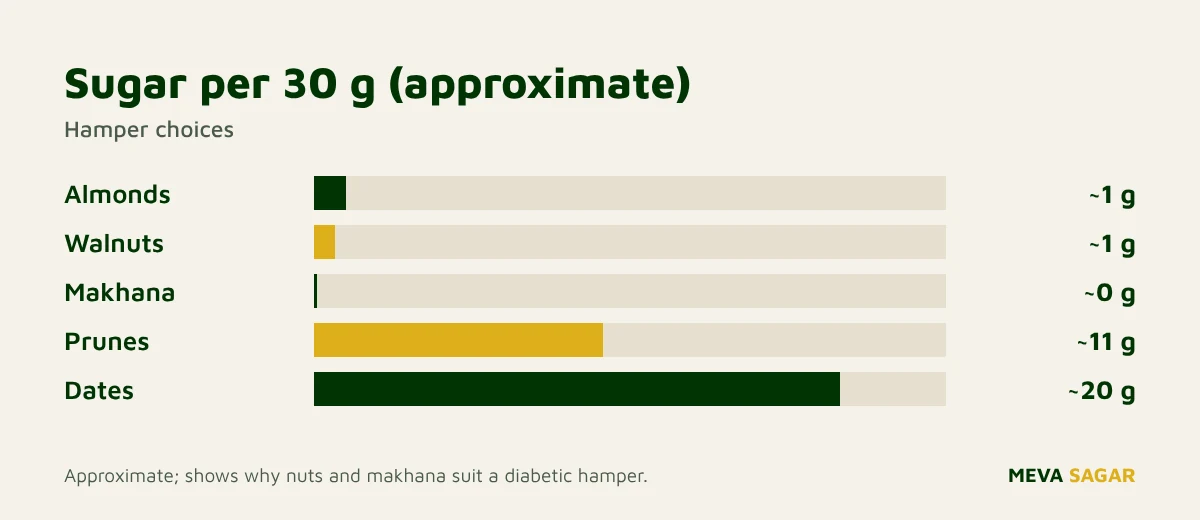
Quick answer: Fill the hamper with unsalted almonds, walnuts, pistachios, seeds and makhana, which have little sugar, and add only a small amount of unsweetened prunes or apricots. Avoid dates, raisins, candied fruit and sweetened mixes in quantity. Read labels for added sugar, include a short note and keep portions small. When in doubt, ask a family member.
Why a sugar-free hamper helps
Festivals and celebrations revolve around sweets, which can leave people with diabetes feeling excluded or tempted. A hamper that they can actually enjoy shows care and thought. Nuts and seeds provide protein, fibre and healthy fats that slow glucose absorption, and research links regular nut intake with better glycaemic control in some studies. They are also portable and keep well. The key is to choose plain, unsalted and unsweetened items and keep portions modest. See walnuts for diabetes and almonds for weight loss.
What to include
| Item | Why | Portion note |
|---|---|---|
| Almonds | Low sugar, fibre, protein | About 10 to 15 a day |
| Walnuts | Omega-3 fats | 2 to 4 halves |
| Pistachios (unsalted) | Low glycaemic, fun to eat | A small handful |
| Makhana | Almost no sugar, light | 25 to 30 g |
| Pumpkin and sunflower seeds | Magnesium, zinc | 1 tablespoon |
| Prunes or apricots | Lower sugar than dates, fibre | 1 to 2, if allowed |
See glycemic index of dry fruits chart for the numbers.
What to limit or skip
- Dates and Medjool: very high in sugar; best left out or in tiny portions.
- Raisins and sultanas: concentrated sugar.
- Candied, glazed or sweetened fruit and nut mixes.
- Chocolate-coated nuts.
- Salted or heavily flavoured nuts if blood pressure is also a concern.
- Large sweet gift boxes, even labelled "natural".
See sugar in dry fruits explained to understand why.
Reading labels
Look at the ingredients list: it should contain only the nut or fruit, and perhaps salt or oil for roasted nuts. Avoid products listing sugar, glucose syrup, honey, jaggery or fruit juice concentrate. "No added sugar" claims should be checked against the ingredients, since fruit sweeteners can be used. Check the nutrition panel for total carbohydrates and sugars per serving. For labelling rules see FSSAI.
Hamper ideas
| Hamper | Contents | Approx price |
|---|---|---|
| Starter | Almonds, walnuts and makhana in small jars | Rs 600 to 900 |
| Standard | Almonds, pistachios, walnuts, makhana, seeds, a herbal tea | Rs 1000 to 1500 |
| Premium | Large selection plus a nut cracker and a recipe card | Rs 1800 to 2500 |
Build a custom one using how to build a custom dry fruit hamper.
Add non-food extras
Pair the hamper with something that supports healthy living: a pedometer, a water bottle, a book of healthy recipes, a herbal tea or a yoga mat. Avoid overtly medical gifts unless requested. A card with a small recipe, such as spiced roasted nuts, makes the gift feel personal; see spiced roasted nuts recipe.
Be sensitive in your note
Avoid language that sounds like judgement, such as "healthy snacks for your condition". Instead, write something warm like "Some of our favourite snacks, hoping you enjoy them." Never remark on the person's food choices or weight. If you do not know them well, ask a close family member whether they have restrictions. Gifts should feel like care, not supervision.
Portion and storage
Even sugar-free items are calorie dense, so include a note suggesting small daily portions and storing nuts in airtight jars. Share tips from how to store dry fruits. People who monitor glucose can see how different foods affect them, and individual responses vary. Encourage them to check with their healthcare team.
Medical caution
This guide is general information, not medical advice. People with diabetes differ in medication, targets and other conditions such as kidney disease or high blood pressure. If you are unsure, send something that is not food or ask the family. For dietary guidance for people with diabetes, see the WHO diabetes fact sheet and the National Institute of Nutrition.
Talking to the family or the person
If you know the person well, a quiet word can help: ask what they like to snack on and what their doctor suggests. Some people with diabetes are happy to talk about it, while others prefer privacy. Respect their lead. If they mention that they are trying to cut down on sugar, suggest the hamper idea lightly: "I would love to put together a box of nuts and seeds you can enjoy. What do you like?" This shows interest without judgement. For colleagues and acquaintances, a neutral hamper of nuts and tea, not labelled as diabetic-friendly, is thoughtful and respectful.
Diabetes is not one-size-fits-all. People on insulin may need to treat lows with fast-acting sugar, so a few dates can actually be useful in an emergency kit, while others must avoid them entirely. This is why talking to the person or their family is better than guessing.
Festival-specific ideas
During Diwali, Eid, Christmas and Raksha Bandhan, sweets dominate gifts. A diabetic-friendly alternative might include roasted makhana, spiced nuts and a small jar of seeds, with a pack of herbal tea. For birthdays, add a handwritten note and a small plant. For weddings, a favour box of unsalted nuts and a few roasted chickpeas is a pleasant, lighter token. Keep the packaging festive so the gift does not feel like a medical item, and mention that the nuts are fresh and roasted without sugar. See Diwali sweets without sugar for sweet alternatives.
Helpful add-ons that are not food
A well-chosen add-on can make the hamper feel complete. Consider a set of small airtight jars for portioning nuts, a measuring spoon, a glass water bottle, a pedometer or a copy of a practical cookbook for diabetic-friendly meals. Herbal tea bags or whole spices such as cinnamon sticks are lovely extras. If the person enjoys walking, a pair of comfortable socks makes a thoughtful addition. Choose items that support their lifestyle without drawing attention to their condition, and keep the tone celebratory. A hamper should feel like a gift, not an intervention.
Finally, be aware that prices vary. A modest hamper with quality nuts and a handwritten note will be more appreciated than an oversized one filled with items they will not use. Keep receipts in case they wish to exchange anything.
Frequently asked questions
What dry fruits are safe for diabetics?
Nuts, seeds and makhana are generally low in sugar; limit dates and raisins.
Can diabetics eat prunes?
In small portions, as they have lower sugar than dates and raisins.
Should I avoid honey-roasted nuts?
Yes, they contain added sugar.
What if I am unsure about their diet?
Ask a family member or choose a non-food gift.
What should I write in the note?
A warm, non-judgemental message.
Is this medical advice?
No, it is general information; consult a doctor.
The bottom line
Gifts for diabetics work best as plain, unsweetened hampers of nuts, seeds and makhana. Limit dates and raisins, read labels for added sugar and add a warm, non-judgemental note.


