Every January, millions of people promise to eat better, and by February many of those promises are forgotten. The reason is usually that the resolutions are too large, too vague and too strict. This guide to healthy snacking resolutions takes a gentler approach: it shows how to build a realistic plan around dry fruits and other whole foods, with clear portions, simple swaps, a weekly schedule, habit-building tips and honest advice about common slip-ups. It is for busy people who want to feel better without counting every calorie, and it works for office workers, students, parents and anyone who wants to snack more thoughtfully. Start small, stay consistent and adapt as you learn what works for you.
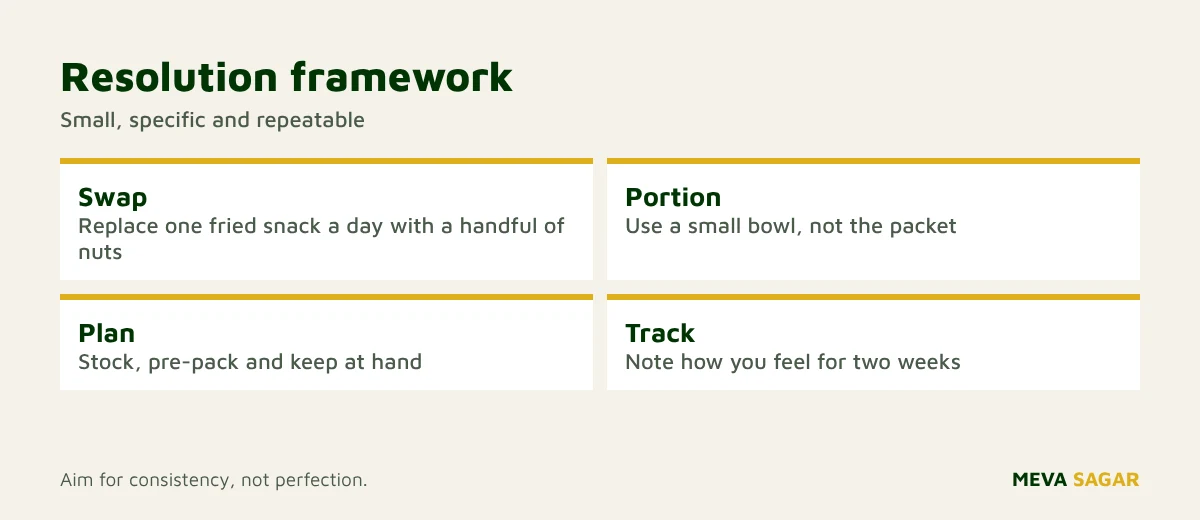
Quick answer: Make small, specific snacking resolutions: swap one fried or sugary snack a day for a 30 g handful of nuts or a few dates, pre-pack portions on Sunday, keep snacks where you need them, and review after two weeks. Aim for 80 percent consistency rather than perfection.
Why most resolutions fail
Big goals like "eat clean" or "no sugar ever" collapse when real life intrudes. They are vague, rely on willpower and create guilt after any slip. Behavioural research suggests that small, specific changes tied to existing routines are far more likely to last. A resolution to "have almonds with my 4 pm tea" is clearer and easier than "snack healthier". Build your plan from tiny steps you can do even on a bad day.
The core swaps
| Instead of | Try | Why |
|---|---|---|
| Fried namkeen | Roasted makhana or roasted almonds | Less oil, more protein |
| Biscuits with tea | Dates and walnuts | Fibre and healthy fat |
| Sweet mithai daily | Two dates with nuts | Natural sweetness |
| Chips at night | Trail mix in a small bowl | Satisfying crunch |
| Sugary cereal bar | Fruit and nut mix | Whole ingredients |
See dry fruit snacks under 200 calories for ready ideas.
Portion guide
A standard portion of nuts is about 30 g, roughly a small handful or 20 to 23 almonds. Dried fruit portions are around 30 to 40 g, such as two or three dates or a tablespoon of raisins. Use a small bowl instead of eating from the packet. See nut portion control and how many almonds per day.
A sample weekly plan
| Day | Mid-morning | Afternoon |
|---|---|---|
| Monday | Almonds (soaked) | Fruit and curd |
| Tuesday | Makhana | Dates and walnuts |
| Wednesday | Trail mix | Buttermilk and nuts |
| Thursday | Pistachios | Apple and almonds |
| Friday | Raisins and cashews | Roasted chana |
| Weekend | Free choice with one planned treat | Share a family snack plate |
Habit-building tips
- Anchor snacks to a routine: tea, a meeting, a commute.
- Prepare on Sunday: portion into small jars or bags.
- Keep snacks visible; hide temptations.
- Start with one change; add another after two weeks.
- Use a simple tracker or note on your phone.
- Forgive slip-ups and resume at the next meal.
Handling cravings and stress
Cravings often follow stress, boredom or tiredness rather than true hunger. Pause, drink water, walk for five minutes and then choose a planned snack. A date with a few almonds satisfies a sweet craving without the crash. If emotional eating is a persistent issue, consider speaking to a professional. See dry fruits for weight loss.
Special situations
If you have diabetes, kidney problems or allergies, personalise your plan with your doctor; see dry fruits for diabetes and nut allergy symptoms and safe swaps. For children, choose age-appropriate portions; see dry fruits for kids age-wise guide.
Shopping and storage
Stock a few staples: almonds, walnuts, makhana, dates and raisins. Buy modest quantities to keep them fresh, and store in airtight jars, with nuts in the fridge in warm weather. See how to store dry fruits and daily mix.
Reviewing your progress
After two weeks, reflect: Did you keep the habit? How was your energy? What got in the way? Adjust rather than abandon. Celebrate small wins, like a week of afternoon snacks without chips. Over months, these tiny shifts change your overall diet. For dietary guidance see the WHO healthy diet page and National Institute of Nutrition.
Beyond snacks
Snacking is only one part of health. Sleep, activity, hydration, stress management and regular meals matter too. Use dry fruits as a tool, not a cure, and pair them with vegetables, pulses, whole grains and movement. Small steps, repeated, are the real resolution.
Setting up your environment
Your surroundings shape your habits more than willpower does. At home, place a jar of nuts and a bowl of fruit on the counter and move biscuits and chips to a high shelf or out of sight. At work, keep a small airtight tin in your drawer with a portion of almonds, walnuts and raisins, so a late meeting or a long afternoon does not send you to the vending machine. When the healthy option is the easy option, it wins most of the time.
Prepare on a fixed day each week. Spend fifteen minutes portioning nuts and dried fruit into small containers or zip bags, label them if you like, and put them where you will reach for them. Include a few options so that you do not get bored: a salty-savoury mix, a sweet-fruity one and a plain handful of nuts. Having choices ready prevents the common slide towards whatever is closest.
Also think about drinks. Often a craving is thirst in disguise, so keep a water bottle on your desk and sip regularly. Herbal tea, buttermilk and coconut water are good alternatives to sugary drinks. These tiny adjustments to your environment make your resolution feel almost effortless.
Staying motivated through the year
Motivation naturally dips after the first few weeks, so plan for it. Choose a visible reminder, such as a note on the fridge or a calendar where you tick off each day you kept your snack habit. Tell a friend or colleague and invite them to join you, since shared goals are easier to sustain. Reward progress with something non-food, like a new book or a walk in a favourite park.
When you slip, treat it as information, not failure. Perhaps you skipped lunch and snacked too much in the evening, or perhaps a stressful week made the plan impractical. Adjust the plan to your reality instead of abandoning it. Revisit your goals every month, celebrate what has improved and add one new small step. Over a year, these gentle upgrades add up to a genuinely healthier relationship with food.
A closing thought
The best resolution is the one you can still keep in March. Choose one small snack swap, make it easy, track it kindly and build from there. A handful of nuts today is worth more than a perfect plan abandoned next week, and the confidence you gain from keeping small promises will carry into every other part of your health.
Frequently asked questions
What is a good snacking resolution?
Swap one fried or sugary snack a day for a handful of nuts.
How much nuts should I eat?
About 30 g a day for most adults.
How do I avoid overeating?
Portion into a small bowl and pre-pack.
Can dry fruits help weight loss?
In sensible portions, as part of a balanced diet.
What if I slip up?
Resume at the next meal without guilt.
How long to see results?
Habits form in weeks; benefits build over months.
The bottom line
Healthy snacking resolutions work when they are small, specific and repeatable. Swap one snack, portion it, plan ahead and keep going.