

Janmashtami celebrates the birth of Krishna at midnight, with fasting, bhajans, decorated shrines and a spread of sweets believed to be his favourites. It falls in the middle of the monsoon, a season of dampness and digestive sensitivity, so the right food choices matter. This guide to Janmashtami dry fruits explains how nuts, makhana, dates and seeds appear in panjiri, kheer and the fasting plate, how to prepare dhaniya panjiri and makhana kheer, how to keep dry fruits crisp in humid weather, how to break the fast gently, and how to share prasad safely. Customs vary across regions and families, so adapt as appropriate and consult a doctor before fasting if you have a medical condition.
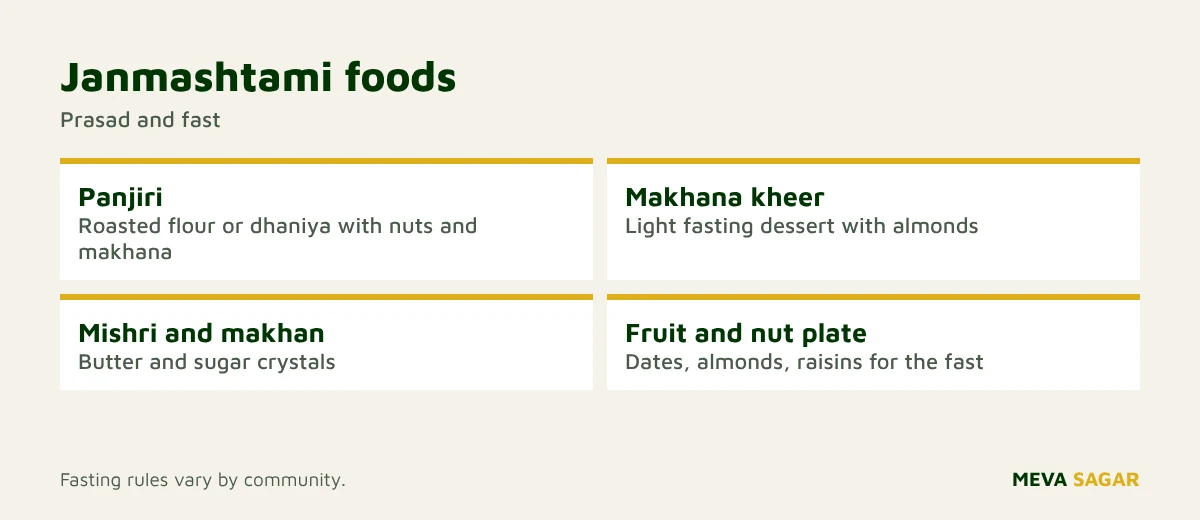
Quick answer: For Janmashtami, make panjiri with roasted flour or coriander powder, ghee, almonds, makhana and seeds, prepare makhana kheer, and keep a plate of dates, almonds and raisins for the fast. Store everything airtight in monsoon humidity and break the fast gently with fruit and light foods.
The festival and its foods
Janmashtami is celebrated with a day-long fast, ending after midnight prayers. Offerings include makhan mishri, panjiri, kheer, laddus and fruit, with many regions adding special items such as Mathura peda or Gujarati sweets. Dry fruits enrich panjiri and kheer, give energy during the fast and are easy to offer. Because the festival falls in August or September, humidity affects how foods are stored and prepared.
Dhaniya panjiri
| Ingredient | Quantity (serves 8) |
|---|---|
| Coriander (dhaniya) powder | 100 g |
| Ghee | 60 g |
| Powdered sugar | 60 g |
| Makhana, roasted and crushed | 40 g |
| Almonds and cashews, chopped | 50 g |
| Raisins | 2 tbsp |
| Melon seeds | 2 tbsp |
| Cardamom | 1/2 tsp |
Roast the coriander powder in ghee on low heat until fragrant, add makhana and nuts, cool, then mix in sugar and cardamom. Serve a spoonful as prasad. See makhana and almonds.
Makhana kheer
Roast makhana in ghee until crisp, crush half and simmer in milk until thick, add sugar and cardamom and garnish with almonds and raisins. It is light and filling, often accepted in fasts. See dry fruit kheer recipe and makhana benefits and how to eat. Cool before serving and store in the fridge.
The fasting plate
Many devotees eat fruit, nuts and milk during the day. A small plate of dates, almonds, walnuts and raisins is simple and sustaining. Soak almonds overnight, eat dates with water and include seasonal fruit. Drink plenty of fluids, especially in humid weather. Elderly people, children, pregnant women and those with diabetes or other conditions should consult a doctor; see dry fruits for diabetes.
Breaking the fast gently
- Water
Start with a glass of water. - Fruit and dates
Eat dates or a banana for quick energy. - Prasad
Take small portions of panjiri or kheer. - Wait
Pause for 20 to 30 minutes. - Meal
Eat a light, fresh meal. - Rest
Avoid heavy, oily food late at night.
Keeping dry fruits crisp in monsoon
Humidity softens makhana and nuts and encourages mould. Store in airtight jars with silica sachets, avoid opening them in the kitchen steam and refrigerate oily nuts. Re-crisp makhana by dry roasting. See how to store makhana so it stays crisp and how to store dry fruits.
Healthy swaps
- Reduce sugar in panjiri and kheer and use dates for sweetness.
- Roast rather than deep fry nuts.
- Serve small portions of sweets.
- Add seeds for fibre.
- Include fresh fruit on the plate.
- Use toned milk if you prefer.
Shopping list
For a home celebration: 100 g coriander powder, 250 g almonds, 100 g makhana, 100 g raisins, 100 g melon seeds, ghee, milk, sugar, dates and fruit. Buy sealed fresh packs and check packing dates and FSSAI details; see FSSAI. For decorating, add tulsi, flowers and a few butter pots.
Sharing prasad safely
Prasad is shared widely, so hygiene matters. Use clean hands and utensils, cover dishes and label allergens such as nuts. In humid weather, do not leave milk-based sweets out for long. Offer small portions and keep extras in the fridge. See nut allergy symptoms and safe swaps.
Community and tradition
Janmashtami is celebrated with great variety: dahi handi in Maharashtra, midnight aartis in Mathura and Vrindavan, and home shrines across the country. Every tradition has its own foods. Use dry fruits where they fit, and enjoy the togetherness. For nutrition guidance see the National Institute of Nutrition and the WHO healthy diet page.
Preparing for the midnight celebration
Janmashtami ends in a midnight celebration, so planning the evening carefully makes the vigil easier. Prepare the prasad earlier in the day, cover it and keep it in a cool place. Set out the puja items, flowers, tulsi leaves and a small cradle for the idol, and arrange the plates for offering. Keep a bowl of dates and a pot of water nearby for the devotees who are fasting and feeling the effects of a long day.
Think about children, who love the celebrations and often stay up late. Give them a simple snack of raisins, a few almonds, banana slices or a small date earlier in the evening so they are not tempted to fill up on sweets before the prasad. Let them help decorate the shrine or arrange the flowers, since involvement keeps them engaged and makes the festival a happy family memory.
Remember that midnight is also late for digestion. After the aarti and prasad, eat lightly and drink water before sleeping. Avoid large quantities of heavy sweets, and keep any leftovers in the fridge, since monsoon heat spoils milk-based sweets quickly. A little foresight turns a long day into a joyful and comfortable celebration.
Regional variations in prasad
Across India, Janmashtami foods vary widely. In Mathura and Vrindavan, peda, makhan mishri and panjiri are common. In Maharashtra, dahi handi events feature curd-based snacks and poha. In Gujarat, families prepare sweets like shrikhand and special farsan, and in the South, seedai, murukku and payasam are popular. Dry fruits appear in many of these dishes in different forms, from garnish to filling.
If you are planning prasad for a large group, choose items that hold well, such as panjiri, dry fruit laddus or roasted makhana, rather than perishable sweets. Pack in small portions so that sharing is easy and hygienic. Let local customs guide the details, and use dry fruits as a flexible, widely loved ingredient that adds richness and a sense of festivity to any plate.
A closing thought
Janmashtami is a festival of joy, devotion and playfulness. Keep the food simple, fresh and shared, let children enjoy the stories and songs, and use dry fruits to add richness to prasad without excess. A calm, well-prepared household makes the midnight celebration truly special for everyone involved, young and old alike.
Frequently asked questions
What is dhaniya panjiri?
A sweet made of roasted coriander powder, ghee, sugar and nuts.
Can I eat makhana during the fast?
Usually yes, but follow your tradition.
How do I keep makhana crisp?
Store airtight and re-roast if it softens.
How do I break the fast?
Gently, with water, fruit and small portions.
Who should avoid fasting?
Those with medical conditions should seek advice.
How long does panjiri keep?
About two weeks in an airtight jar.
The bottom line
Janmashtami dry fruits enrich panjiri, kheer and the fasting plate. Keep them dry in the monsoon, cut sugar where you can and break the fast gently.