
Makhana, or fox nut, has moved from fasting-day food to everyday healthy snack, and the market now offers many grades, colours and prices. Not all packs are equal: some are small and chewy, some are broken or stale, and some have been bleached or poorly dried. Knowing how to choose good makhana helps you get crunchy, fresh, evenly popped pieces for roasting, chaat, kheer or curries. This guide explains size grading by suta, colour and pop quality, texture and smell tests, sourcing from Bihar and Mithila, how to read the pack, what fair prices look like, how to spot damp or old stock and how to store makhana so it stays crisp for months.
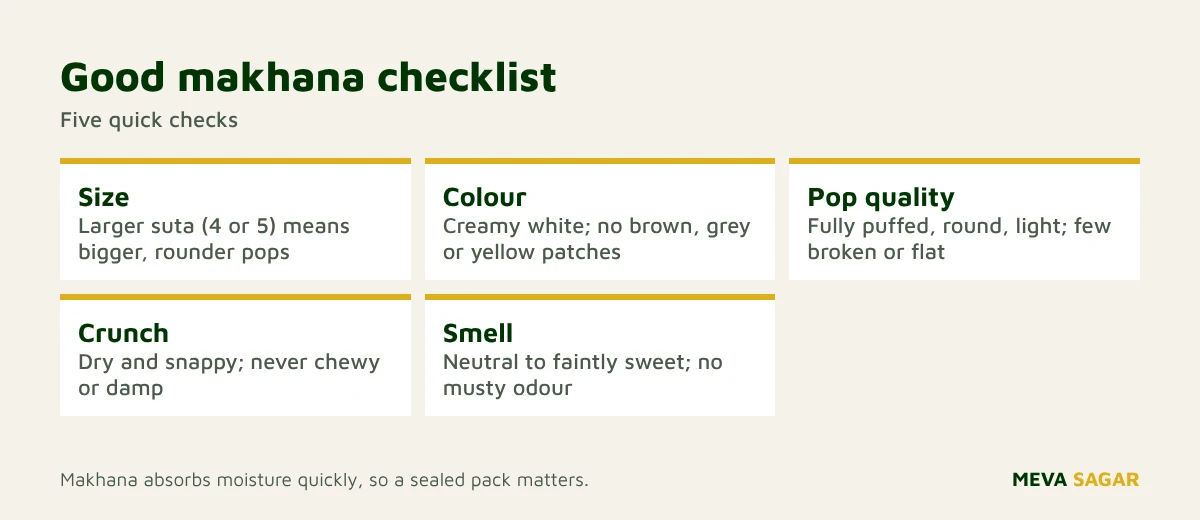
Quick answer: Choose creamy-white, round, fully popped makhana with a dry, snappy crunch and a neutral smell. Larger sizes such as 4 suta and 5 suta cost more but give bigger pops. Avoid brown, grey or yellow pieces, many broken bits, chewy texture or musty smell. Buy sealed, dated packs and store airtight, re-crisping in a dry pan if needed.
What makhana is and where it comes from
Makhana is the popped seed of the prickly water lily, Euryale ferox, grown in ponds in Bihar, especially the Mithila region, as well as Assam and parts of eastern India. Farmers dive to collect the seeds from pond beds, which are then sun-dried, roasted and popped by hand with a mallet, an old and labour-intensive process. This labour is why good makhana is not cheap. Bihar makhana has a geographical indication tag. See Euryale ferox for background and makhana benefits and how to roast for nutrition.
Understanding suta grades
| Grade | Typical size | Best for |
|---|---|---|
| 3 suta | Smaller, more irregular | Kheer, curries, roasting in bulk; see regular 3 suta |
| 4 suta | Medium, round | Everyday snacking; see premium 4 suta |
| 5 suta and above | Large, bright, even | Gifting, premium snacks; see jumbo 5 suta |
Suta refers to how pops are sorted by sieve size, and higher numbers mean bigger pops. There is no single legal standard, so sellers vary slightly. Compare actual pieces rather than only the label. See makhana grades 3, 4 and 5 suta explained.
Colour and appearance
Good makhana is creamy to bright white, round or slightly oval and smooth. A little colour variation is normal because different pops dry differently. Avoid brown, grey or yellow pieces, which may be old, poorly dried or damaged by moisture. Some sellers use bleaching or polishing agents to make makhana look whiter than natural, which can leave a chemical smell, so natural cream is safer than a brilliant, almost paper-white look. Dark specks are usually remnants of the seed coat and can be fine in small quantities.
The crunch and moisture test
Makhana is very porous and absorbs moisture from the air within hours. Fresh makhana is light and crisp and snaps easily when bent, with a clean, dry sound. If a piece bends or feels chewy, the pack has absorbed moisture or was poorly dried. Damp makhana can be re-crisped by dry roasting for a few minutes on low heat, but if it smells musty or shows mould, discard it. When buying in a shop, ask to feel a few pieces. Online, check reviews for complaints of chewiness or staleness.
Smell and taste
Fresh makhana smells neutral or faintly sweet, and tastes bland and slightly nutty when roasted plain. A sour, musty or stale smell signals old stock, damp storage or the start of mould. A chemical smell may suggest bleaching or poor processing. Roast a small handful in a dry pan with a little ghee: it should puff slightly and become crisp with a pleasant, toasty aroma. If it stays chewy or tastes off, the batch is poor quality.
Check the pop quality and broken pieces
- Mostly whole, round, fully puffed pops.
- Few flat, half-popped or broken pieces.
- Minimal dust at the bottom of the pack.
- Uniform size within the grade.
- No insect holes or webbing.
A few broken pieces are normal because makhana is delicate. Excess crumbs suggest rough handling or old stock. See insects in dry fruits.
Reading the pack and price
Look for a sealed pack, packing date, best-before date, FSSAI licence, net weight and clear grade or size. Vacuum or zip-lock packs keep makhana crisper. Compare price per 100 g for the same grade. Very cheap makhana is often small, broken or old, while very expensive may reflect packaging and branding more than quality. See dry fruits price per kg guide and reading dry fruit labels.
Plain or flavoured
Plain makhana is the most versatile: roast it yourself, add to kheer or curries, or make chaat. Ready-roasted and flavoured versions such as roasted salted makhana save time, but may contain more oil, salt and flavourings, and they have shorter shelf life. Check ingredients for palm oil, added sugar and preservatives. For recipes, see makhana chaat recipe and flavoured roasted makhana recipes.
Storing makhana
Store makhana in an airtight container away from humidity. Glass jars with tight lids work well, and a sachet of silica gel in humid weather helps. Do not put damp spoons in the jar. Properly stored, plain makhana stays crisp for three to six months. If it softens, spread it on a pan and dry roast for three to five minutes on low heat, then cool before storing. See how to store makhana crisp for more detail.
Health notes
Makhana is low in calories (about 100 calories per 30 g), low in fat, a source of protein and magnesium and gluten-free. It is a popular fasting food and a snack for people managing weight or blood sugar; see makhana vs popcorn and dry fruits for fasting. Nutrient data are available from USDA FoodData Central and the National Institute of Nutrition. Avoid eating large quantities of heavily salted or fried makhana.
Makhana for different recipes
For roasting and snacking, choose 4 or 5 suta, which gives large, crunchy pops that hold seasoning well. For kheer and sweets, 3 suta or broken pops are fine, because they soften in milk and cost less. For curries such as makhana matar, medium pops hold their shape. For chaat, large crisp pops give the best texture. When in doubt, buy a small pack of two grades and compare in your own kitchen before buying more. Roast with a teaspoon of ghee on low heat, stirring until they crackle softly.
Frequently asked questions
How do I know if makhana is fresh?
It is creamy white, dry and snappy, with a neutral smell, and has no musty or chemical odour.
Which makhana grade is best?
5 suta is the largest and best for gifting, 4 suta suits everyday snacking and 3 suta suits cooking.
Why is my makhana chewy?
It has absorbed moisture; dry roast it for a few minutes to re-crisp and store it airtight.
Is whiter makhana better?
Natural creamy white is fine. An unnaturally bright white may mean bleaching.
How long does makhana last?
About three to six months in an airtight container.
Is makhana healthy?
Yes, it is low in calories and fat, gluten-free and a modest source of protein, but avoid heavily salted or fried versions.
The bottom line
Knowing how to choose good makhana is mostly about size, colour, crunch and a dry, neutral smell. Buy sealed fresh packs of the grade that suits your use and store them airtight to keep them crisp.