A nut allergy is one of the most serious common food allergies, and in a country where dry fruits are woven into sweets, festivals and gifts, avoiding nuts takes real attention. Allergy to tree nuts such as almonds, cashews, walnuts and pistachios is different from peanut allergy, though many people react to both. Reactions can range from an itchy mouth to life-threatening anaphylaxis. This guide explains symptoms, how allergy differs from intolerance, where nuts hide in everyday foods, how to read labels, safe swaps, what to do in an emergency and why a proper diagnosis from a doctor or allergist matters. It is general information, not medical advice.
Quick answer: Nut allergy can cause itching, hives, swelling, vomiting, wheezing and, in severe cases, anaphylaxis, which is a medical emergency. Tree nuts and peanuts are different but often overlap. Read every label, ask about sweets and gifts, avoid cross-contact and see an allergist for testing and an emergency plan. Safe swaps include seeds such as pumpkin, sunflower and sesame, unless you are allergic to them too.
What is a nut allergy?
A food allergy occurs when the immune system reacts to proteins in a food as if they were harmful. Tree nuts include almonds, cashews, walnuts, pistachios, hazelnuts, pecans, macadamias, Brazil nuts and pine nuts. Peanuts are legumes, not nuts, but allergy to them is common and often coexists. See tree nut allergy. Many people allergic to one tree nut react to others, though some tolerate certain ones, which is why testing by an allergist is important. Allergy is different from intolerance, which causes digestive discomfort but is not life-threatening.
Symptoms: mild to severe
| Severity | Symptoms | What to do |
|---|---|---|
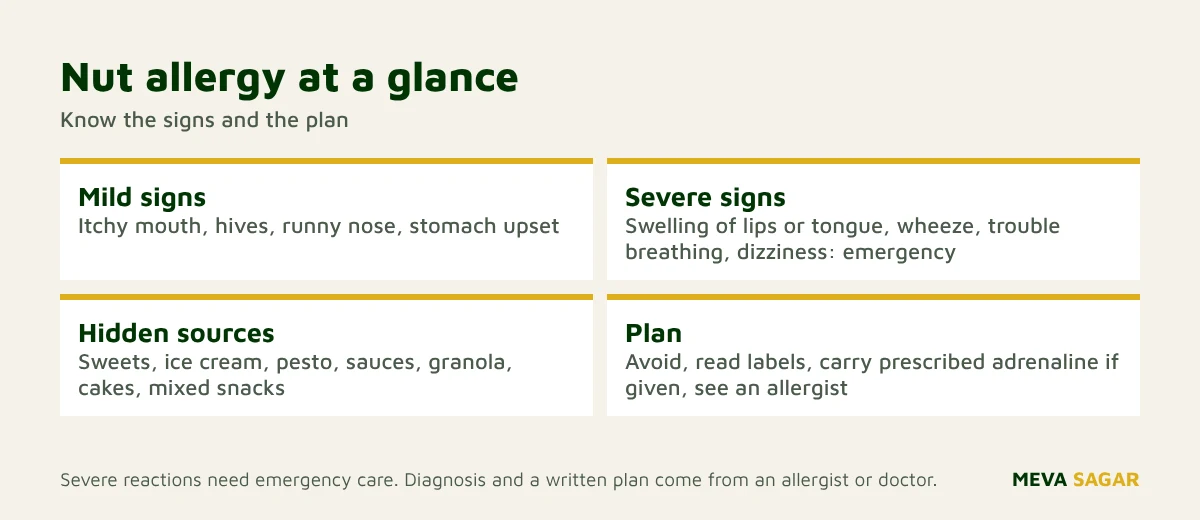
| Mild to moderate | Itchy or tingling mouth, hives, rash, runny nose, sneezing, stomach cramps, nausea | Stop eating; antihistamine if advised; watch closely; seek medical advice |
| Severe (anaphylaxis) | Swelling of lips, tongue or throat; difficulty breathing or wheeze; hoarse voice; dizziness or fainting; rapid pulse; pale or blue skin | Emergency: use prescribed adrenaline auto-injector if available and call emergency services immediately |
| Delayed signs | Eczema flare, vomiting hours later | Tell your doctor |
Symptoms usually start within minutes to two hours of eating. Anaphylaxis can progress very fast. If in doubt, treat as an emergency.
Diagnosis and the role of an allergist
Never self-diagnose a nut allergy or assume a mild reaction will stay mild. An allergist can use a history, skin prick tests, blood tests and sometimes supervised food challenges to confirm allergy and identify which nuts are involved. They can also provide a written emergency action plan, advise on adrenaline auto-injectors and discuss new treatments such as oral immunotherapy for peanuts in some settings. If you suspect an allergy in a child, do not test at home by feeding nuts; see a doctor first.
Hidden sources of nuts
| Food | Why nuts may be present |
|---|---|
| Indian sweets (barfi, halwa, laddu, kheer) | Cashew, almond, pistachio paste or garnish |
| Gravies (korma, shahi paneer, butter chicken) | Cashew or almond paste |
| Ice cream, kulfi and shakes | Nuts or nut-based flavours |
| Chocolate, biscuits, cakes and granola bars | Nuts or cross-contact in the factory |
| Pesto and sauces | Pine nuts, walnuts, cashews |
| Cereals, muesli and trail mixes | Mixed nuts |
| Marzipan, nougat and amaretti | Almond |
| Cosmetics and oils | Almond oil, nut oils (check with doctor) |
Restaurants and sweet shops often use the same utensils for nut and nut-free food. Always ask, and when in doubt, skip.
Reading labels in India
- Look for a clear allergen declaration such as contains: tree nuts, almond, cashew.
- Check for may contain traces of nuts or made in a facility that processes nuts.
- Know alternate names: kaju (cashew), badam (almond), akhrot (walnut), pista (pistachio), mungfali (peanut).
- Re-read labels every time; recipes change.
- Packs sold loose or without labels are risky.
- FSSAI rules require declaration of major allergens, but cross-contact can still occur.
See FSSAI for regulations and reading dry fruit pack labels for label basics.
Safe swaps for nuts
| Instead of | Try | Notes |
|---|---|---|
| Almonds or cashews as snack | Roasted chickpeas, makhana, pumpkin or sunflower seeds | Check you are not allergic to seeds; sesame is also a common allergen |
| Nut paste in gravies | Melon seeds (magaz), poppy seeds or onion-tomato base | Check each for allergy |
| Almond garnish on kheer | Pumpkin seeds or dried coconut slivers | Coconut is generally not a tree nut for allergy purposes, but ask your allergist |
| Trail mix | Seeds, raisins, makhana, dried fruit | Check for cross-contact |
| Nut butter | Sunflower seed butter | Check label |
Dried fruit such as raisins, dates, figs and apricots is not a nut, but may be packed alongside nuts. Choose sealed, nut-free-labelled packs where available.
Living with nut allergy: daily practices
- Carry your plan
Keep a written emergency action plan and prescribed medicine with you. - Tell others
Inform school, workplace, hosts and restaurants. - Avoid cross-contact
Use separate utensils and clean surfaces. - Check gifts and sweets
At festivals, ask what is in sweets before eating. - Teach children
Age-appropriate rules: never share food, always ask. - Review yearly
Allergies can change; see your allergist regularly.
Our nut-free families may prefer to buy raisins and dates as separate, clearly labelled packs. For everyone else, see dry fruits for kids for safe introduction of nuts.
Introducing nuts to babies
Current guidance from many paediatric bodies suggests that introducing peanut and other allergens early, around six months and when the baby is ready for solids, may lower allergy risk in infants, particularly if there is eczema or a family history of allergy. Introduce smooth nut butter thinned with water or breast milk or finely ground nuts, never whole nuts, and talk to your paediatrician first, especially if your baby has severe eczema or another food allergy. Whole nuts are a choking hazard for young children.
Myths and common mistakes
| Myth or mistake | Reality |
|---|---|
| A small amount is safe | Even traces can cause reactions in some people |
| Coconut is a nut and must be avoided | Usually treated differently, ask your allergist |
| Cooking removes allergens | Heat does not remove nut proteins |
| Antihistamines treat anaphylaxis | Adrenaline is the first-line treatment |
| Children always outgrow nut allergy | Most tree nut and peanut allergies persist |
Eating out, travelling and festivals with a nut allergy
Indian festivals revolve around sweets and gifts, many containing cashew, almond or pistachio. Ask hosts early and politely, explain that the allergy can be serious and offer to bring a safe dish. When you receive a gift box of sweets or dry fruits, do not assume it is safe for allergic family members; read the label or keep it separate. In restaurants, tell the server about the allergy when ordering, ask about nut pastes in gravies and about oils and shared fryers, and do not hesitate to choose a simpler dish.
When travelling, carry your emergency medicine, a copy of your action plan and a note in the local language if needed. Pack safe snacks such as roasted makhana and raisins in sealed packs so you are never forced to take a risk when hungry.
Nut-free dried fruit and makhana
Raisins, dates, figs and makhana; check labels for cross-contact.
Frequently asked questions
What are the symptoms of nut allergy?
Itchy mouth, hives, swelling, vomiting, wheezing and in severe cases difficulty breathing and collapse. Severe symptoms need emergency care.
Is tree nut allergy the same as peanut allergy?
No, but many people react to both. An allergist can test which you are allergic to.
Are dates and raisins safe for nut allergy?
They are not nuts, but they may be packed with nuts. Check for cross-contact warnings.
Can nut allergy be cured?
There is no general cure, though oral immunotherapy exists for peanut allergy in some settings. Most people manage by avoidance and a plan.
What should I do if I think someone is having a severe reaction?
Use their prescribed adrenaline auto-injector if available and call emergency services immediately.
Which seeds are safe swaps?
Pumpkin and sunflower seeds are common swaps, but check you are not allergic and watch for cross-contact. Sesame is a common allergen too.
The bottom line
Nut allergy requires attention, planning and calm: know the symptoms, read labels, ask about sweets and sauces, keep an emergency plan and see an allergist. With care, people with nut allergy eat well and live safely, and everyone around them can help by respecting the rules.