
Maha Shivratri, the great night of Shiva, is observed with fasting, night-long vigil, abhishek and prayers. Devotees eat phalahar, a diet of fruit, milk, nuts and permitted starches, and many drink thandai, a cooling spiced milk with almonds and pistachios. Dry fruits fit the day perfectly because they provide sustained energy without grains. This guide to Maha Shivratri dry fruits covers phalahar plates, thandai, makhana dishes, dates and figs for energy, how to stay hydrated and comfortable during the vigil, how to break the fast gently, and how to store dry fruits in the late-winter weather. Practices differ across regions, so follow your family's customs, and consult a doctor before fasting if you have a medical condition.
Quick answer: For Maha Shivratri, build phalahar plates with dates, almonds, walnuts, raisins and fruit, drink thandai made with soaked almonds, pistachios, fennel and cardamom, and use makhana for light snacks. Stay hydrated, avoid heavy fried foods and break the fast gently with fruit and a light meal.
Phalahar and dry fruits
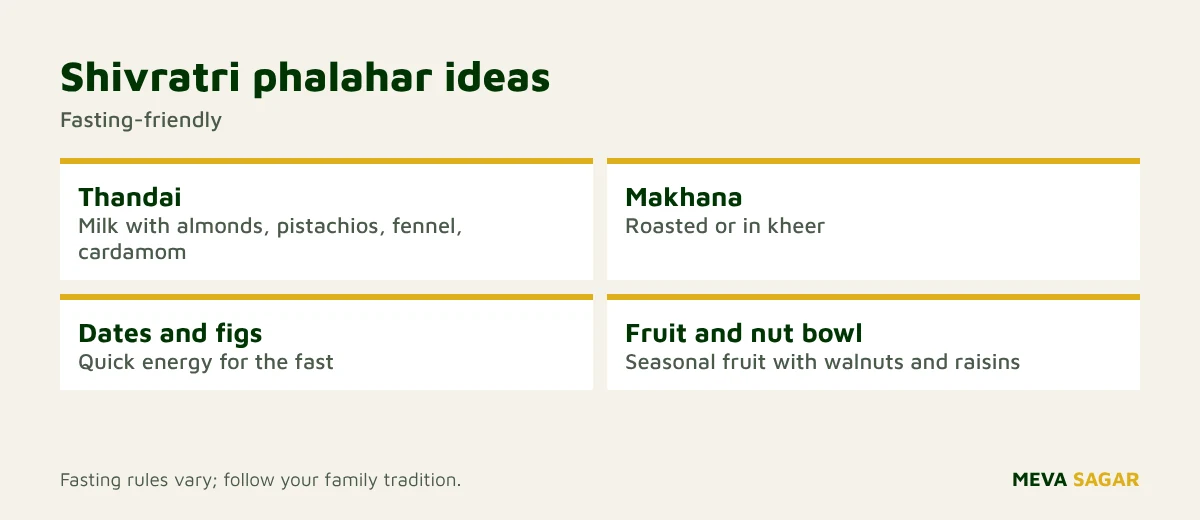
Phalahar means fruit-based food, eaten during fasts that exclude grains and often salt. Dry fruits are naturally permitted in most traditions and offer protein, healthy fats and minerals. They are also easy to carry to the temple. A mix of almonds, walnuts, raisins and dates makes a balanced snack. Choose plain, unsalted and unflavoured items, or use rock salt if your tradition allows.
Thandai
| Ingredient | Quantity (serves 4) |
|---|---|
| Almonds | 20, soaked |
| Pistachios | 2 tbsp |
| Melon seeds | 1 tbsp |
| Fennel seeds | 1 tbsp |
| Cardamom | 4 pods |
| Black pepper | 4 to 5 corns |
| Rose petals (dried) | 1 tbsp |
| Milk | 1 litre |
| Sugar or dates | To taste |
Grind the soaked nuts and spices with a little milk into a paste, strain, and mix into chilled milk with sweetener. Serve cold. See dry fruit milkshake and thandai recipe for variations. Keep the traditional preparation free of unsuitable additions.
Makhana snacks
Makhana is light, crunchy and permitted in many fasts. Roast in ghee with rock salt and pepper, or simmer in milk for kheer. See makhana benefits and how to eat and premium makhana. Store airtight so it stays crisp.
Staying energised through the vigil
Night-long vigils with a day of fasting can leave people tired and hungry. Eat a nourishing meal before the fast starts, with protein and fibre. During the day, sip water, coconut water or buttermilk, and eat small portions of nuts and fruit every few hours. Avoid caffeine and sugar overload. Rest in the afternoon if you can. People with diabetes, low blood pressure or pregnancy should consult a doctor; see dry fruits for diabetes.
Breaking the fast gently
- Water
Start with a glass of water or tender coconut water. - Dates
Eat one or two dates. - Fruit
Have a banana or papaya. - Light meal
Eat khichdi, curd rice or soup. - Avoid
Skip very spicy, fried or heavy foods at first. - Rest
Sleep well afterwards.
A note on bhang
Thandai on Shivratri is sometimes mixed with bhang in certain regions. Bhang is a cannabis preparation with strong effects, can interact with medications and is illegal in some contexts. This guide does not cover it. Enjoy plain thandai, which is delicious and safe for the whole family, and keep any such drinks away from children and anyone who has not knowingly consented.
Storage in late winter
Shivratri falls in February or March, when mornings are cool and afternoons warm. Store dry fruits in airtight jars away from heat, and keep thandai paste in the fridge for a day or two. Prepare nuts fresh each time. See how to store dry fruits.
Shopping list
For a household: 250 g almonds, 100 g pistachios, 100 g makhana, 250 g dates, 100 g raisins, fennel, cardamom, rose petals and milk. Buy sealed packs; check FSSAI details; see FSSAI. Choose plain, unsalted nuts.
Community and tradition
Temples often distribute prasad and thandai, and families host gatherings. Follow your temple and family customs for what to include. Keep hygiene high: clean utensils, covered dishes and washed hands. For nutrition guidance see the WHO healthy diet page and USDA FoodData Central.
Preparing for the night vigil
Maha Shivratri is a night of wakefulness, so planning food and rest in advance helps you stay comfortable. Eat a nourishing, balanced meal before sunset if your tradition allows, including protein and fibre. Keep a small container of dry fruits with you, a bottle of water and a light shawl for the cool night air. If you are visiting a temple, carry only what you need and check the rules on what may be taken inside.
Pace yourself through the night. Sip water regularly, take short breaks from standing, and eat a few nuts or a date every couple of hours instead of waiting until you are very hungry. This keeps blood sugar steady and helps avoid headaches and dizziness. If you feel unwell, rest and seek help; the festival is about devotion, not endurance for its own sake.
For households hosting a gathering, prepare simple refreshments in advance. A pot of thandai kept cold, bowls of makhana, a plate of fruit and a tray of dates and almonds are enough. Guests will appreciate light, wholesome food that does not break their fast rules, and you will avoid being stuck in the kitchen all night.
Making thandai ahead
Thandai paste can be prepared a day ahead and stored in the fridge, which saves time on the festival day. Soak the almonds overnight, grind them with the spices and a little milk into a smooth paste, and keep it covered. When ready to serve, mix a few tablespoons of paste into chilled milk, sweeten as desired and strain if you like a silky texture. Serve cold with a garnish of chopped pistachios and rose petals.
For a lighter version, use low-fat milk and sweeten with dates instead of sugar, blending a couple of soaked dates into the paste. Increase fennel and cardamom for a refreshing aroma, and reduce the nuts if you are watching calories. Always taste before adding more sweetener, since dates and milk are already naturally sweet. A well-made glass of thandai is cooling, filling and a perfect companion to the long night.
A closing thought
Shivratri asks for discipline, reflection and gratitude. Support your body with simple, wholesome food, listen to its signals, and do not push through illness for the sake of the fast. Plain dry fruits, thandai and makhana can carry you through the night, while prayer, rest and good company fill the rest. Plan ahead, stay hydrated and keep the festival peaceful and safe for the whole family.
Share what you prepare with neighbours, elders and the temple community, and keep hygiene high when handling prasad for a crowd. A small, thoughtful offering made with care is always worth more than an elaborate spread prepared in a hurry.
Frequently asked questions
Which dry fruits suit a Shivratri fast?
Almonds, walnuts, raisins, dates and makhana, subject to your tradition.
What goes into thandai?
Almonds, pistachios, fennel, cardamom, pepper and milk.
How do I break the fast?
Gently, with water, dates, fruit and a light meal.
Can diabetics fast?
Seek medical advice first.
Is makhana allowed?
Often yes; check your family custom.
How do I store thandai paste?
In the fridge for a day or two.
The bottom line
Maha Shivratri dry fruits power the fast with thandai, makhana and phalahar plates. Keep them plain, stay hydrated and break the fast gently.