Nuts are among the healthiest snacks, but they are also among the easiest to overeat. A handful becomes two, then a bowl, and suddenly several hundred calories have disappeared while you were watching a show. The solution is not to avoid nuts but to build habits that make the right amount automatic. This guide to nut portion control explains how much to eat, how to measure without a scale, why nuts are so easy to overeat, and the mindful eating techniques, packaging tricks and environment changes that help. It also covers emotional eating, parties and travel, and what to do on the days that do not go to plan.
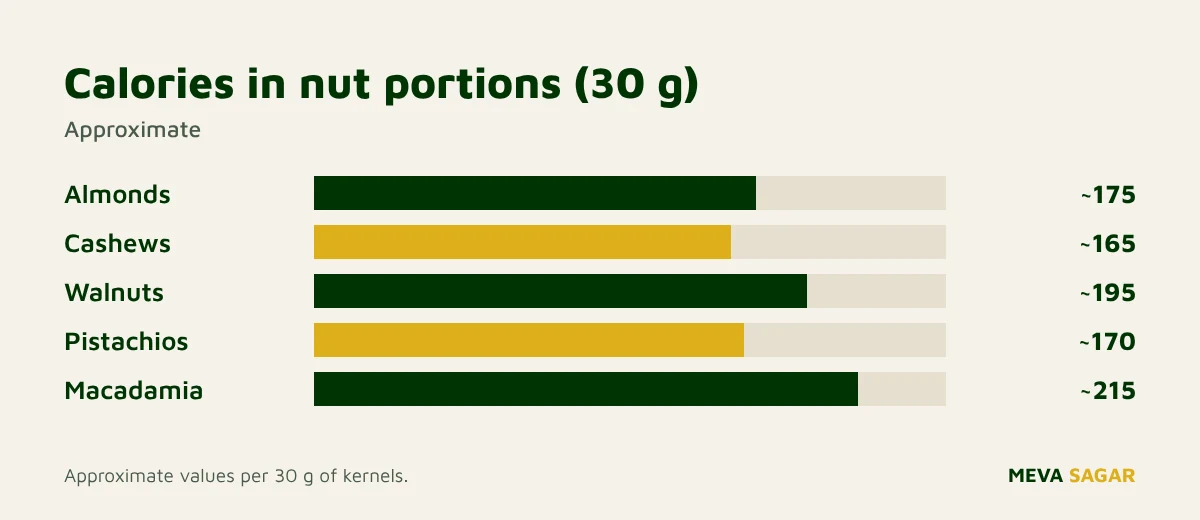
Quick answer: A standard portion is about 30 g, or roughly a small handful: 23 almonds, 18 cashews or 14 walnut halves, around 165 to 195 calories. Pre-portion into small containers, eat at a table without screens, choose in-shell nuts and pair with fruit or curd. Small, planned portions give the benefits without extra calories.
How much is a portion
| Nut | 30 g portion | Approx calories |
|---|---|---|
| Almonds | 23 nuts | ~175 |
| Cashews | 18 nuts | ~165 |
| Walnuts | 14 halves | ~195 |
| Pistachios | 49 kernels | ~170 |
| Peanuts | 28 nuts | ~170 |
| Hazelnuts | 21 nuts | ~180 |
| Macadamia | 10 to 12 nuts | ~215 |
Many guidelines suggest about 30 g of nuts a day. See USDA FoodData Central for values and how many dry fruits per day.
Why nuts are easy to overeat
Nuts are small, crunchy, salty or sweet and calorie dense, which makes them easy to eat quickly without registering fullness. Eating from a large bowl or packet hides how much you have had. Distraction from phones or TV reduces awareness. Flavoured and roasted nuts are designed to be moreish. Knowing these traps helps you set up an environment that works with your habits rather than against them.
Ways to measure
- Weigh 30 g on a kitchen scale once and see how it looks in your palm.
- Use a small cup or 1/4 cup measure.
- Count: 10 almonds, 5 cashews, 3 to 4 walnut halves for a light snack.
- Portion a week of snacks into small containers on Sunday.
- Buy snack-size packs when you cannot control a big one.
Mindful eating techniques
- Sit down
Eat at a table, not on the sofa. - Look first
Notice the colour and shape. - Chew slowly
Chew each nut well and put them down between bites. - Pause midway
Ask whether you are still hungry. - Finish and close
Seal the container and put it away.
Research on mindful eating suggests that attention to hunger and fullness cues reduces overeating, though the effects are modest. Apply it to snacks you enjoy.
Set up your environment
Keep the large pack in a high cupboard or the freezer, and a small jar on the counter. Avoid keeping nuts in your car or on your desk in open bowls. Choose in-shell nuts such as pistachios and walnuts, which take time and show how many you have eaten. Make fruit and vegetables more visible. If you buy in bulk, divide immediately. Unsalted in-shell pistachios are a good slow-eating option.
Pair nuts with other foods
A small portion of nuts with an apple, a bowl of curd, cut vegetables or a cup of tea is more filling than nuts alone, and the total calories are still moderate. Adding nuts to oats, salads or curd also spreads them thinly, so you taste them without eating a large amount. See dry fruit snacks under 200 calories for combinations.
Emotional and stress snacking
If you eat nuts when stressed, bored or tired, pausing for five minutes and asking what you need can break the pattern. A walk, a glass of water, a call to a friend or a short rest may help more than food. Do not punish yourself after overeating; return to your usual routine at the next meal. If you feel out of control around food or very distressed, speak to a doctor or counsellor.
Parties, travel and festivals
At parties, fill a small plate rather than standing next to the bowl. On trips, carry your own portioned packs. During festivals, enjoy traditional dry fruit sweets and gift boxes, but share them and put leftovers away. Planning allows enjoyment without guilt. See dry fruit gift box ideas for sharing ideas.
When more is fine
Active people, growing teenagers and those who need extra calories, such as during recovery or pregnancy, may need larger portions. Athletes may eat two or three portions across the day. In these cases, the principle still applies: plan portions and combine with other foods. Ask a doctor or dietitian if you are unsure.
Choosing plain nuts
Plain, unsalted nuts keep portions meaningful: salted and flavoured versions make it hard to stop. Choose almonds, walnuts and cashews and portion them yourself. For general guidance, see the WHO healthy diet page.
Building a weekly routine
On Sunday, set out seven small containers and fill each with a measured portion of nuts, adding a few raisins or seeds if you like. Place the containers in the fridge or a cool cupboard, and label them by day. Decide when you will eat each one, such as mid-morning or after lunch, so that it replaces a less nutritious snack rather than adding to it. At the end of the week, notice how you felt, whether the portions were enough and whether you needed to adjust. Small experiments teach you more than strict rules.
Reading hunger and fullness
Before reaching for nuts, ask yourself whether you are physically hungry, with a rumbling stomach or low energy, or whether you want to eat for another reason. Rate hunger on a scale of one to ten and aim to eat at around three to four, stopping at six or seven. After a portion of nuts and water, wait ten minutes before deciding whether you need more. Fat and protein take time to signal fullness, so the feeling often arrives after you have finished. This pause alone prevents a lot of overeating.
Nuts in the context of the whole diet
Portion control works best within a balanced diet that includes vegetables, pulses, whole grains, fruit and enough protein. If your meals are too light, you will crave snacks, and portion rules will feel punishing. Eat regular meals, sleep well and stay active. Nuts then become one pleasant part of a healthy pattern, not a battleground. For broader guidance, see the WHO healthy diet page and the National Institute of Nutrition.
A quick self-check
At the end of each day, spend one minute noting how many portions of nuts you ate, how hungry you were and how you felt afterwards. After two weeks you will see patterns, such as overeating when tired or when working late. Use the notes to adjust your routine, by moving a snack earlier or adding more protein at lunch.
Frequently asked questions
What is a portion of nuts?
About 30 g, a small handful or 23 almonds.
How do I stop eating too many nuts?
Pre-portion, remove the large pack and eat mindfully.
Are in-shell nuts better for portion control?
Yes, they slow you down and show how many you ate.
Is it bad to eat 50 g of nuts a day?
Not necessarily, but it adds about 300 calories; adjust other food.
Can I eat nuts every day?
Yes, a daily portion is beneficial for most people.
Do roasted nuts have more calories?
Slightly, if oil is used; salted ones are also easier to overeat.
The bottom line
Nut portion control is about habits: measure about 30 g, pre-portion, eat mindfully and pair with other foods. You keep the benefits of nuts without the unplanned calories.