
The soaked almonds benefits that people repeat are partly true and partly myth. Soaking makes almonds soft, easy to chew and easy to peel, and it may slightly reduce phytic acid, a compound that binds minerals. It does not magically multiply nutrients, and raw or roasted almonds are just as nutritious in most respects. Whether you soak is mostly about texture, digestion and habit. This guide explains what soaking really changes, who benefits most, how to soak safely and how many almonds to eat.
Quick answer: Soaking almonds overnight softens them and may slightly reduce phytic acid, but vitamin E, fibre, protein and calories change very little. It helps people who find raw almonds hard to chew or digest, including children and older adults. Eat 5 to 10 soaked almonds a day, soak 8 to 12 hours in clean water, and discard the water. Raw almonds are fine if you do not want to soak.
What soaking does
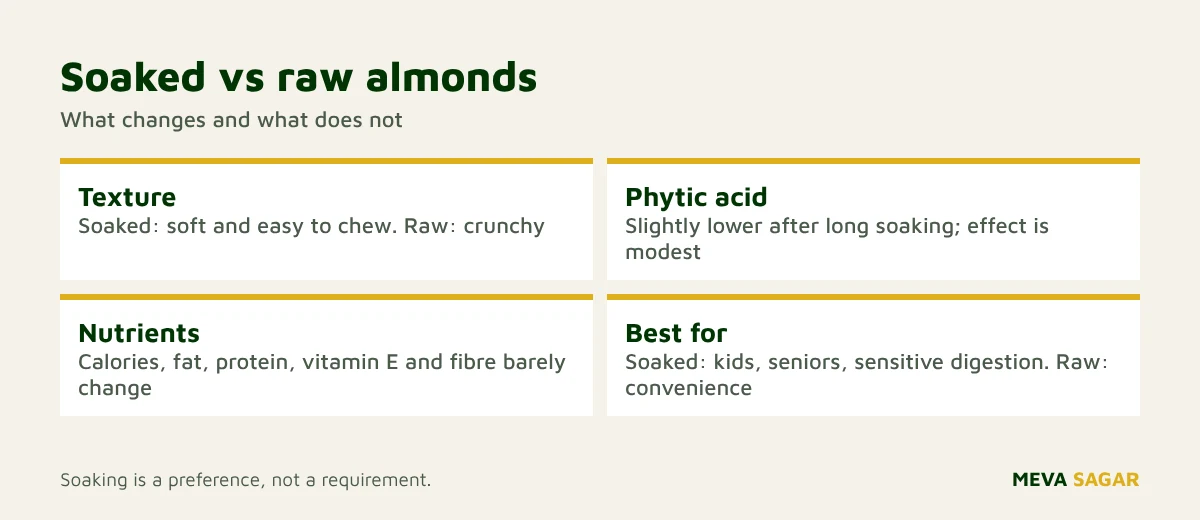
When almonds sit in water, they absorb moisture, soften and swell. The brown skin loosens so it can be peeled easily. Enzymes inside the almond become more active, and small amounts of water-soluble compounds, including some phytic acid, leach into the water. For the full picture of almond nutrition, see benefits of almonds.
| Property | Raw almond | Soaked almond |
|---|---|---|
| Texture | Hard, crunchy | Soft, chewy |
| Skin | Tight | Easy to peel |
| Phytic acid | Higher | Slightly lower after long soak |
| Protein, fat, vitamin E | Same | Almost the same |
| Calories per almond | ~7 kcal | ~7 kcal (more water, same nutrients) |
| Shelf life | Months | Eat within a day, keep in fridge |
Nutrient values are from USDA FoodData Central.
Phytic acid: how much does soaking matter?
Phytic acid is a natural compound in nuts, seeds and grains that binds to minerals like iron, zinc and calcium and can reduce their absorption. Studies suggest soaking reduces phytic acid only modestly, and it does so more in grains and pulses than in almonds. For most people eating a balanced diet, this is not a concern, because phytic acid also has antioxidant properties. If your diet is low in iron or zinc, pairing almonds with vitamin C foods and eating a variety of foods matter more than soaking.
Do soaked almonds help digestion?
Many people find soaked almonds gentler because they are softer and easier to chew, which makes digestion simpler. For some people, the skin can be irritating, so peeling helps. However, almonds are high in fibre and fat, so too many can cause bloating regardless of soaking. Start with 4 to 5 and increase slowly. Drink water with almonds. See also dry fruits on an empty stomach.
Should you peel soaked almonds?
| Option | Pros | Cons |
|---|---|---|
| Eat with skin | More fibre and polyphenols; saves time | Slightly tannic taste; can be harder to digest for some |
| Peel the skin | Smooth, mild taste; easier to chew and digest for some | Loses some fibre and antioxidants |
The skin contains polyphenols and fibre, so peeling is optional. Peel if you or your child prefer the texture or have a sensitive stomach.
How to soak almonds safely
- Rinse
Rinse almonds in clean water. - Soak
Cover with clean drinking water and soak for 8 to 12 hours, or overnight. - Drain and rinse
Throw away the soaking water. - Peel if you like
Pinch the skin and it slips off. - Eat or store
Eat the same day, or refrigerate in an airtight container and use within 24 hours.
In hot weather, soak in the refrigerator to avoid bacterial growth. Never reuse the soaking water. See which dry fruits to soak.
How many soaked almonds per day?
| Person | Suggested amount |
|---|---|
| Healthy adult | 5 to 10 almonds |
| Child (age appropriate) | 2 to 5, peeled and chopped for young children |
| Older adult | 5 to 8 soaked, peeled |
| Weight-conscious | 5 to 6, as part of total nut portion |
Soaked almonds count towards your total nut portion of about 30 g a day. Avoid giving whole almonds to toddlers because of choking risk.
Soaked vs raw vs roasted
| Type | Best for | Note |
|---|---|---|
| Soaked | Soft texture, kids, seniors, breakfast | Eat promptly |
| Raw | Convenience, travelling | Crunchy; slightly harder to digest for some |
| Dry-roasted | Flavour, snacking | Check for oil and salt |
| Honey roasted or flavoured | Occasional treats | Added sugar and salt |
See raw vs roasted vs salted nuts for details. For the almonds themselves, browse California almonds and Mamra almonds.
Who should be careful
- People with a tree nut allergy should avoid almonds entirely. See tree nut allergy.
- Those with a history of kidney stones may need to limit high-oxalate foods; ask your doctor. See oxalic acid.
- Anyone with chewing or swallowing difficulty should choose peeled, soft or ground almonds.
- Do not leave soaked almonds out for long, as bacteria can grow.
- Count almonds as part of your daily calories.
Myths and common mistakes
| Myth or mistake | Reality |
|---|---|
| Soaked almonds are far more nutritious | The nutrient difference is small |
| You must peel the skin | Peeling is optional |
| More almonds mean more benefit | A small handful is enough |
| Soaking water is nutritious | Discard it |
| Soaked almonds keep for days | Eat within a day, or refrigerate |
Who gets the most from soaking
Soaking is most useful for children, older adults and people with dental problems, because softer almonds are easier to chew and swallow. It also helps people who find raw almonds heavy or who get a scratchy feeling in the throat from the skin. For busy people, soaking is a simple morning routine that takes thirty seconds the night before, and it builds a habit of eating almonds regularly.
On the other hand, if you enjoy the crunch of raw almonds and have no digestive issues, there is no need to change. For travel, a handful of raw almonds is more practical than a container of soaked ones. Whichever you choose, the most important thing is the portion and the consistency: a small handful most days, not a large amount occasionally.
Almond ideas beyond soaking
Soaked almonds blend into smooth almond paste for milkshakes, thandai and halwa, and peeled almonds are the base of traditional badam milk. Sliced almonds toast quickly in a dry pan for salads and desserts. Blanched almonds, which have already had their skin removed, save you the peeling step. See blanched almonds and sliced almonds if you cook often with almonds. For a drink idea, read dry fruit milkshake and thandai.
Fresh almonds for soaking
California, Mamra, Gurbandi and blanched almonds, packed fresh.
Frequently asked questions
What are the benefits of soaked almonds?
They are softer, easier to chew and peel and may be easier to digest for some people. The core nutrition is similar to raw almonds.
Do I have to soak almonds?
No. Raw or roasted almonds are nutritious. Soaking is a matter of preference and digestion.
How long should I soak almonds?
Soak for 8 to 12 hours, or overnight, in clean water, and discard the water afterwards.
How many soaked almonds should I eat a day?
About 5 to 10 for most adults, within a total of around 30 g of nuts a day.
Should I peel soaked almonds?
It is optional. The skin has fibre and polyphenols, but peeling can make them gentler on digestion.
Can I store soaked almonds?
Keep them in an airtight container in the fridge and eat within 24 hours. Do not leave them out in warm weather.
The bottom line
The soaked almonds benefits are mostly about softness and ease of digestion, not hidden super-nutrition. Soak overnight if you like them that way, peel if you prefer, eat a small handful and enjoy raw or roasted almonds on other days.


