A woman nutritional needs shift across life, from growing teens and monthly periods to pregnancy, breastfeeding and menopause, so there is no single list of dry fruits for women. What is true across all stages is that nuts and dried fruits are an easy way to add iron, calcium, magnesium, fibre and healthy fats to Indian meals, where iron-deficiency anaemia and low calcium intake are common. This guide walks through each stage, suggests dry fruits and portions, explains what they can and cannot do, and tells you when to see a doctor rather than rely on food alone.
Quick answer: Teens and women with periods benefit from iron-rich raisins, figs and cashews with vitamin C. In pregnancy, dates, almonds, walnuts and apricots add energy, fibre and folate, but supplements and medical advice come first. After childbirth, nuts, dates and makhana add calories and minerals. After menopause, almonds, walnuts, prunes and figs support bone and heart health. Keep to about 30 g of nuts a day.
Why women have distinct needs
Women lose iron through menstruation, need extra folate, iron and calcium during pregnancy, and face faster bone loss after menopause. Indian surveys show high rates of anaemia among women and adolescent girls. See the WHO fact sheet on anaemia. Dry fruits cannot replace iron tablets or folic acid when a doctor prescribes them, but they contribute to daily intake and make healthy snacking easier. Nutrient values here come from USDA FoodData Central.
Teens and adolescent girls
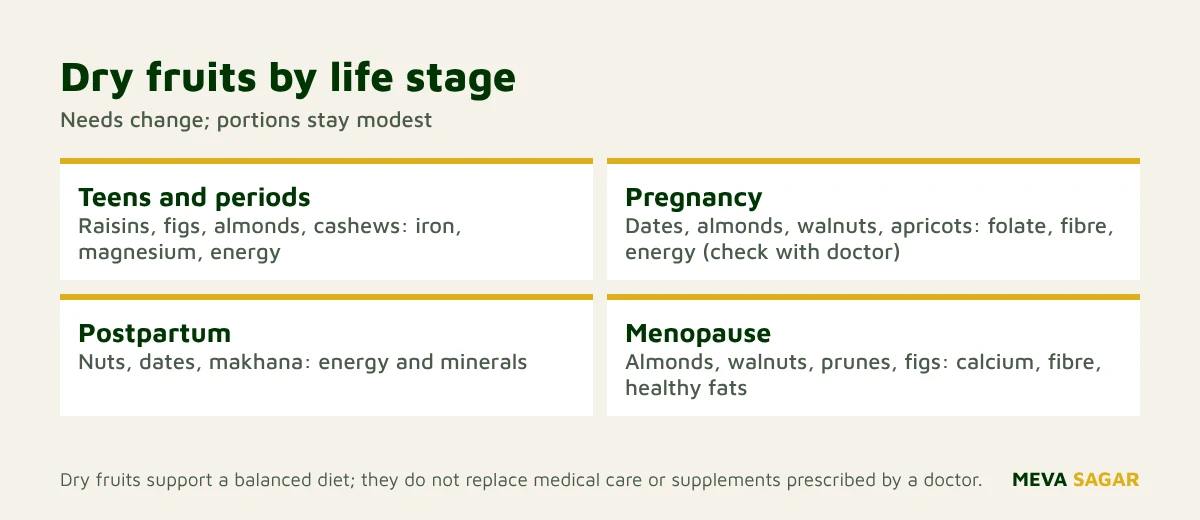
Growth spurts and the start of periods raise needs for iron, calcium and protein. Teens often skip breakfast and snack on chips and biscuits. A small box of almonds, raisins and cashews, or a date with a few nuts, is a better choice. Pair iron sources like raisins and figs with vitamin C, such as an orange or amla, to improve absorption. See dry fruits for iron and dry fruits for students. Offer a small handful, around 20 to 30 g, and encourage regular meals.
Periods and heavy bleeding
During periods, iron loss and cramps can leave you tired. Magnesium-rich nuts, such as almonds and cashews, and iron-rich foods, such as raisins, figs, dates, dal and green leafy vegetables, help. Avoid a diet of sugary snacks that cause energy crashes. If periods are very heavy, last more than seven days, or you feel dizzy, breathless or constantly exhausted, see a doctor and ask for a haemoglobin test. Food alone will not correct anaemia that has medical causes. See NIH on iron.
Pregnancy
| Dry fruit | Why it can help | Notes |
|---|---|---|
| Dates | Energy, fibre, potassium | Keep to 2 to 3 a day; watch blood sugar |
| Almonds | Protein, magnesium, vitamin E | About 6 to 10 a day |
| Walnuts | ALA omega-3 | 4 to 5 halves |
| Dried apricots | Iron, fibre, vitamin A precursors | Small portion; check sulphur label |
| Figs and prunes | Fibre for constipation | 1 to 3 pieces |
| Raisins | Iron, potassium | Small handful |
Folic acid supplements are essential before and during early pregnancy; dry fruits contribute only a little folate. Always follow your doctor advice. See dry fruits during pregnancy, and check the NIH folate fact sheet. Avoid papaya in unripe form and ask about any unusual herbal or concentrated products.
After childbirth and during breastfeeding
Nursing mothers need extra calories, fluids and nutrients. Traditional postpartum foods such as panjiri, laddus and dink or gond preparations use ghee, nuts and dried fruits and can be nourishing, though they are often very rich. A moderate version with almonds, walnuts, dates and makhana provides energy and minerals without too much sugar. Drink plenty of water and eat regular meals. See dry fruits for breastfeeding mothers and panjiri recipe.
Perimenopause and menopause
| Concern | Dry fruit help | Notes |
|---|---|---|
| Bone loss | Almonds, figs, prunes (small trials on prunes) | Calcium, vitamin D and exercise matter most. See calcium reality check |
| Heart health | Walnuts, almonds, pistachios | Replace fried snacks |
| Weight changes | Measured nut portions | Calorie-dense; keep to 30 g |
| Digestion | Figs, prunes, apricots | Fibre with water |
| Hot flashes and mood | No dry fruit cure | Talk to a doctor about options |
See menopause for background. A doctor can discuss bone density testing and treatment options.
PCOS, thyroid and other conditions
Conditions such as PCOS and thyroid disease have specific dietary considerations. Nuts are often recommended in small portions because of their fibre and healthy fats, while concentrated sugar from dried fruit should be limited if insulin resistance is a concern. Your doctor or dietitian can tailor advice. See dry fruits for PCOS and dry fruits for thyroid.
A simple daily plan
- Breakfast
Oats or besan chilla with 6 almonds and a few raisins. - Mid-morning
An orange and 10 cashews or a date with a walnut half. - Lunch
Dal, vegetables, roti and curd; add a spoon of seeds. - Evening
2 soaked figs or apricots and tea. - Dinner
Balanced meal; a few nuts in the gravy.
Keep nuts near 30 g a day and dried fruit to one small handful. See how many dry fruits per day.
Cautions and when to see a doctor
- Heavy or irregular periods, constant fatigue or dizziness need medical evaluation.
- Pregnancy: follow your doctor advice and take prescribed supplements.
- Tree nut allergy: avoid nuts. See tree nut allergy.
- Gestational or other diabetes: limit dried fruit sugar.
- Unexplained weight change, hair loss or mood changes need checking.
Iron absorption tips for women
Iron from plants, called non-haem iron, is absorbed less well than iron from meat, fish and eggs, but you can boost absorption with a few kitchen habits. Eat iron-rich foods such as raisins, figs, dal and leafy greens together with vitamin C sources like lemon, amla, guava, orange or tomato. Avoid drinking tea or coffee with meals, because tannins reduce absorption; keep them an hour or two apart. Cooking in an iron pan can add a little iron to food. Soaking and sprouting pulses reduces phytates that bind iron.
Dry fruits help most as part of this pattern, for example raisins with an orange after lunch or a fig with a glass of lemon water. If a test shows low haemoglobin or ferritin, your doctor will recommend a supplement and a dose; food then supports but does not replace treatment.
Eating well on a busy schedule
Women often juggle work, family and care for others and skip their own meals. A small box of almonds, raisins and cashews in your bag, a couple of dates in your drawer and a bottle of water make it easier to eat something nourishing when you have no time. Plan a weekly stock so you do not rely on biscuits. If you cook for the family, add a spoon of chopped nuts to a dish everyone eats, so you all benefit. Small habits repeated daily matter more than a perfect diet.
Nutritious snacks for every stage
Almonds, dates, figs, raisins and mixes, packed fresh.
Frequently asked questions
Which dry fruits are best for women?
Almonds, walnuts, dates, figs, raisins and apricots are useful across life stages for iron, fibre, healthy fats and energy. The best mix depends on age and needs.
How many dry fruits should a woman eat daily?
About 30 g of nuts and one small handful of dried fruit is a common portion.
Do dry fruits help anaemia?
They add some iron, but cannot treat anaemia alone. Get a blood test and follow your doctor advice.
Are dry fruits safe in pregnancy?
Yes in normal food amounts if you have no allergy. Follow your doctor advice on supplements and any limits.
Which dry fruits help after menopause?
Almonds, walnuts, prunes and figs support bone, heart and digestive health as part of a balanced diet.
Can dry fruits reduce period pain?
Magnesium-rich nuts may help some people, but evidence is limited. See a doctor for severe pain.
The bottom line
Dry fruits for women work best when matched to the life stage: iron and energy in the teens and periods, folate and fibre in pregnancy, calories after birth, calcium and heart support after menopause. Keep portions modest, pair with a balanced diet and ask a doctor when symptoms need more than food.