

Exam season often means late nights, endless tea and packets of biscuits, so dry fruits for students is a topic worth getting right. A small box of mixed nuts and dried fruit is an ideal study snack: portable, mess-free, filling and rich in nutrients linked with brain function, such as omega-3, vitamin E, magnesium and zinc. But they are not a magic memory pill, and the fundamentals of sleep, hydration and regular meals matter far more. This guide shows how to use dry fruits for steady energy and focus, what to avoid, how much to eat and how to plan snacks for study days and exam mornings.
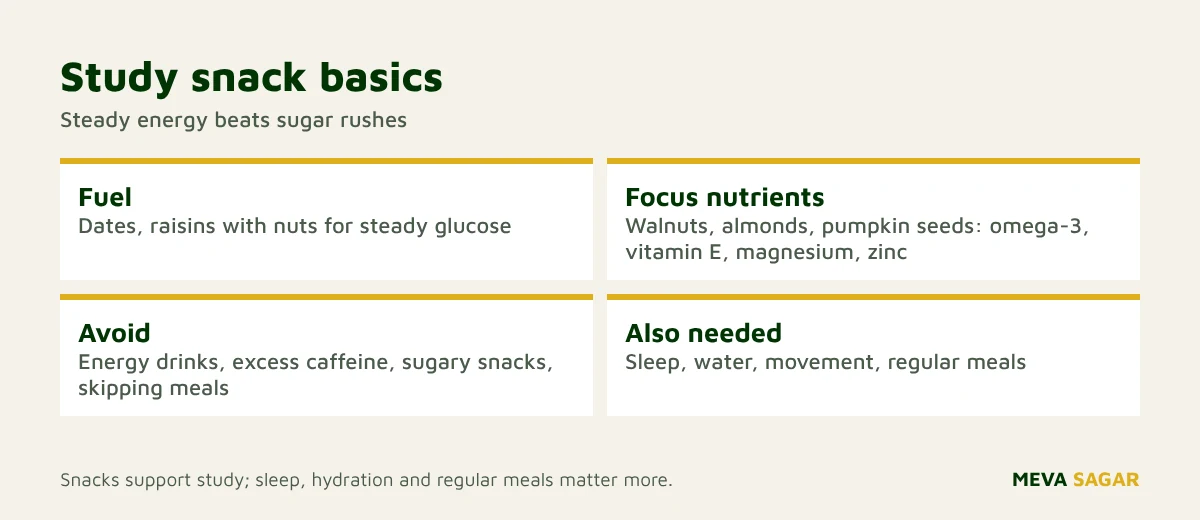
Quick answer: Keep a small box with 20 to 30 g of mixed nuts and a few raisins or a date for study breaks. Pair with fruit, water and regular meals. Avoid energy drinks, too much caffeine and sugary snacks that cause crashes. No food boosts memory dramatically; sleep, hydration and spaced study matter most. On exam day, eat a light breakfast and carry a small snack.
How food affects studying
The brain runs on glucose and needs a steady supply. Skipping meals and eating sugary snacks cause swings that feel like sluggishness, headaches and poor concentration. Meals with protein, fibre and healthy fats release energy more slowly. Dehydration, even mild, reduces attention. Caffeine can help alertness in moderation but ruins sleep if taken late. The WHO healthy diet guidance for fruit, nuts and whole grains applies fully to students. See dry fruits for the brain for what the research shows.
Best dry fruits for study snacks
| Dry fruit | Why it helps | Portion |
|---|---|---|
| Almonds | Protein, vitamin E, magnesium; keep you full | 6 to 10 |
| Walnuts | ALA omega-3 and polyphenols | 4 to 5 halves |
| Pistachios | In-shell slows eating; potassium | A small handful |
| Dates | Quick, natural energy | 1 to 2 |
| Raisins | Light, sweet, iron | 1 tablespoon |
| Cashews | Zinc, magnesium, soft and easy | 10 to 12 |
| Pumpkin seeds | Zinc and magnesium | 1 tablespoon |
Values from USDA FoodData Central. Our trail mix and berry and nut mix come ready to portion.
Study-day eating plan
- Breakfast
Oats or eggs with a few almonds and a date. - Mid-morning break
Fruit and 8 to 10 cashews, water. - Lunch
Balanced meal: dal, vegetables, roti or rice, curd. - Afternoon slump
4 walnut halves and a date instead of tea and biscuits. - Evening
Light dinner; no heavy meal right before bed. - Late-night study
Small snack, such as a few almonds and a banana; avoid energy drinks.
Drink water regularly, aiming for six to eight glasses a day.
Exam-day tips
- Eat a familiar breakfast at least an hour before: oats, eggs or idli with a few nuts.
- Carry a small box of almonds and a date for after the exam.
- Avoid trying new foods or large amounts of caffeine on the day.
- Sip water; avoid big drinks just before entering the hall.
- Do not skip meals; low blood sugar hampers recall.
- Get a full night of sleep; cramming all night undoes the benefit of any snack.
Nerves can reduce appetite. If you cannot eat, take a banana or a few dates.
Caffeine, energy drinks and sugar
Many students rely on coffee, tea or energy drinks. Moderate caffeine, up to about 200 to 300 mg a day for adults (two to three cups of coffee), is considered safe for most healthy people, but it disturbs sleep if taken in the afternoon and evening. Energy drinks combine high caffeine with sugar and are not recommended for teenagers. Sugary snacks give a short boost then a crash. Replace some with nuts, fruit and water. See dry fruits for stress and mood.
Sleep and memory
Sleep consolidates memory, so trading sleep for extra study hours often backfires. Aim for seven to nine hours. If you study late, finish with something light and avoid screens in bed. A small bedtime snack, such as a few walnuts and a date, is fine, but large meals disturb sleep. See dry fruits for sleep.
Portions and cautions
- Nuts are calorie-dense; keep to 30 g a day and avoid eating from a large bag while studying.
- Choose unsalted and unsweetened options.
- Tree nut allergy: avoid nuts; ask a doctor for safe alternatives. See tree nut allergy.
- Share carefully; do not give nuts to roommates without checking allergies.
- Wash hands before eating and keep snacks in sealed containers to avoid pests in hostels.
See how many dry fruits per day.
Myths and common mistakes
| Myth or mistake | Reality |
|---|---|
| Almonds boost memory overnight | There is no quick effect; steady nutrition and sleep help |
| Skipping meals saves time | It hurts concentration |
| Energy drinks are better than snacks | They add caffeine and sugar; not recommended for teens |
| Eating a lot before the exam is best | A light, familiar meal is better |
| Dry fruits replace sleep | Nothing replaces sleep |
Hostel and PG snacking tips
Living away from home often means irregular meals, instant noodles and chips. A sealed container of mixed nuts and a pack of dates, kept in a closed locker, give you an alternative when the mess is closed. Buy small packs to avoid stale or insect-infested stock in humid rooms, and store them away from heat. Share with friends and agree not to snack from the same bag while studying, which leads to overeating. Add fruit from the local market for vitamin C, and keep a water bottle on your desk.
If you have limited budget, buy broken cashew pieces, raisins and peanuts rather than premium nuts; they have similar nutrition for less. Our cashew pieces and daily mix are pocket-friendly choices.
Managing exam stress with food and habits
Exam stress can tighten the stomach and kill appetite, or send you straight to the biscuit tin. Aim for three regular meals and one or two planned snacks, so hunger does not hit at the worst moment. Take a short walk between study blocks, breathe slowly for a minute and talk to a friend or family member if you feel overwhelmed. If anxiety is severe or you have trouble sleeping for weeks, speak to a counsellor or doctor. Good support makes more difference than any snack.
Quick answers
In short: keep a small box of nuts and dates at your desk, eat regular meals, drink water, avoid energy drinks and protect your sleep. These simple habits support steady focus through a long exam season far better than any single food or supplement.
Study snacks, packed fresh
Trail mix, almonds, walnuts, dates and raisins for desks and bags.
Frequently asked questions
Which dry fruits are best for students?
Almonds, walnuts, dates, raisins, cashews and pistachios make good study snacks in small portions.
Do dry fruits improve memory?
They provide nutrients involved in brain health, but there is no quick memory boost. Sleep, study habits and overall diet matter more.
How many nuts should a student eat?
About 30 g a day, which is a small handful.
What should I eat before an exam?
A light, familiar breakfast, such as oats or eggs with a few nuts, an hour or two before.
Are energy drinks safe for students?
They are high in caffeine and sugar and not recommended for teenagers. Water, fruit and nuts are better.
Can dry fruits help me stay awake?
They give steady energy, but they will not replace sleep. Avoid late-night overeating.
The bottom line
Dry fruits for students are a simple, portable way to keep energy steady during long study hours. Keep a small box handy, pair with water and fruit, avoid energy drinks and sugar crashes, and protect your sleep, which does more for memory than any snack.