

"What happens if I eat dry fruits every day for a month?" is one of the most common questions people ask. Social media promises glowing skin, rapid weight loss and boundless energy, but the real picture is quieter and more interesting. This guide to eating dry fruits daily for 30 days sets out what research and nutrition science suggest might change, such as digestion, cholesterol, satiety and diet quality, what probably will not, a week-by-week plan, signs you may be eating too much, who should be cautious and how to track your own response. It aims to give honest expectations so you can enjoy the habit without disappointment.
Quick answer: Eating about 30 g of mixed nuts and a small portion of dried fruit daily for a month may improve fibre intake, help some people feel fuller, modestly lower LDL cholesterol and improve diet quality, but will not transform weight, skin or energy on its own. Start small, drink water, measure portions and watch for digestive upset or allergy.
What research suggests
Trials and large observational studies link regular nut intake with lower LDL cholesterol, better blood vessel function and reduced risk of heart disease over years. Over four weeks, changes are small but measurable in some people, especially if nuts replace less healthy snacks. Dried fruit adds fibre and potassium; prunes, in particular, help regularity. These effects depend on what you eat the rest of the day. For overview data, see USDA FoodData Central and the WHO healthy diet page.
What may change in 30 days
| Area | Likely effect | Strength of evidence |
|---|---|---|
| Digestion | More fibre may improve regularity; some bloating at first | Moderate |
| Fullness | Fewer cravings if nuts replace refined snacks | Moderate |
| Cholesterol | Small LDL decrease possible | Moderate |
| Weight | Little change; could drop or rise depending on the rest of your diet | Mixed |
| Energy | Steadier energy if replacing sugary snacks | Anecdotal |
| Skin and hair | No proven change in a month | Weak |
| Mood and sleep | Unclear; magnesium and healthy fats help diet quality | Weak |
Be sceptical of dramatic claims, and judge by how you feel and any routine check-ups.
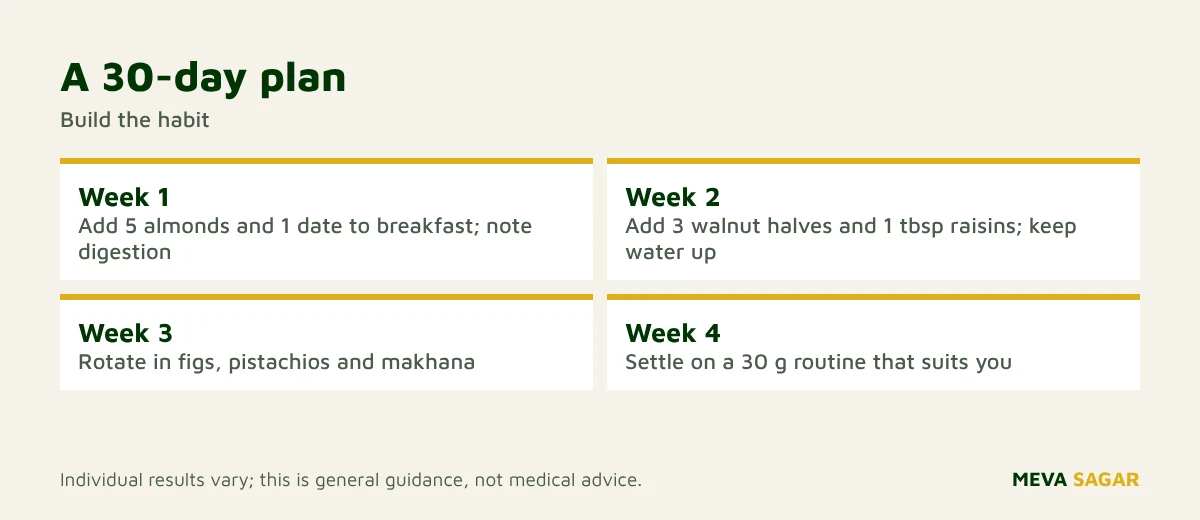
Week-by-week plan
- Week 1
Add 5 almonds and one date to breakfast. Drink extra water. - Week 2
Add 3 walnut halves and a tablespoon of raisins. Note digestion. - Week 3
Rotate in figs, pistachios and makhana for variety. - Week 4
Settle on a routine of about 30 g of nuts and a small portion of dried fruit.
See how many dry fruits per day.
Digestion and getting started
A sudden jump in fibre can cause gas or loose stools. Build up gradually, drink more water and avoid eating a large amount of dried fruit at once. Prunes, figs and raisins are natural laxatives, so too many can cause diarrhoea. Soaking nuts may help some people. If you have irritable bowel syndrome or a sensitive gut, introduce one new food at a time. See dry fruits for gut health.
Weight and calories
Nuts and dried fruit are calorie dense. Adding 250 calories a day to an unchanged diet could add roughly 0.25 kg a week, or 1 kg a month. But studies find that people who eat nuts often do not gain weight, because they compensate by eating less elsewhere and because some calories are not fully absorbed. To be safe, replace other snacks with dry fruits rather than adding them. See dry fruit snacks under 200 calories.
Signs you may be eating too much
- Persistent bloating or loose stools.
- Weight gain you did not intend.
- Feeling queasy or heavy after snacks.
- Dental problems from sticky fruit.
- Rash, itching or swelling, which may signal an allergy, so stop and seek medical help.
Who should be cautious
People with nut allergy should avoid nuts. Those with diabetes should monitor dried fruit; see dry fruits for diabetes. People with kidney disease should check potassium and phosphorus; see dry fruits for kidney disease. Those on blood thinners should keep vitamin K intake consistent. If you have a medical condition, talk to your doctor before making a large change.
How to track your experiment
Note your starting weight, waist, energy and digestion, and write short notes each week. If you have recent blood tests, repeat cholesterol and glucose after a few months, not weeks, for a meaningful comparison. Do not change medicines on your own. Keep the rest of your lifestyle, such as sleep, exercise and other food, as steady as possible so you can see the effect of the habit.
Making it a long-term habit
The real benefit of a month is the habit. Pick a time, such as breakfast or mid-afternoon, keep a jar visible, rotate varieties and buy in manageable quantities. Prepare weekly portions. If you miss a day, simply continue. A modest daily portion for years matters more than a perfect month. See how to store dry fruits to keep supplies fresh.
What to buy for the month
A month at 30 g of nuts plus a small dried fruit portion needs roughly 1 kg in total. Mix almonds, walnuts, pistachios, dates and figs. Or choose a ready daily mix. For label checks, see FSSAI.
Real-life examples of daily routines
One person adds five almonds and two walnut halves to oats each morning and keeps a date for the afternoon. Another carries a small tin with a handful of mixed nuts and raisins to work and eats it at four, in place of biscuits. A third has a glass of almond and date milk every night. The common thread is a fixed time, a measured amount and a replaced snack. Choose the pattern that suits your schedule. If you travel, pack single-serve bags so the routine continues. If you forget, do not double the next day; simply resume.
Other habits that matter more
No single food decides your health. Sleep, activity, vegetables, whole grains, pulses and avoiding tobacco matter greatly. Use dry fruits as one thread in a larger pattern, and review your overall diet rather than looking for a miracle. If you want to know whether your intake is balanced, a registered dietitian can look at your whole day. For a general reference, the National Institute of Nutrition provides dietary guidelines for Indians.
After the month
At the end of 30 days, review how you feel and what you enjoyed. Keep the portions and varieties that worked, drop those that did not and fix a longer-term pattern. Some people do best with nuts most days and dried fruit three or four times a week. Others prefer a rotating plan across the week. Revisit your routine every few months, since needs change with age, activity and health.
Frequently asked questions
What happens if I eat dry fruits every day?
You may get more fibre and nutrients and feel fuller, but dramatic changes are unlikely.
How much should I eat daily?
About 30 g of nuts and a small portion of dried fruit.
Will I gain weight?
Not if they replace other snacks and portions are measured.
Can I eat dry fruits daily if I have diabetes?
Often yes in small amounts, but consult your doctor.
Does it improve skin in a month?
There is no strong evidence for a visible change in 30 days.
What if I get bloated?
Reduce the portion, soak nuts and drink more water.
The bottom line
Eating dry fruits daily for a month can modestly improve fibre intake, fullness and diet quality. Start gradually, measure portions, watch for digestive or allergy signs and treat it as a long-term habit.