Polycystic ovary syndrome affects a large share of Indian women, and many ask about dry fruits for PCOS. Insulin resistance is common in PCOS, which means that diet quality and total carbohydrate matter. Nuts, with their fibre, healthy fats and low glycaemic load, generally fit a PCOS-friendly diet, while dried fruits are concentrated sugar and need smaller portions and pairing with protein or fat. This guide explains the logic, lists helpful choices, provides portions and a sample day, and stresses that a doctor or dietitian should guide a personal plan for PCOS, since there is no single PCOS diet.
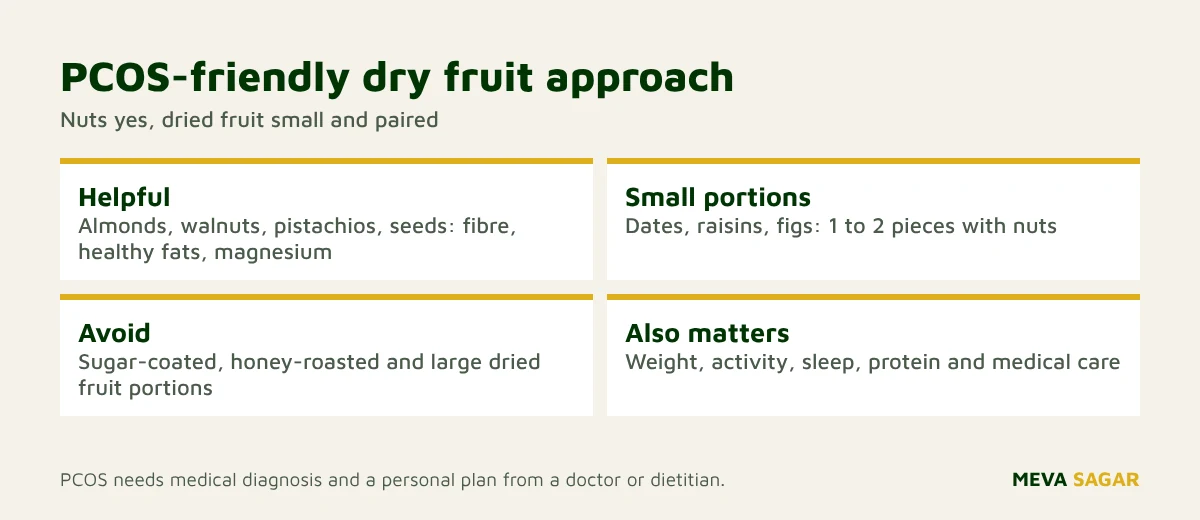
Quick answer: Nuts such as almonds, walnuts and pistachios, about 30 g a day, fit a PCOS diet well because of fibre, fats and low glycaemic load. Dried fruit is concentrated sugar, so keep to 1 or 2 pieces, paired with nuts. Avoid sweetened and coated products. Weight, activity, sleep and medical care matter more than any single food. See a doctor for diagnosis and a personal plan.
PCOS and diet basics
Polycystic ovary syndrome is a hormonal condition that can cause irregular periods, excess androgen effects such as acne and unwanted hair, and ovarian cysts. Many women also have insulin resistance and a tendency to gain weight around the middle. Evidence-based approaches include healthy weight management if overweight, regular physical activity, a diet with plenty of fibre and low glycaemic load, and medicines when needed. The WHO healthy diet guidelines apply: more whole foods, fewer refined carbohydrates and sugary drinks.
How nuts help
| Nut | Why it fits | Portion |
|---|---|---|
| Almonds | Fibre, magnesium, healthy fats; studies show better insulin response | 6 to 10 |
| Walnuts | Omega-3, polyphenols | 4 to 5 halves |
| Pistachios | Fibre, protein; in-shell slows eating | A small handful |
| Cashews | Zinc, magnesium; slightly higher carbohydrate | 10 to 12 |
| Seeds (pumpkin, flax, chia) | Fibre, zinc, omega-3 | 1 tablespoon |
Nuts have a low glycaemic load and keep you full. Magnesium-rich foods are also linked with better insulin sensitivity. See dry fruits rich in magnesium and benefits of almonds. Nutrient values from USDA FoodData Central.
Dried fruit and sugar
Dried fruits such as dates, raisins and figs are concentrated in natural sugar and can raise blood glucose quickly. For women with insulin resistance, a better approach is a very small portion, one date or a teaspoon of raisins, paired with nuts. Avoid candied fruit, coated cranberries and fruit mixes with added sugar. Fresh whole fruit such as apple, pear, berries and guava is often a better everyday choice. See dry fruits for diabetes for related guidance.
A PCOS-friendly day with dry fruits
- Breakfast
Besan chilla or eggs with vegetables; a few almonds. - Mid-morning
An apple and 10 pistachios. - Lunch
Dal, vegetables, a small portion of roti or millet, curd. - Evening
4 walnut halves and a few seeds. - Dinner
Protein-rich meal with plenty of vegetables. - Sweet craving
1 date with a walnut half after a meal.
Keep nuts near 30 g a day. See how many dry fruits per day.
Foods and habits that matter more
| Habit | Why |
|---|---|
| Regular activity (150 minutes a week or more) | Improves insulin sensitivity and weight |
| Whole grains, millets and pulses instead of refined flour and white rice | Lower glycaemic load |
| Protein at every meal | Fullness and steadier glucose |
| Cut sugary drinks and sweets | Reduces insulin spikes |
| Sleep 7 to 9 hours | Poor sleep worsens insulin resistance |
| Stress management | Cortisol affects appetite and hormones |
A weight loss of even 5 percent can improve cycles and symptoms in women with overweight. Aim for gradual change.
Medical care and supplements
- A doctor can diagnose PCOS and rule out thyroid and other causes.
- Medicines such as metformin or hormonal treatments may be prescribed; follow your doctor advice.
- Vitamin D, inositol and other supplements are widely marketed; ask your doctor before using them.
- If trying to conceive, discuss folic acid and a preconception plan.
- Do not stop prescribed medicine for natural remedies.
Mental health matters too: PCOS is linked with anxiety and low mood. See dry fruits for stress and mood and seek support if you need it.
Cautions
- Nuts are calorie-dense; weigh portions if weight is a goal.
- Choose unsalted, unsweetened nuts.
- Tree nut allergy: avoid nuts. See tree nut allergy.
- Do not follow extreme diets; they can worsen hormones.
- If you have diabetes or take blood-sugar medicines, check with your doctor before big diet changes.
Myths and common mistakes
| Myth or mistake | Reality |
|---|---|
| Dry fruits cure PCOS | No food cures PCOS |
| All nuts are bad for weight in PCOS | Moderate portions help fullness and glucose control |
| Dates are free because they are natural | They raise glucose; keep to small portions |
| A single PCOS diet fits all | Plans should be personal |
| Cutting all carbohydrate is best | Aim for quality and portion, not elimination |
Understanding insulin, glycaemic load and cravings
Insulin is the hormone that moves glucose from the blood into cells. In insulin resistance, the body needs more insulin to do the same job, and high insulin levels can push the ovaries to make more androgens, which worsens acne, hair growth and irregular cycles. Eating patterns that avoid big, fast rises in glucose therefore make sense. Glycaemic load combines how quickly a food raises glucose with how much carbohydrate a serving contains. Almonds and walnuts have a very low glycaemic load, while dates and raisins have a higher one per gram, which is why portion size matters so much for dried fruit.
Cravings are common in PCOS, partly because of blood sugar swings and partly because of poor sleep and stress. Planning helps. Eat regular meals with protein, so you are not hungry by evening. Keep a small box of nuts ready for the moment when a craving hits, and pair any sweet item with protein or fat. A few almonds with half a banana, or a walnut half with a date, causes a gentler glucose rise than the fruit alone.
Many women also worry about weight on the scale. Focus on waist size, energy, cycle regularity and lab results with your doctor, rather than only weight. Strength training twice a week builds muscle, which uses glucose and improves insulin sensitivity. Walking after meals for ten to fifteen minutes is a simple habit that lowers post-meal glucose. Small, repeatable steps work better than strict diets that collapse after two weeks.
When you shop, read labels and avoid mixes that contain sugar-coated fruit, candied peel or flavoured nuts with added sugar. Buy plain, unsalted nuts and add your own small portion of dried fruit, so you control the sugar.
Everyday nuts, packed fresh
Almonds, walnuts, pistachios and cashews in 250, 500 and 1000 g.
Frequently asked questions
Are dry fruits good for PCOS?
Nuts are generally helpful in about 30 g a day. Dried fruits are concentrated sugar and should be small portions paired with nuts.
Which nuts are best for PCOS?
Almonds, walnuts and pistachios are popular because of fibre, healthy fats and magnesium.
Can I eat dates with PCOS?
One date with nuts occasionally may fit. Avoid large portions, especially on an empty stomach.
How many nuts a day for PCOS?
About 30 g, a small handful, within your calorie needs.
Do dry fruits help irregular periods?
No food fixes irregular periods alone. Healthy weight, activity and medical care matter more.
Should I see a doctor for PCOS?
Yes. A doctor can diagnose PCOS and recommend treatment and a plan suited to you.
The bottom line
Dry fruits for PCOS work best as a handful of nuts and a very small amount of dried fruit, within a diet of whole foods, regular activity and medical care. Choose unsweetened options, measure portions and let your doctor or dietitian shape a plan for you.