
From the creamy cashew paste in a restaurant-style gravy to the golden raisins in a festive pulao, dry fruits are woven into Indian cooking. They add richness, sweetness, texture and colour, often replacing cream or sugar. This guide to dry fruits in Indian cooking explains the classic uses, how to prepare pastes and garnishes, how much to use for four people, healthier swaps for cream, ways to stretch expensive nuts, and storage and cooking mistakes to avoid. Whether you are making everyday dal or festive sweets, a few well-chosen nuts and fruits can lift a dish without much effort.
Quick answer: Use 10 to 15 cashews soaked and ground to thicken a gravy for four, 1 tablespoon of raisins in pulao, a handful of chopped almonds in halwa and a few pistachios for garnish. Soak nuts for 15 to 30 minutes in warm water before grinding, fry briefly in ghee for garnish, and add dried fruit late to avoid burning.
Cashews in gravies
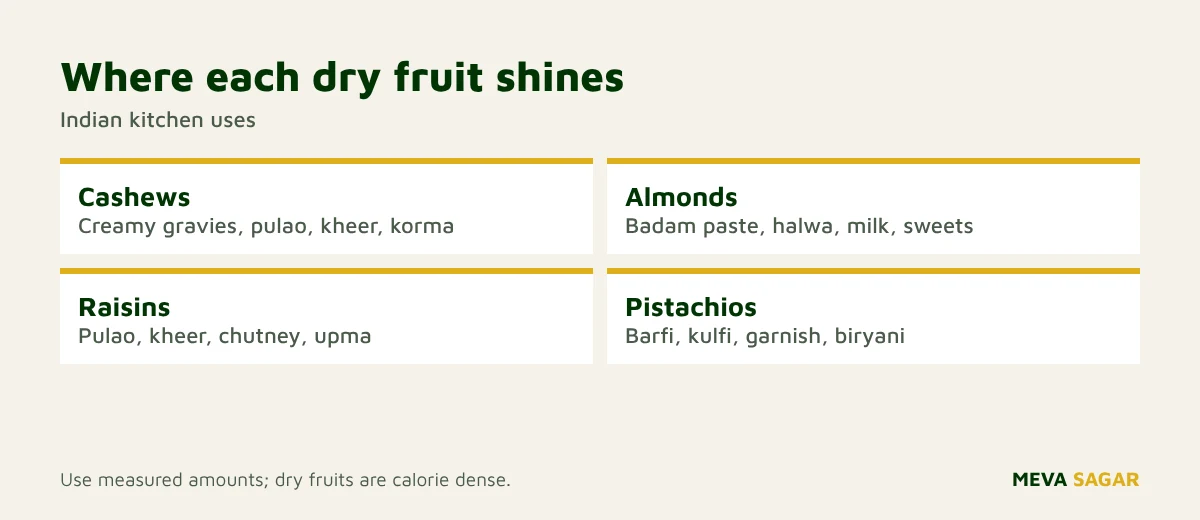
Cashew paste gives butter chicken, korma, shahi paneer and kofta sauces their silky body. Soak 10 to 15 cashews in warm water for 20 minutes, grind with a splash of water until smooth and add near the end of cooking. Cashew paste replaces cream and thickens without flour. Broken cashews are ideal here, saving money; see cashew pieces and cashew splits. The paste adds calories, so use measured amounts.
Rice dishes: pulao, biryani and kheer
| Dish | Dry fruit | Quantity (serves 4) | Tip |
|---|---|---|---|
| Pulao | Cashews, raisins | 8 cashews, 1 tbsp raisins | Fry in ghee until golden |
| Biryani | Almonds, raisins, pistachios | 1 tbsp each | Layer before dum |
| Kashmiri pulao | Almonds, walnuts, dried fruit | 2 tbsp mixed | See Kashmiri pulao recipe |
| Sweet rice | Raisins, cashews, saffron | 2 tbsp | Add at the end |
| Kheer | Almonds, pistachios, raisins | 2 tbsp | See dry fruit kheer recipe |
Sweets and halwa
Almonds, cashews, pistachios and raisins are the backbone of halwa, laddu, barfi and payasam. Roast nuts lightly in ghee to bring out aroma. Chop rather than grind for texture. Replace some sugar with dates or figs to cut refined sugar, as in anjeer halwa. Ghee and sugar remain, so treat these as occasional dishes. For sugar-light ideas see Diwali sweets without sugar.
Chutneys, curries and tangy dishes
- Dates and tamarind chutney: sweet and tangy for chaat.
- Raisin and mint chutney with curd.
- Walnut chutney from Kashmir with chilli and curd.
- Coconut and cashew chutney for dosa.
- Kofta stuffed with raisins and nuts, in a tomato gravy.
- Apricot curry (khubani ka meetha style) with cream or custard.
Breakfast and snacks
Add cashews and raisins to upma, poha and semolina. Sprinkle chopped almonds on sheera. Include walnuts in parathas, or stuff them with spiced nuts. Add peanuts to poha, as is traditional, for crunch and protein. A tablespoon of nuts in a breakfast dish raises protein without much extra effort. See dry fruit paratha recipe.
Healthier swaps for cream and sugar
| Instead of | Use | Result |
|---|---|---|
| Cream in gravy | Cashew or melon seed paste | Creamy with less saturated fat |
| Sugar in kheer | Dates or figs | Natural sweetness and fibre |
| Fried nut garnish | Dry-roasted nuts | Fewer calories |
| Khoya in sweets | Ground almonds and milk powder | Lighter texture |
| Store-bought sweets | Homemade dry fruit laddu | Control over sugar |
Use sparingly even for healthier swaps.
Techniques for the best flavour
- Soak
Soak cashews or almonds in warm water to soften. - Grind
Grind to a smooth paste with water or milk. - Fry
Fry whole nuts briefly in ghee to avoid bitterness. - Add late
Add raisins and delicate nuts near the end. - Garnish
Add crushed nuts just before serving for crunch.
Stretching expensive nuts
Use broken pieces for gravies and pastes, whole nuts for garnish. Replace part of the cashew paste with melon seeds (magaz) or soaked poppy seeds. Toast and crush a small amount of nuts for a bigger flavour effect. Keep pistachios and almonds for dishes where they are visible. Buying in bulk during festival offers also reduces cost; see dry fruit pricing tricks.
Allergies and kitchen safety
Cashew paste in restaurant gravies is a hidden allergen. If you cook for guests, ask about nut allergies and label dishes. Wash utensils thoroughly to avoid cross-contact. For information on food allergens, see FSSAI. See nut allergy symptoms and safe swaps.
Storage and selection
Keep cooking nuts in airtight jars in a cool place, or in the fridge during summer. Smell before use, since rancid nuts spoil a dish. Choose cashews, almonds, pistachios and raisins. See how to tell if nuts are rancid. For nutrient data, visit USDA FoodData Central.
Regional traditions
In Kashmir, almonds, walnuts and dried apricots enrich wazwan dishes and kahwa tea. In Punjab, cashews and almonds make creamy gravies and lassi. Gujarat uses raisins and cashews in sweet and tangy dishes. In Hyderabad, biryani and haleem are garnished with fried onions, cashews and raisins. In the south, cashews go into payasam and upma, and dates and nuts appear in sweets during festivals. Knowing these traditions helps you choose which nut and fruit suits each dish, and gives your cooking more authenticity.
Sample recipe: cashew paste base
- Soak
Soak 12 cashews in warm water for 20 minutes. - Blend
Blend with 3 tablespoons of water until smooth. - Cook
Add to sauteed onion-tomato masala at the end. - Simmer
Simmer 3 minutes, stir well and season. - Finish
Add garam masala, a pinch of sugar if needed and serve.
This paste serves four and can be frozen in ice cube trays for later use.
Nutrition and portions
Nuts in cooking add calories, so measure them. Ten cashews contribute about 160 calories, which is spread over four servings. Nuts also bring protein, healthy fats and minerals such as magnesium, zinc and copper. Using nut paste in place of cream can lower saturated fat. For nutrient data, see USDA FoodData Central, and for dietary guidance see the National Institute of Nutrition.
Everyday dishes that benefit from a small handful
You do not need elaborate recipes to use dry fruits well. Stir a spoon of raisins and a few chopped cashews into plain rice, add crushed almonds to dal tadka for a nutty finish, or fold chopped dates into a vegetable stuffing for parathas. A pinch of ground almonds can thicken a thin curry, and a few soaked melon seeds give creaminess to a tomato sauce. Dried figs and apricots chopped into a tagine-style vegetable stew bring a gentle sweetness that balances spice. Try one idea at a time and note the amounts that suit your family.
When cooking for children, finely chop or grind nuts so there are no hard pieces, and keep chilli levels mild. For festivals, prepare a base nut and spice mix in advance and store it airtight, so you can add it to gravies and sweets quickly. Always taste a nut before adding it to a dish, since a single rancid piece can spoil the whole pot. Keep expensive nuts for the dishes where they are most visible, and use cheaper seeds and broken pieces elsewhere.
Frequently asked questions
How many cashews for a gravy for four?
About 10 to 15, soaked and ground.
Can I use broken cashews?
Yes, they are ideal for pastes and gravies.
How do I stop raisins burning?
Add them at the end, or fry briefly on low heat.
What can replace cream in curries?
Cashew paste, melon seed paste or blended curd.
Do I need to soak nuts for gravy?
Soaking in warm water for 20 minutes helps grind them smooth.
How do I store cooking nuts?
In airtight jars in a cool place or the fridge.
The bottom line
Dry fruits in Indian cooking add richness and flavour to gravies, rice, sweets and snacks. Use measured amounts, broken pieces for pastes, and store nuts airtight for the freshest taste.