

If you have ever stood in a shop in Jaipur or Delhi and wondered whether khubani and alubukhara are the same thing, you are not alone. This guide lists dry fruits names in English and Hindi, with what each one tastes like, what it is used for, and which ones are actually nuts, seeds or dried fruit. Use it as a shopping checklist.
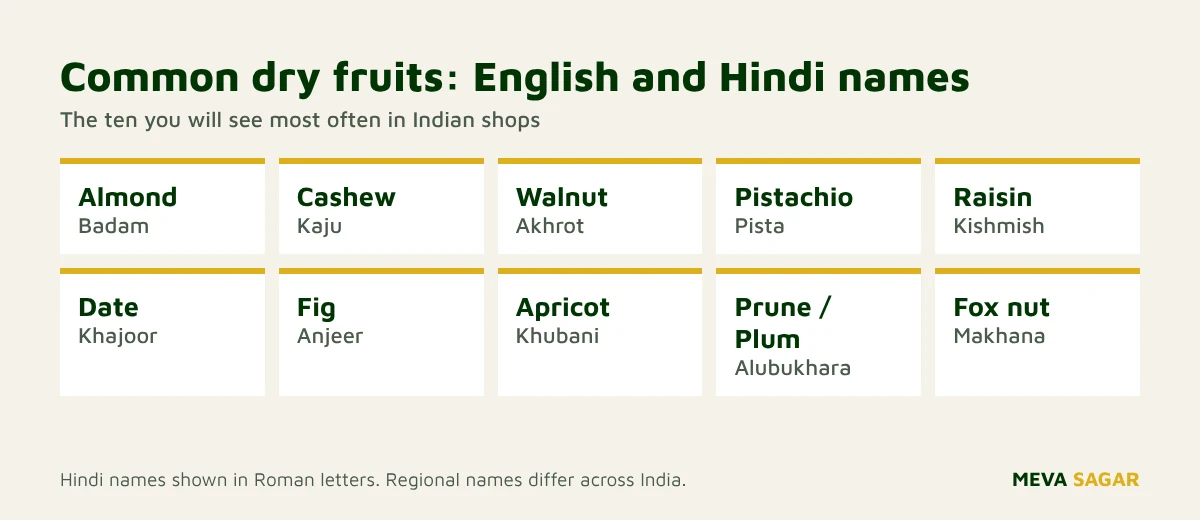
Quick answer: The ten most common dry fruits are almond (badam), cashew (kaju), walnut (akhrot), pistachio (pista), raisin (kishmish), dates (khajoor), fig (anjeer), apricot (khubani), prune or dried plum (alubukhara) and fox nut (makhana). Almost every other name in a mithai shop is a seed, a gum or a dried fruit from this same family.
What are dry fruits? Nuts, dried fruits and seeds explained
In everyday Indian use, "dry fruits" (or mewa) covers three different things, and it helps to know which is which.
- Nuts and kernels: almonds, cashews, walnuts, pistachios, pecans, hazelnuts and similar. They are grown on trees and eaten for their fat, protein and crunch.
- Dried fruits: raisins, dates, figs, apricots, prunes and berries. These are fresh fruits with the water removed, so they are chewy and sweet.
- Seeds and others: makhana, melon seeds, pumpkin seeds, edible gum and dried coconut. They are used in fasting food and traditional sweets.
The difference matters when you plan a diet. Nuts are higher in fat and protein. Dried fruits are higher in natural sugar and cheaper per kilo, and you should eat them in smaller amounts.
Dry fruits names in English and Hindi: the complete list
Here is the list we use at Meva Sagar when someone calls and asks for something by its local name. Regional names vary across India, so where a name is not widely known, we have said so instead of making one up.
Nuts and kernels
| English | Hindi name | What it is like | Common use |
|---|---|---|---|
| Almond | Badam | Crunchy, mildly sweet | Snacking, milk, sweets, soaking |
| Cashew | Kaju | Soft, buttery, creamy | Kaju katli, gravies, snacking |
| Walnut | Akhrot | Slightly bitter, rich | Breakfast, baking, salads |
| Pistachio | Pista | Sweet, slightly salty, green | Kulfi, kheer, garnish |
| Pine nut | Chilgoza | Soft, resinous, rich | Premium snacking, gifting |
| Hazelnut | No common Hindi name | Sweet, crunchy | Chocolate, baking |
| Pecan | No common Hindi name | Buttery, mild | Pies, baking, snacking |
| Macadamia | No common Hindi name | Very rich and creamy | Premium gifting, baking |
| Brazil nut | No common Hindi name | Large, creamy | Snacking |
| Peanut | Moongfali | Earthy, roasted | Chikki, namkeen (a legume, not a tree nut) |
Dried fruits
| English | Hindi name | What it is like | Common use |
|---|---|---|---|
| Raisin | Kishmish | Sweet, chewy | Kheer, pulao, sweets |
| Large seeded raisin | Munakka | Big, dark, rich | Soaked and eaten, traditional use |
| Date | Khajoor | Sticky, caramel-like | Snacking, fasting, shakes |
| Dried date | Chhuhara, Kharik | Firm, less sticky | Milk, winter foods, weddings |
| Fig | Anjeer | Chewy with crunchy seeds | Snacking, soaking, desserts |
| Dried apricot | Khubani | Tangy-sweet, chewy | Desserts like khubani ka meetha |
| Dried plum, prune | Alubukhara | Sweet-sour | Biryani, chutney, snacking |
| Dried mango | Aam (dried) | Sweet, tart | Snacking (not the same as amchur powder) |
| Cranberry | No common Hindi name | Tart, sweet | Salads, trail mix, baking |
Seeds, gum and other traditional ingredients
| English | Hindi name | What it is used for |
|---|---|---|
| Fox nut, lotus seed | Makhana, phool makhana | Fasting food, roasted snack, kheer. See our makhana guide. |
| Melon seeds | Magaz, char magaz | Thickening gravies, sweets |
| Chironji seeds | Chironji, charoli | Sweets, kheer, traditional recipes |
| Dried coconut | Khopra, gola | Sweets, chutney, offerings |
| Edible gum | Gond | Winter laddoos |
| Pumpkin seeds | Kaddu ke beej | Snacking, salads |
| Sunflower seeds | Surajmukhi ke beej | Snacking, bread, salads |
The same dry fruit can have three names in three states. When in doubt, ask for it by its English name.
What is the difference between kishmish, munakka and black raisins?
This is a very common mix-up. All are dried grapes, but they are not the same product.
- Kishmish usually means small, seedless raisins, green, golden or black. Green raisins are the most popular for kheer and pulao.
- Munakka is a large, dark raisin with seeds, dried from big grapes. It is stickier and richer.
- Black seedless raisins are sweet and mild, good for baking and snacking.
The nutrition is similar, so choose by how you plan to use them. The raisin page on Wikipedia explains the drying methods that create the different colours.
Khajoor, chhuhara and Medjool: are all dates the same?
No. Date palm fruit comes in hundreds of varieties, and the texture changes a lot.
- Soft dates such as Medjool, Ajwa and Mabroom are moist and sticky, with a strong caramel taste. They are eaten fresh.
- Semi-dry dates such as Khalas and Safawi are firmer and less sweet. They are good for everyday eating.
- Dry dates (chhuhara) are hard and chewy, traditionally added to warm milk in winter and used in weddings.
See the full dates collection if you want to taste a few varieties side by side.
Anjeer, khubani and alubukhara: three fruits often confused
They look somewhat alike when dried, but they are different fruits. Fig (anjeer) is sweet and filled with tiny crunchy seeds. Apricot (khubani) is orange, tangy and often sold with its stone. Dried plum, or prune (alubukhara), is dark, sweet and sour. We stock premium anjeer and pitted prunes in our dried fruits range.
What is panch mewa and what is in a mixed dry fruit pack?
Panch mewa means "five dry fruits". The exact five changes from family to family, but it is typically almonds, cashews, raisins, pistachios and either walnuts or dried dates. Ready-made packs such as our Daily Mix and Royal Mix save you from buying each one separately. Browse more in mixed dry fruits.
How to buy dry fruits: a simple checklist
- Look at the colour
Nuts should be evenly coloured. Dull, dark or spotted nuts are old. - Smell before you buy
A faint sweet or nutty smell is good. A sharp, oily or paint-like smell means rancid. - Check the date
Look for a packing date and a licence number from FSSAI, the national food safety authority. - Buy in small quantities
Nuts last months when sealed, but not forever once opened. Buy what you can finish in a month or two. - Store them well
Airtight jar, away from the stove and the sun. Use the fridge in humid weather.
Looking for something specific?
Browse every nut, dried fruit and seed in one place.
Frequently asked questions
What are the names of dry fruits in Hindi?
The common ones are badam (almond), kaju (cashew), akhrot (walnut), pista (pistachio), kishmish (raisin), khajoor (date), anjeer (fig), khubani (apricot), alubukhara (prune or plum) and makhana (fox nut).
What is the difference between dry fruits and nuts?
Nuts are a type of dry fruit, such as almonds and walnuts, and are rich in fat and protein. Dried fruits such as raisins, dates and figs are fresh fruits with the water removed, so they are sweeter and chewier.
Which dry fruits are healthiest?
No single one is best. Almonds, walnuts and pistachios give protein, fibre and healthy fats. Dates, figs and raisins give fibre and quick energy. A mix of a few types in small portions works better than a lot of one.
Is makhana a dry fruit?
Makhana is the puffed seed of the lotus-like water lily Euryale ferox. It is sold alongside dry fruits and eaten in the same way, but botanically it is a seed, not a nut or dried fruit.
What is panch mewa?
Panch mewa means five dry fruits. It usually includes almonds, cashews, raisins, pistachios and either walnuts or dates, though the mix varies by region and family.
What is the difference between munakka and kishmish?
Kishmish is a small, usually seedless raisin. Munakka is a large, dark raisin that has seeds and a richer, stickier taste. Both are dried grapes.
What are the most expensive dry fruits?
Pine nuts (chilgoza), macadamia nuts and Mamra almonds are among the priciest, because of low yields and long growing cycles. Premium dates such as Ajwa are also costly.
Next steps
Now that you can decode the names, the next question is what to eat and how much. Start with the benefits of almonds or see which options suit weight loss. If you are buying for someone else, our gift box guide helps you pick.