Flavoured nuts, from peri peri cashews to smoked almonds and honey roasted peanuts, have turned a plain snack into an exciting one. But the coating that makes flavoured nuts irresistible can also add salt, sugar and oil. This guide explains how common flavours are made, compares them on taste and nutrition, shows what to check on labels, suggests healthier options and offers tips for serving and storing. Flavoured nuts are enjoyable in moderation, and with a little label reading you can enjoy the taste without turning a healthy snack into a salty or sugary one.
Quick answer: Flavoured nuts add seasoning, salt, sugar or oil to plain nuts. Peri peri and masala varieties are salty, honey roasted ones are sweet and calorie-dense, smoked varieties vary, and black pepper cashews are among the lighter choices. Check sodium (aim lower than about 300 mg per 30 g), added sugar and the oil used, keep portions near a small handful and keep plain unsalted nuts as your daily staple.
How flavoured nuts are made
Plain nuts are roasted or fried, then coated with a seasoning blend, sometimes using oil, a binder like starch or sugar syrup, and powders of spices, salt, chilli, garlic, herbs or smoke. Dry roasting with a light spray of oil is typical for premium products, while deep-fried and heavily coated ones are heavier. The base nut matters: almonds and cashews take flavour well, while pistachios and walnuts are often left plain. See raw vs roasted vs salted.
Popular flavours compared
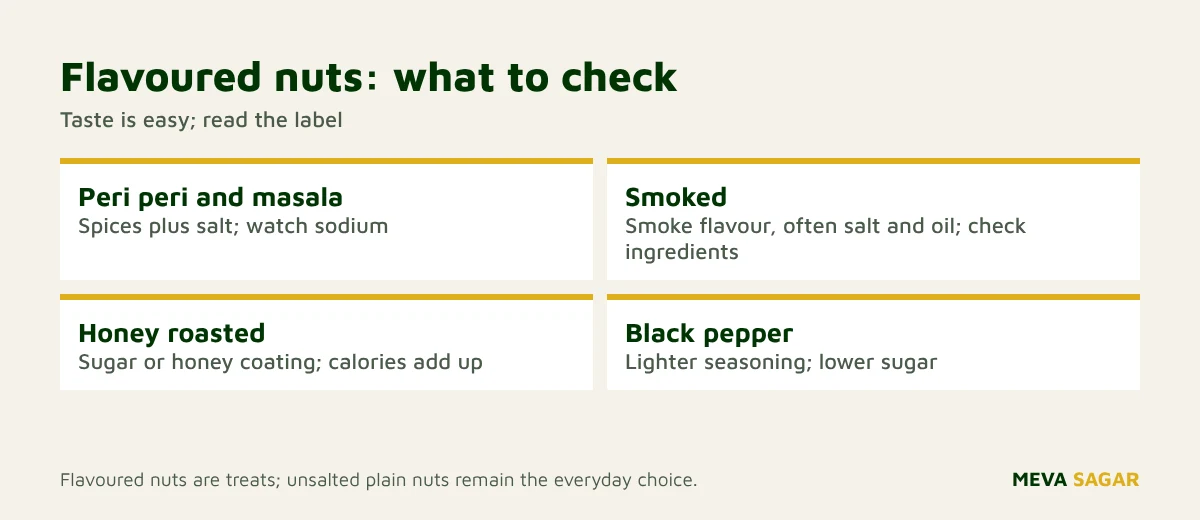
| Flavour | Typical taste | Watch for | Product |
|---|---|---|---|
| Peri peri | Spicy, tangy, garlicky | Salt, chilli heat | peri peri cashews |
| Black pepper | Peppery, savoury | Salt | black pepper cashews |
| Smoked | Smoky, savoury | Salt, oil, smoke flavour | smoked almonds |
| Honey roasted | Sweet, glossy | Sugar and calories | honey roasted almonds |
| Roasted salted | Simple, salty | Sodium | roasted salted almonds and salted cashews |
| Masala and chaat | Tangy Indian spices | Salt, acidity regulators | Look for ingredient lists |
Nutrition: how much extra are you eating?
A 30 g serving of plain almonds has about 170 kcal and almost no sodium. A salted or peri peri version may add 100 to 250 mg of sodium and a few extra calories from oil, while honey roasted nuts can add 3 to 6 g of sugar per serving. These numbers are small if you eat a handful but add up if you snack from a big bag. The WHO advice on hypertension and healthy diet guidance recommend limiting salt to under 5 g a day and free sugars as far as possible. Check values against USDA FoodData Central for plain nuts.
How to choose healthier flavoured nuts
- Read the ingredient list
Short is better: nuts, spices, a little oil and salt. - Check sodium per 100 g and per serving
Lower is better. - Check added sugar
Zero or low for savoury, small for honey roasted. - Prefer dry roasted
Instead of deep fried. - Avoid artificial colours and flavour enhancers
If you prefer a cleaner label. - Choose smaller packs
Portion built in.
See how to read labels.
Who should be careful
- People with high blood pressure or kidney disease: sodium counts. See dry fruits for blood pressure.
- People with diabetes: honey and sugar coatings affect glucose.
- People with acidity or reflux: spicy and smoked nuts can trigger symptoms. See acidity guide.
- Nut allergy sufferers: seasoning blends may add other allergens.
- Young children: no whole nuts and avoid spicy blends.
Make your own flavoured nuts at home
Home flavouring is easy and lets you control salt and sugar. Toss almonds with a teaspoon of olive oil, a pinch of salt, smoked paprika and garlic powder and roast at 160 degrees C for 10 to 12 minutes. For peri peri, use chilli flakes, dried oregano, paprika and lemon zest. For sweet nuts, warm a teaspoon of honey with cinnamon and toss gently before a short roast. Cool completely before storing. A batch lasts about two weeks in an airtight jar.
Serving and storage
Serve flavoured nuts in small bowls to avoid mindless eating. Pair spicy ones with cucumber or fruit and sweet ones with plain curd. Seasoned nuts can turn soft or stale faster than plain ones because spices attract moisture, so keep them airtight, away from heat and eat within a few weeks of opening. See how to tell if nuts are rancid.
Flavoured nuts as gifts
A mixed box of flavoured nuts makes an interesting gift, especially for younger people. Offer a balance of savoury and mild flavours, avoid very spicy blends for general gifting and add plain nuts or a fruit and nut mix for variety. See birthday gift ideas and fruit and nut gift box.
Myths and common mistakes
| Myth or mistake | Reality |
|---|---|
| Flavoured nuts are as healthy as plain | They add salt, sugar or oil |
| Honey roasted is natural so it is healthy | Honey is still sugar |
| Smoked means no additives | Many use smoke flavour and oil |
| A small bag is one serving | Check servings per pack |
| Spicy nuts are digestive | They can aggravate acidity |
Flavour pairing and serving ideas
Flavoured nuts are versatile beyond the snack bowl. Crushed peri peri cashews add crunch and heat to salads, wraps and roasted vegetables. Smoked almonds suit cheese boards and pasta. Black pepper cashews pair nicely with fruit and soft cheese. Honey roasted almonds are good on yoghurt, oats and ice cream, though you may want to reduce other sweeteners in the same dish. Use flavoured nuts as a garnish rather than a main course, and your sodium and sugar intake stays low.
For parties, offer three bowls: a plain mix, a mildly seasoned mix and one bold flavour for adventurous guests. Provide small spoons so people serve themselves cleanly, and put out water or fruit to balance the salt. Label the bowls for allergies, as seasoning blends can include sesame, soy, milk powder or gluten.
When buying, remember that bold flavours can mask staleness. A fresh nut tastes sweet and clean under the seasoning; a stale one tastes oily or cardboard-like even when spiced. Taste a plain nut from the same batch if you can, check packing dates and choose reputable sellers. For storage, keep flavoured nuts airtight and away from heat, and eat them within a few weeks after opening. The WHO guidance on salt and sugar is a handy reference when deciding how often flavoured nuts fit into your routine.
Flavoured favourites
Peri peri cashews, smoked almonds, honey roasted almonds and more.
Frequently asked questions
Are flavoured nuts healthy?
They are nutritious but add salt, sugar or oil. Enjoy them in small portions and keep plain nuts for everyday.
Which flavoured nuts are healthiest?
Dry roasted, lightly seasoned nuts like black pepper cashews usually have less salt and sugar than honey roasted or heavily coated ones.
How much salt is in peri peri cashews?
It varies by brand; check the label. Look for lower sodium per serving.
Can diabetics eat honey roasted nuts?
Occasionally in small portions, with their doctor advice. Plain nuts are better.
How long do flavoured nuts last?
Typically a few weeks to months unopened; consume within a few weeks of opening.
Can I make flavoured nuts at home?
Yes, with spices, a little oil and a short roast, giving you control over salt and sugar.
The bottom line
Flavoured nuts are a fun snack: choose dry roasted, read sodium and sugar, keep servings small and rely on plain nuts for daily nutrition. Home-flavoured batches give you the taste with full control.