The gut microbiome has become a popular topic, and many readers ask about dry fruits for gut health. The reasoning is sound: the trillions of bacteria in our intestines feed on fibre and plant compounds, and diets rich in a variety of plant foods are linked with a more diverse microbiome and better digestive and metabolic health. Figs, prunes, dates, apricots, raisins and nuts supply fibre, polyphenols and fermentable carbohydrates. But dry fruits are also concentrated in sugar, and some, such as prunes, can cause gas and loose stools. This guide shows how to use them wisely.
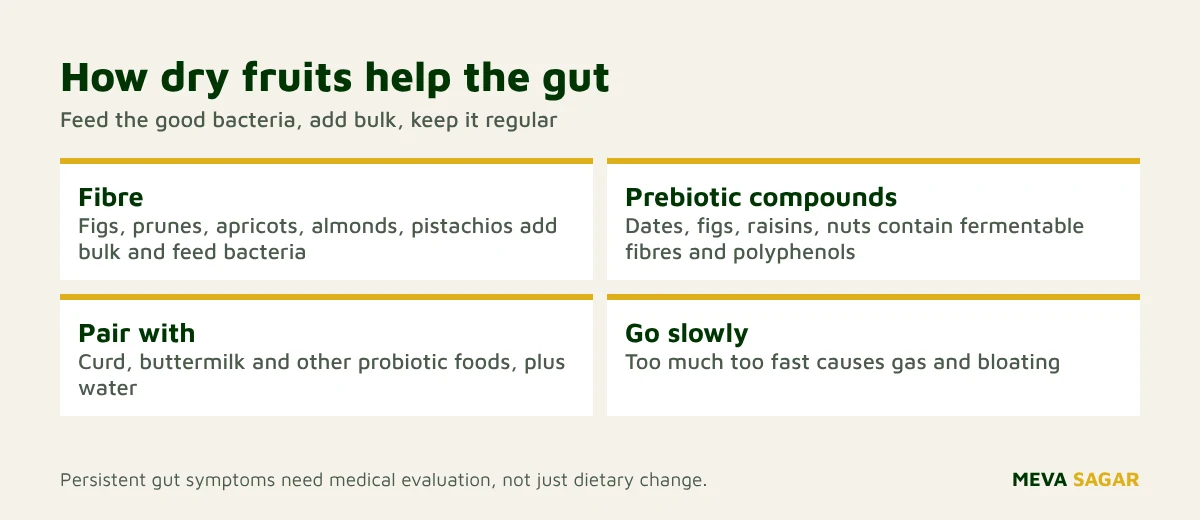
Quick answer: Dry fruits help the gut mainly through fibre and plant compounds that feed beneficial bacteria. Figs, prunes, apricots, dates and almonds are the most useful. Add them gradually, drink water and pair with curd or buttermilk for probiotics. Aim for one small handful of dried fruit and 30 g of nuts a day. If you have IBS, bloating, pain or blood in stools, see a doctor.
The gut microbiome in brief
The gut hosts trillions of microorganisms, collectively the gut microbiota. They help digest fibre, make short-chain fatty acids that nourish the colon lining, train the immune system and produce some vitamins. A diet high in fibre and plant variety supports a diverse community, while diets heavy in refined foods and low in fibre reduce diversity. A prebiotic is a food component that feeds beneficial bacteria, and a probiotic is a live microorganism, such as those in curd. Dry fruits are prebiotic-type foods rather than probiotics.
What dry fruits bring to the gut
| Dry fruit | Gut-relevant content | Notes |
|---|---|---|
| Figs (anjeer) | High fibre, seeds, polyphenols | Gentle regularity; see benefits of anjeer |
| Prunes | Fibre, sorbitol, polyphenols | Well studied for constipation; start with 2 to 3 |
| Dates | Fibre, polyphenols, some sorbitol | Small studies show gut-friendly effects |
| Dried apricots | Fibre, pectin | Check sulphur label |
| Raisins | Fibre, polyphenols | Smaller fibre dose |
| Almonds | Fibre, polyphenols in skin | Early studies show prebiotic effect of almond skin |
| Pistachios | Fibre, fermentable carbohydrates | Linked with more butyrate-producing bacteria in small trials |
Values and gut effects come from small trials; benefits are modest and vary between people. Nutrient values are from USDA FoodData Central.
Dry fruits and constipation
Constipation is the most common digestive complaint, and dry fruits are a time-honoured remedy. Prunes have the best evidence, with studies showing improved stool frequency and consistency compared with some fibre supplements. Figs, dates and raisins also help. The key is combining fibre with enough fluid and activity. See dry fruits for constipation and high fibre dry fruits.
Pair with probiotic foods
Since dry fruits feed bacteria and curd supplies them, combining the two is a sensible habit. Add chopped figs, dates and almonds to a bowl of fresh curd, or have buttermilk with a handful of soaked raisins. Other fermented foods such as idli and dosa batter, kanji, kimchi and pickles made without vinegar contribute different microbes. Choose plain, unsweetened curd and keep sugar low. If you have a weakened immune system, ask your doctor about fermented foods.
How to add them without bloating
- Start small
One or two pieces of dried fruit daily for the first week. - Increase slowly
Add another piece every few days. - Soak
Soaking figs, prunes and apricots softens fibre and may reduce discomfort. - Spread through the day
Do not eat the full amount at once. - Drink water
Aim for six to eight glasses; fibre needs fluid. - Chew well
Especially nuts.
If bloating persists, reduce the amount or try a different fruit.
FODMAPs and sensitive guts
Some people with irritable bowel syndrome react to FODMAPs, short-chain carbohydrates that ferment quickly. Dried fruits such as prunes, dates, figs and apricots contain sorbitol, fructose or fructans in large amounts, and cashews and pistachios are higher in FODMAPs than almonds or walnuts in some portions. If you have IBS, a dietitian can guide a low-FODMAP trial and reintroduction. Raisins, walnuts and small portions of almonds are often better tolerated. Do not cut out food groups without guidance. See sorbitol.
A gut-friendly day
| Meal | Idea |
|---|---|
| Breakfast | Oats with chopped figs, almonds and curd |
| Mid-morning | Fruit and a few pistachios |
| Lunch | Dal, vegetables, roti or brown rice, buttermilk |
| Evening | 2 soaked prunes and tea |
| Dinner | Vegetables, pulses and a small portion of grain |
Include a range of plant foods through the week. Variety matters as much as any single food, and many experts suggest aiming for 30 different plant foods a week.
When to see a doctor
- Blood in stools, black stools or unexplained weight loss.
- Persistent abdominal pain, vomiting or nighttime symptoms.
- New change in bowel habit lasting more than a few weeks, especially after age 45.
- Fever with diarrhoea.
- Suspected coeliac disease or inflammatory bowel disease.
Do not self-treat persistent symptoms with diet alone.
Myths and common mistakes
| Myth or mistake | Reality |
|---|---|
| Dry fruits are probiotics | They are prebiotic-type foods; curd gives probiotics |
| More fibre is always better | Too much too fast causes gas |
| Probiotic supplements are always needed | A varied diet helps; supplements have specific uses |
| Sweetened dried fruit is as good | Added sugar offsets benefits |
| A gut cleanse fixes the gut | Gradual diet and lifestyle change works better |
Lifestyle habits that help the gut
Food is one lever for gut health, and lifestyle is another. Regular physical activity speeds transit and is linked with a more diverse microbiome. Managing stress matters because the gut and brain communicate closely, and long-term stress can worsen symptoms. Sleeping seven to nine hours supports digestion. Limit unnecessary antibiotics, which wipe out beneficial bacteria; take them only when prescribed and finish the course as advised. Avoid smoking and heavy alcohol, which damage the gut lining.
Eat slowly in a calm setting, chew food thoroughly and avoid lying down right after meals. Keep a regular meal pattern so your gut has a rhythm. If you travel, carry a small box of nuts and dried fruit, since long gaps between meals and unfamiliar food often upset digestion.
Choosing and storing dry fruits for the gut
Choose unsweetened dried fruit without added syrup or preservatives where possible, since sulphites can bother some sensitive people. Soft, pliable figs and prunes are fresher than very hard ones. Plain, unsalted nuts are easier on the gut than flavoured or fried ones. Store in airtight containers and refrigerate in humid months, because mouldy dried fruit or rancid nuts can cause stomach upset. See how to store dry fruits and sulphur in dried fruits.
Frequently asked questions
Are dry fruits good for gut health?
Yes, mostly through fibre and plant compounds that feed gut bacteria. Figs, prunes, dates and almonds are helpful in moderate portions.
Which dry fruit is best for the gut?
Prunes and figs have the best evidence for regularity, and nuts add fibre and polyphenols. A varied mix is best.
Are dry fruits probiotics?
No. They are prebiotic-type foods. Curd, buttermilk and fermented foods provide probiotics.
Can dry fruits cause bloating?
Yes if you eat too many too fast, especially prunes. Start small and drink water.
What if I have IBS?
Some dried fruits are high in FODMAPs. A dietitian can help you choose and portion them.
How many dry fruits for gut health?
About one small handful of dried fruit and 30 g of nuts a day is a reasonable amount for most people.
The bottom line
Dry fruits for gut health work through fibre and plant compounds that feed good bacteria. Add figs, prunes, dates and almonds slowly, drink water, pair them with curd and see a doctor for persistent symptoms.