Dry fruits for sleep is a tempting idea: a handful of walnuts or a few dates with warm milk before bed. There is a little science behind it. Walnuts and pistachios contain small amounts of melatonin, nuts and seeds supply tryptophan and magnesium, and a light snack with carbohydrate and protein can stop hunger from waking you. But the amounts are small, studies are limited and sleep depends far more on routine, light, caffeine and stress than on any food. This guide separates what is plausible from what is hype, and shows how to use dry fruits as a gentle part of a healthy bedtime routine.
Quick answer: Walnuts and pistachios contain small amounts of melatonin, and nuts and seeds supply tryptophan and magnesium, but no dry fruit has been shown to treat insomnia. A small bedtime snack, such as 4 walnut halves with a date or warm milk with almonds, may help if hunger wakes you. Avoid large, heavy or sugary snacks late at night. See a doctor if poor sleep lasts more than a few weeks.
What helps sleep in food?
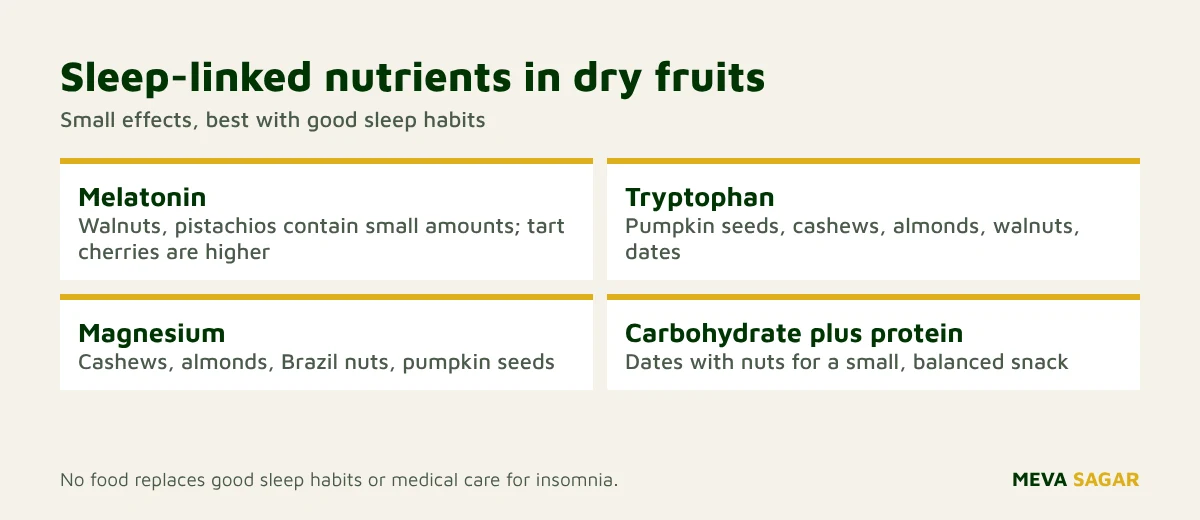
Three nutrients are often linked with sleep. Melatonin is the hormone that signals night; small amounts occur in some foods. Tryptophan is an amino acid the body uses to make serotonin and then melatonin. Magnesium helps regulate nerve activity and muscle relaxation. Food has far smaller effects than supplements or medicines, and effects vary between people. See NIH on magnesium.
Dry fruits and sleep-linked nutrients
| Food | Sleep-linked content | Notes |
|---|---|---|
| Walnuts | Small amount of melatonin; ALA omega-3 | Small studies show raised blood melatonin after eating |
| Pistachios | Among the highest melatonin of nuts | Amounts are tiny compared with supplements |
| Almonds | Magnesium and some tryptophan | ~76 mg magnesium per 30 g |
| Cashews | Magnesium, tryptophan | ~82 mg magnesium per 30 g |
| Dates | Carbohydrate, small tryptophan | Natural sugar may help some people fall asleep, hurt others |
| Pumpkin seeds | Magnesium and tryptophan | Rich source, not a dry fruit |
| Tart cherries (dried) | Higher natural melatonin | Small trials show modest sleep improvements |
See dry fruits rich in magnesium and benefits of walnuts.
What the research shows
Studies on nuts and sleep are small and mixed. Some observational studies find that people who eat more nuts report better sleep, but this may reflect healthier lifestyles overall. Trials on tart cherries show modest improvements in sleep time. Magnesium supplements may help sleep in older adults with low intake, but evidence is limited. No trial shows that a handful of dry fruits cures insomnia. Treat nuts as a pleasant, harmless addition, not a treatment.
What to eat and when
| Option | Why it can work | Tips |
|---|---|---|
| 4 walnut halves and 1 date, 60 to 90 minutes before bed | Light, balanced, small melatonin | Keep to about 150 kcal |
| Warm milk with a few almonds and a pinch of nutmeg | Comforting; tryptophan and calcium | Avoid added sugar |
| A small handful of pistachios | Light protein and fat | Unsalted |
| Banana with almonds | Magnesium, potassium, carbohydrate | Good if you get leg cramps |
| Herbal tea with a date | Calming ritual | No caffeine |
The ritual matters as much as the food. Doing the same calm thing each night signals the brain that bedtime is near.
What to avoid close to bedtime
- Large or heavy meals within 2 hours of sleep.
- Sugary or sweetened dried fruit in large amounts.
- Salty snacks that cause thirst and night-time waking.
- Caffeine, including tea, coffee, cola and chocolate, after mid-afternoon.
- Alcohol, which fragments sleep.
Acid reflux can disturb sleep. Go easy on late, large nut portions if you get heartburn. See dry fruits for acidity and gas.
Sleep habits that matter more
- Fixed bedtime and wake time, even at weekends.
- Dim lights and avoid screens for an hour before bed.
- A cool, dark, quiet room.
- Daytime light exposure and exercise, but not too close to bedtime.
- Managing worry with a notebook or breathing exercise.
If you snore loudly, have pauses in breathing, or feel unrefreshed despite enough hours, ask a doctor about sleep apnoea.
When to see a doctor
See a doctor if you struggle to fall or stay asleep for more than three or four weeks, if poor sleep affects daytime function or mood, or if you rely on sleeping tablets. Insomnia can be linked with anxiety, depression, pain, thyroid problems and medicines. Treatments such as cognitive behavioural therapy for insomnia work better than snacks. Do not start melatonin or magnesium supplements without medical advice, especially in pregnancy or if you take other medicines.
Myths and common mistakes
| Myth or mistake | Reality |
|---|---|
| Walnuts are a natural sleeping pill | They contain small amounts of melatonin; effects are modest |
| More nuts at night helps more | Large portions can cause discomfort |
| Sweet snacks help you sleep | Sugar can cause energy swings |
| Magnesium always cures insomnia | Evidence is limited |
| Food replaces sleep hygiene | Habits matter more |
Evening routine ideas
An evening routine does more than any single food. Try a light dinner at least two hours before bed, a short walk, a warm shower, dim lights and a book or gentle music. If you like a snack, choose something small and calm: four walnut halves, a date or a cup of warm milk with a pinch of nutmeg. Avoid checking work email or scrolling social media in bed, as the blue light and mental stimulation make it harder to wind down.
If you wake in the night hungry, a few almonds or half a banana may help you drift off again, but regular large night-time snacks are a habit worth reviewing. For shift workers and travellers, sleep timing is harder; the same principles apply, but light exposure at the right times matters even more.
Children, older adults and pregnancy
Children need a consistent bedtime and calm routine more than any snack. Avoid giving whole nuts to young children, and avoid sugary snacks close to bedtime. Older adults often sleep lighter and may need a daytime activity routine and light exposure. Pregnant women should talk to their doctor before using melatonin or magnesium supplements; food sources like nuts are fine in normal portions. Everyone benefits from limiting caffeine after lunch.
Quick answers
In short: a few walnuts, almonds or a date in the evening are fine and may be calming, but the effect is small. Keep portions light, avoid caffeine and sugar late in the day and focus on a regular routine. If sleep problems linger, a doctor can find causes and suggest treatments that work better than any snack.
Frequently asked questions
Do dry fruits help you sleep?
They contain small amounts of sleep-linked nutrients, but evidence that they improve sleep is limited. A light snack may help if hunger keeps you awake.
Which nuts contain melatonin?
Walnuts and pistachios contain small amounts. Tart cherries have more.
Are walnuts good before bed?
A few walnuts, about four halves, are a light option. Avoid large portions late at night.
Do dates help you sleep?
Dates provide carbohydrate and small tryptophan, which may help some people. Large amounts of sugar may disturb sleep for others.
Is magnesium good for sleep?
It may help people with low intake, but evidence is mixed. Get it from food first and ask your doctor before supplements.
How long before bed should I snack?
Aim for 60 to 90 minutes before bed, and keep it small.
The bottom line
Dry fruits for sleep are a gentle extra, not a solution. A few walnuts, almonds or dates in the evening can fit a calm routine, but good sleep habits, daytime light and stress management do the real work. See a doctor if sleep problems persist.