Few people want to talk about it, but dry fruits for constipation is one of the most searched food questions in India. Dried figs, prunes and raisins are traditional remedies, and the science mostly agrees with tradition: they supply fibre, they hold water in the gut and some contain natural laxative compounds. Prunes in particular have been tested in trials and perform as well as some over-the-counter fibre products. This guide explains how each one works, how much to eat and what else you need.
Quick answer: Two to four prunes, one to two soaked figs (anjeer) or a small handful of raisins a day can help soften stools, especially with plenty of water. Prunes have the strongest evidence. Increase slowly to avoid gas, drink more fluid, and see a doctor if constipation is severe, painful, new or lasts for more than a few weeks.
Why constipation happens
Constipation means infrequent or hard stools, or difficulty passing them. The most common causes are low fibre intake, low fluid intake, little physical activity, ignoring the urge to go, certain medicines (iron tablets, some painkillers and antacids), pregnancy and stress. Diet is the first thing to adjust, and dried fruit is a simple tool. For fibre guidance, see dietary fibre. The recommended intake for adults is about 25 to 30 g a day, and many people eat much less.
How each dry fruit helps
| Dry fruit | How it helps | Typical amount | Evidence |
|---|---|---|---|
| Prunes | Fibre plus sorbitol and phenolic compounds that draw water into the gut | 3 to 5 prunes | Strongest, shown in trials |
| Anjeer (figs) | High in fibre; some trials show faster transit | 1 to 2 soaked | Moderate |
| Raisins | Fibre and tartaric acid; mild effect | 1 to 2 tablespoons | Limited |
| Dates | Fibre and sorbitol | 2 to 3 | Some |
| Dried apricots | Fibre and sorbitol | 3 to 4 | Limited |
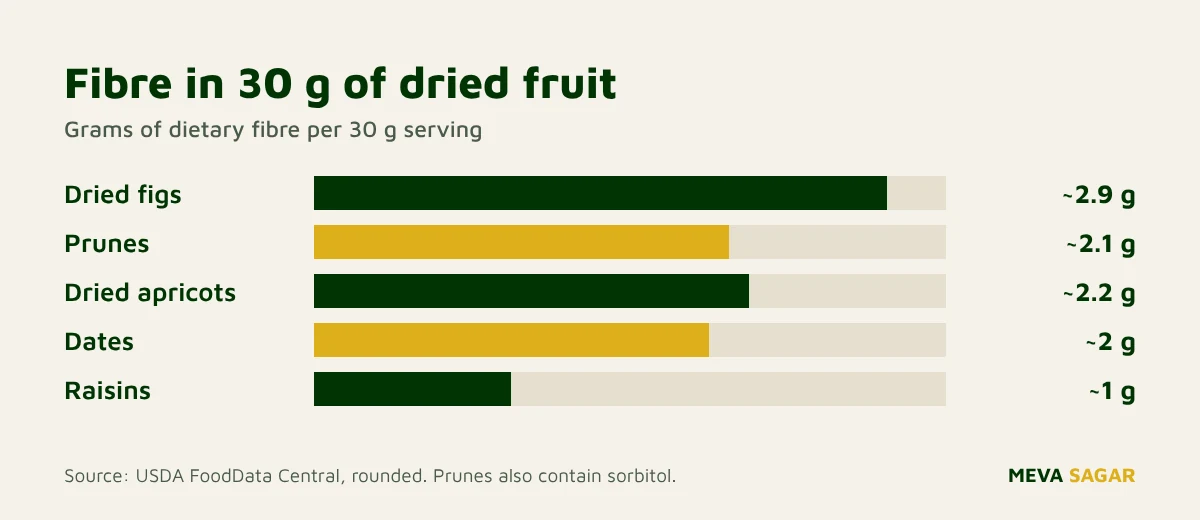
Per USDA FoodData Central, 100 g of prunes has about 7 g of fibre and 100 g of dried figs has about 10 g. See the individual guides on prunes and figs.
Prunes: the best-studied remedy
Several randomised trials found that prunes increased stool frequency and softened stools compared with psyllium husk in adults with mild to moderate constipation. A typical trial dose was about 50 g (around 10 prunes) a day, but many people respond to fewer. The effect is credited to fibre, sorbitol (a sugar alcohol that draws water into the intestine) and phenolic compounds. Start with three prunes and increase slowly over a week. Prunes can cause gas or loose stools if you overdo them.
How to use them: a simple plan
- Night before
Soak 3 prunes and 1 fig in a glass of water. - Morning
Eat the soaked fruit with breakfast, and drink the soaking water if you like. - Water
Drink 8 to 10 glasses of fluid through the day. - Add fibre slowly
Include vegetables, whole grains and pulses at meals. - Move
Walk for 20 to 30 minutes. Activity stimulates the gut. - Give it a week
Most people notice a change within a few days.
Warm water or herbal tea in the morning can help trigger a bowel movement for some people. Try the routine with our soaked dry fruit guide.
What not to do
- Do not eat large amounts suddenly. A sudden jump in fibre or sorbitol causes bloating and cramps.
- Do not skip water. Fibre without fluids can make constipation worse.
- Avoid sweetened, candied dried fruits. They add sugar and fewer benefits.
- Do not rely on dried fruit if you are on iron tablets and have severe constipation. Ask your doctor about options.
- Do not ignore warning signs.
When to see a doctor
See a doctor if constipation is new and lasts more than two to three weeks, if you notice blood in the stool, black stools, unexplained weight loss, severe pain, vomiting, or if you alternate between constipation and diarrhoea. Constipation in young children, or in people who are bedridden, also needs medical advice. Dry fruits are a gentle everyday measure, and not a treatment for an underlying condition.
Fibre-rich recipes for regularity
- Prune and oat bowl: overnight oats with chopped prunes, curd and a few walnuts.
- Fig and apricot compote: simmer soaked figs and apricots with a cinnamon stick for 10 minutes. Eat a few spoonfuls with curd.
- Raisin and almond porridge: broken wheat (dalia) cooked in milk with raisins and almonds.
- Date and fig paste: blend soaked dates and figs, and spread on whole wheat toast.
- Warm lemon water: a simple morning drink alongside the dried fruit.
These recipes blend fibre from grains and fruit, which works better than dried fruit alone.
Constipation in special groups
Pregnant women often get constipated because of hormones and iron tablets. Small portions of prunes or figs, with fluids, are commonly used, but ask your doctor before changing anything. In children, constipation is common when starting solids, and soaked, pureed prunes or figs are often suggested. See our kids guide. Older adults often need more fluids and gentle fibre, and should check with a doctor if on several medicines.
Dry fruits to be careful with
Some dry fruits are not helpful for constipation. Roasted and salted nuts are dry and can worsen it in people who eat little fluid. Large amounts of unsoaked almonds or cashews without water may feel heavy. Very sweet, sticky products may add calories without fibre. If you are prone to loose stools or irritable bowel, add dried fruits slowly, because sorbitol and fructose can trigger symptoms. See sorbitol.
Fluids and fibre: why water matters
Fibre works by absorbing water and adding bulk to the stool. Without enough fluid, a high-fibre diet can make stools harder. Aim for at least 8 glasses of fluid a day, more in hot weather or if you exercise. Water, buttermilk, coconut water, thin dal and soups all count. Limit strong tea and coffee, which can dehydrate some people. A glass of warm water on waking is a simple trigger for many.
Building a regular bowel habit
Beyond food, routine matters. Try to go at the same time each day, often after breakfast, when the gut is most active. Do not rush or ignore the urge. A small footstool under the feet, to bring the knees above the hips, makes passing stools easier. Combined with a daily portion of figs or prunes, these habits produce lasting results far more often than relying on remedies alone.
Frequently asked questions
Which dry fruit is best for constipation?
Prunes have the strongest evidence, followed by figs. Raisins and dates help a little. Start with three to five prunes or one to two soaked figs a day.
How many prunes should I eat for constipation?
Three to five prunes a day is a good start. Some trials used about ten, but this can cause gas or loose stools. Increase gradually.
Are soaked figs good for constipation?
Yes. Figs are high in fibre, and soaking softens them. One or two soaked figs in the morning, with water, helps many people.
Do raisins help with constipation?
A little. Raisins give some fibre and tartaric acid, but their effect is milder than prunes or figs. Soaked raisins are gentle on the stomach.
How long do dry fruits take to work for constipation?
Many people notice a change within two to three days, but it can take up to a week. Drinking enough water speeds things up.
Can dry fruits cause diarrhoea?
Yes, in large amounts. Prunes, figs and apricots contain sorbitol and fibre, which can loosen stools. Reduce the portion if this happens.
Is it safe to eat figs and prunes every day?
Usually, in moderate amounts. Watch your total sugar and calories if you have diabetes or are trying to lose weight.
What else helps with constipation besides dry fruits?
Water, more vegetables and whole grains, regular walks, a fixed bathroom routine and not ignoring the urge. Seek medical advice if it persists.
The bottom line
Prunes, figs and raisins are gentle, evidence-supported helpers for constipation. Start small, soak them, drink plenty of water and combine them with vegetables and movement. Related reading: dry fruits for iron and prunes benefits.