
Not every old pack of nuts or dried fruit has to go in the bin. If your almonds have gone soft, your dates have hardened or your raisins have turned sugary, you can often revive stale dry fruits with a few kitchen tricks and use them in recipes. Stale means a change of texture from moisture gain or loss, not spoilage. The key is to separate stale food from spoiled food, using smell, taste and appearance. This guide explains how to tell the difference, shows simple methods to re-crisp nuts and soften dried fruit, lists recipes that make good use of leftovers and explains how to prevent staleness in future.
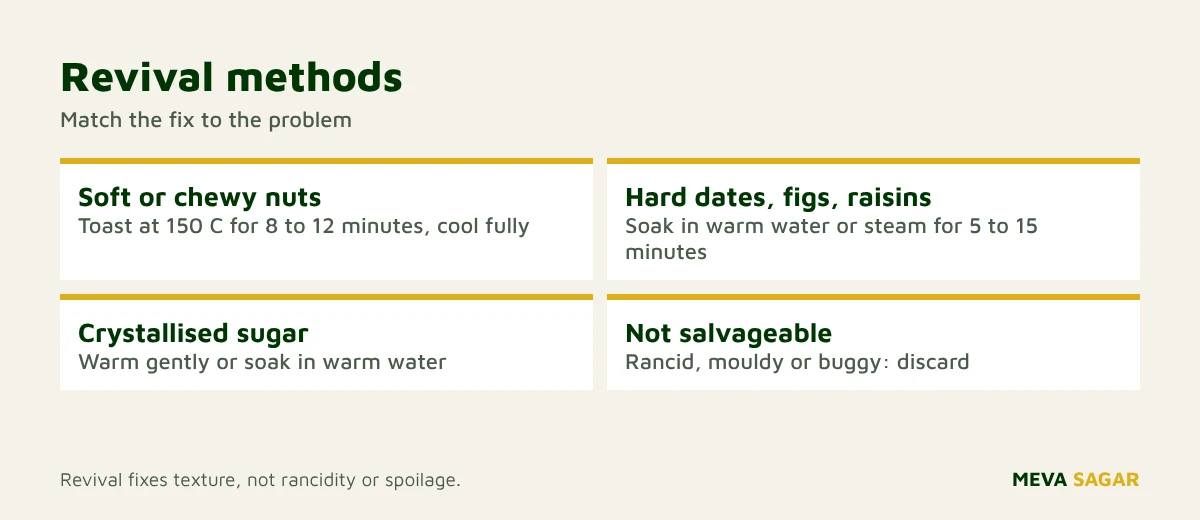
Quick answer: Stale nuts are soft because they absorbed moisture: toast them on a tray at 150 degrees Celsius for 8 to 12 minutes and cool fully. Hard dates, raisins and figs lost moisture: soak in warm water or steam for 5 to 15 minutes, then drain. Use revived items in baking, granola, chutneys and sweets. Discard anything rancid, mouldy or infested.
Stale or spoiled? Check first
Before reviving anything, check that it is safe. Smell and taste a small piece. Stale nuts smell faint and taste flat but not bitter. Stale dried fruit is hard, dry or sugary but smells sweet. Rancid, musty, sour or fishy smells mean spoilage. Visible mould, webbing or insects mean discard. See how to tell if nuts are rancid and insects in dry fruits. Revival fixes texture only. It cannot fix spoiled food.
Re-crisping soft almonds, cashews and walnuts
- Preheat
Set the oven to 150 degrees Celsius. - Spread
Place nuts in a single layer on a baking tray. - Toast
Bake for 8 to 12 minutes, shaking halfway. - Check
Cashews and walnuts brown quickly, so watch closely. - Cool
Let nuts cool fully on the tray; they crisp as they cool. - Store
Transfer to an airtight jar once cold.
You can also dry-roast nuts in a pan over low heat, stirring constantly. Skip salt or seasoning until after toasting. Nuts that taste even slightly bitter before toasting should be discarded.
Reviving makhana and roasted snacks
Soft makhana can be re-crisped in a dry pan on low heat for 3 to 5 minutes, or in an oven at 130 degrees Celsius for 5 to 8 minutes. Spread them in one layer and stir often. Let them cool before storing. Roasted and salted nuts can be re-toasted the same way. Add a tiny pinch of salt or spice after cooling if needed. See makhana chaat and flavoured roasted makhana for ways to use them.
Softening hard dates, figs, raisins and apricots
| Fruit | Method | Time |
|---|---|---|
| Dates | Soak in warm water or steam; or microwave with a damp paper towel | 5 to 10 minutes |
| Figs | Soak in warm water or milk | 10 to 15 minutes |
| Raisins | Soak in warm water or juice; or steam | 5 to 10 minutes |
| Apricots and prunes | Simmer briefly in water or tea | 10 to 15 minutes |
| Mango, papaya, pineapple | Soak in warm water, drain well | 10 minutes |
Drain well and pat dry. Use soaked fruit within a day or two, or cook it into a dish. The soaking water is full of sugars and can be used in smoothies or baking.
Dealing with sugar crystals
White crystals on dates, raisins or figs are usually natural sugar that has come out of the fruit, not mould. Mould is fuzzy and often coloured. To remove crystals, soak the fruit briefly in warm water, or steam for a few minutes until they dissolve. Warm gently in a low oven at 100 degrees Celsius for a few minutes wrapped in foil. Crystallised fruit is safe to eat if it smells fine, and it works well in cooking.
Ways to use revived and leftover dry fruits
| Use | Recipe idea |
|---|---|
| Baking | dates and walnut cake |
| Breakfast | granola or overnight oats |
| Sweets | chikki, panjiri or almond barfi |
| Sauces and syrups | date syrup, dates and imli chutney |
| Drinks | anjeer milkshake |
| Savoury | Chop into rice, pulao or salads |
Using up nuts that are only slightly stale
If nuts are slightly stale but not rancid, grinding them can hide the texture. Make nut flour for baking, nut butter in a blender, or paste for gravies. Toast first to bring out flavour. Sprinkle chopped nuts on yoghurt, oats or desserts. Mix small amounts into masala for kormas or halwa. Freeze portions you cannot use right away. See almonds and cashews for fresh replacements.
Preventing staleness next time
- Store in airtight containers.
- Keep nuts cool, dark and dry.
- Buy smaller packs more often.
- Use silica packets in humid weather.
- Refrigerate or freeze for longer storage; see storing almonds, cashews and walnuts.
- Keep a first-in-first-out routine.
Check labels and dates. See FSSAI and label guide. For general healthy eating see the WHO.
Myths and common mistakes
| Myth or mistake | Reality |
|---|---|
| Roasting fixes anything | It fixes softness, not rancidity |
| White crystals mean mould | Often it is sugar |
| Soaked fruit keeps for weeks | Use within a day or two |
| Stale nuts are unsafe | They are safe if not rancid or mouldy |
| Salt restores flavour in rancid nuts | It does not |
Reviving nuts in the microwave and air fryer
If you do not want to use a full oven, an air fryer works well for small batches. Set it to 140 degrees Celsius and toast nuts for 3 to 5 minutes, shaking the basket halfway. In a microwave, spread nuts on a plate and heat in 30-second bursts, stirring each time, until they smell warm and toasty. Microwaves heat unevenly, so keep watching to avoid scorching. Let the nuts cool completely before judging crispness, because they firm up as they lose heat. Do not add oil or salt before toasting, as these can make the nuts soggy.
Turning leftovers into pantry staples
Leftover and slightly stale nuts and dried fruit can become useful staples. Grind almonds, cashews and walnuts into a coarse powder and freeze it for gravies and desserts. Blend soaked dates into a paste to use as a natural sweetener. Chop dried fruit and mix it with nuts for a homemade trail mix, or fold it into pancake batter. Simmer figs, apricots and raisins into a compote for breakfast. Label everything with the date and use it within a few weeks. This approach reduces waste and gives you ready ingredients for quick meals.
Keeping revived food fresh
Revived nuts absorb moisture quickly, so store them as soon as they cool in airtight jars. Soaked dried fruit should go into the fridge in a covered container and be used within one or two days. If you have more than you can use, freeze portions in small bags. Avoid re-soaking and drying fruit repeatedly, because the texture suffers and the risk of mould rises. When you buy new stock, replace the old rather than topping up, and keep the oldest at the front of the shelf.
Frequently asked questions
How do I make soft nuts crunchy again?
Toast them at 150 degrees Celsius for 8 to 12 minutes and cool fully on the tray.
How do I soften hard dates?
Soak in warm water or steam them for 5 to 10 minutes, then drain.
Are white spots on dried fruit mould?
Usually they are sugar crystals, but fuzzy or coloured growth is mould and should be discarded.
Can I revive rancid nuts?
No. Rancid nuts should be discarded.
What can I make with stale dry fruits?
Granola, cakes, chutneys, barfi, panjiri or smoothies.
How long can I keep soaked dried fruit?
Use it within a day or two, kept in the fridge.
The bottom line
You can revive stale dry fruits by toasting soft nuts and soaking hard fruit, then use them in recipes. Always check smell and appearance first, and throw out anything rancid, mouldy or infested.