

Hazelnut benefits start with vitamin E, of which they are one of the richest sources among nuts, and continue with folate, manganese and a fat profile similar to olive oil. They have a sweet, toasty flavour that works in chocolate, baking and desserts, and most people know hazelnuts mainly through spreads and chocolate. The nut itself is a much better choice than the spread.
Quick answer: About 20 hazelnuts (30 g) a day is a sensible portion. Eat them plain or lightly toasted, and use them in oats, baking and desserts. The nut is nutritious, but commercial hazelnut spreads and chocolates are mostly sugar and oil, so they do not offer the same benefits.
What are hazelnuts?
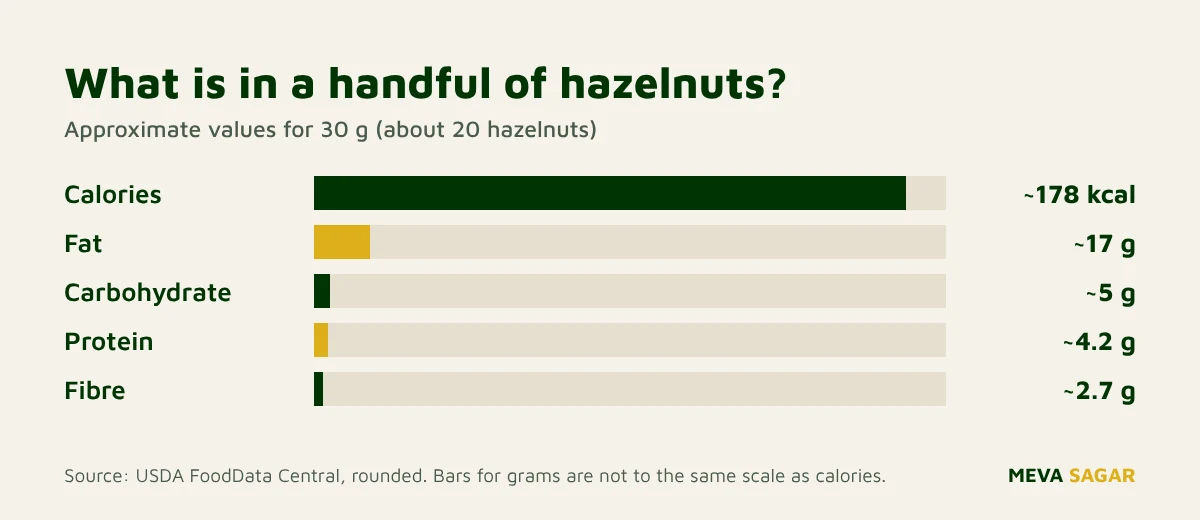
Hazelnuts grow on shrubs in temperate climates, with Turkey producing most of the world's supply. They are round, sweet and crunchy, with a thin brown skin that is often removed for baking. In India they are imported, and usually sold shelled. Per USDA FoodData Central, 30 g gives you roughly:
Hazelnuts also have magnesium, copper and some B vitamins. The NIH folate fact sheet explains why folate matters, especially in pregnancy.
Hazelnut benefits: what holds up
1. Vitamin E
Hazelnuts are among the best nut sources of vitamin E, an antioxidant that protects cell membranes. A handful gives about a third of what adults need in a day. See the NIH vitamin E fact sheet for requirements.
2. Heart-friendly fats
Most of the fat is monounsaturated. Trials of hazelnuts in the diet show modest improvements in cholesterol, especially in people replacing refined snacks.
3. Manganese and bone health
Manganese supports bone formation and metabolism. Hazelnuts are one of the richest nut sources.
4. Folate
Hazelnuts offer some folate, which is useful for cell growth. They are not the best source, since leafy greens and pulses have more, but they contribute.
5. Fibre and fullness
About 2.7 g of fibre in a handful adds to the feeling of fullness. Like other nuts, they keep you satisfied between meals.
The nut is the healthy part. The chocolate spread is a dessert with a hazelnut on the label.
Hazelnuts vs hazelnut spread
This is worth a clear comparison, because many people assume that "hazelnut" on a jar means a healthy product. The numbers are approximate and vary by brand.
| Per 30 g | Hazelnuts | Hazelnut chocolate spread |
|---|---|---|
| Calories | ~178 | ~160 |
| Sugar | ~1.3 g | ~16 to 17 g |
| Fibre | ~2.7 g | ~1 g |
| Hazelnut content | 100 percent | Often 10 to 15 percent |
| Main ingredients | Hazelnuts | Sugar, palm oil, cocoa, skimmed milk |
If you enjoy the flavour, you can make your own spread by blending toasted hazelnuts with a little cocoa and a spoonful of jaggery or a couple of dates. That gives you the taste with far less sugar.
How many hazelnuts should you eat per day?
| Who | Amount | Note |
|---|---|---|
| Healthy adult | 15 to 20 hazelnuts (30 g) | Plain or lightly toasted |
| Watching weight | 10 to 12 hazelnuts | Count calories |
| Active or training | 20 to 25 | With fruit or yoghurt |
| Children (no allergy) | 3 to 4, chopped | Hard and round, a choking risk whole |
| Older adults | 10 to 15 | Chopped or ground if chewing is hard |
If you have a medical condition or take regular medication, ask your doctor or dietitian what suits you.
How to roast, skin and use hazelnuts
Most of the flavour in hazelnuts comes out when they are toasted, and the thin brown skin can be rubbed off after toasting if you want a smoother taste.
- Heat the oven or pan
Set the oven to 160 degrees Celsius, or heat a dry pan on low heat. - Spread them out
Place hazelnuts in a single layer. - Toast
Bake for 10 to 12 minutes, or stir in the pan for 5 to 6 minutes, until the skins crack and the nuts smell sweet. - Rub off the skins
Wrap the warm nuts in a clean cloth and rub. Most of the skins will come off. - Cool and store
Let them cool, then store in an airtight jar. Use within a month, or refrigerate.
Use them in cookies, brownies, granola, chocolate bark, salads or ground into a nut butter. Our hazelnuts are in the exotic nuts range.
Who should be careful with hazelnuts?
- Tree nut allergy: hazelnut allergy is common, especially in people with birch pollen allergy. See tree nut allergy.
- Weight goals: they are calorie-dense, though less so than macadamias.
- Spreads and chocolates: check labels for sugar and palm oil.
- Rancid nuts: a bitter taste or paint-like smell means throw them away.
Easy ways to add hazelnuts to your day
Hazelnuts are easy to use because they go with both sweet and savoury food. Here are a few simple routines:
- Sprinkle chopped, toasted hazelnuts on porridge or oats with a sliced banana.
- Add them to a salad of beetroot, oranges and greens for a crunchy finish.
- Grind a handful into a coarse powder and mix it into pancake or cake batter.
- Pair six or seven hazelnuts with a square of dark chocolate for an evening treat that is far lower in sugar than a spread.
If you cook for children, chop or grind the nuts. Whole hazelnuts are hard and round, which makes them a choking risk for small kids.
Hazelnut myths and facts
| Claim | What is true |
|---|---|
| Hazelnut spread is a healthy breakfast | No. It is mostly sugar and oil, with a small share of hazelnuts. |
| Hazelnuts are a protein food | Moderate only, about 4 g per 30 g. |
| Raw is always better than roasted | Both are fine. Dry roasting adds flavour with little change in nutrition. |
| The skin is harmful | No. It is edible, just slightly bitter. |
Frequently asked questions
How many hazelnuts should I eat per day?
About 15 to 20 hazelnuts (30 g) is a sensible amount for most healthy adults. If you watch your weight, 10 to 12 is easier to fit in.
Are hazelnuts good for you?
Yes. They are rich in vitamin E, manganese and monounsaturated fat, and also give some folate and fibre. Plain or lightly toasted nuts are the healthy choice.
Is hazelnut spread healthy?
Not really. Most hazelnut spreads contain far more sugar and palm oil than hazelnuts. You can make a lower-sugar version at home from toasted hazelnuts, cocoa and a little jaggery.
Are hazelnuts good for weight loss?
They are calorie-dense, but a small portion is filling. They work best as a replacement for a sweet snack, not an addition.
Are hazelnuts high in protein?
They have about 4 g per 30 g, which is moderate. Almonds and pistachios have more.
Should I remove the skin from hazelnuts?
It is optional. The skin carries polyphenols but is slightly bitter. For baking and spreads, many people remove it after toasting.
Can hazelnuts cause allergy?
Yes. Hazelnut is a common allergen, and people with birch pollen allergy often react to it.
How should I store hazelnuts?
Airtight, in a cool, dry place, or in the fridge for longer storage. Discard nuts that taste bitter.
The bottom line
Hazelnuts are rich in vitamin E, manganese and good fats, and their flavour improves with a few minutes of toasting. Choose the nut, not the sugary spread, and keep the portion to a small handful. For more, read almonds and macadamia nuts.


